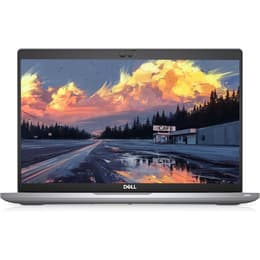

Dell Latitude 5410 14" vs Dell Latitude 5420 14"

Dell Latitude 5410 14"
Starting at

Refurbished price:A$640.00

Versus A$1,425.00 new

See options
Dell Latitude 5420 14"
Starting at

Refurbished price:A$426.00

Versus A$1,199.00 new

See options

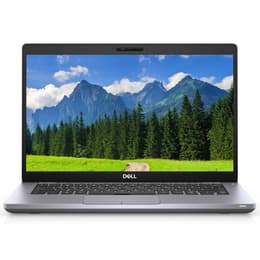
The Dell Latitude 5410, released in 2020, and the Dell Latitude 5420, launched in early 2021, are both 14-inch business-oriented laptops from Dell's Latitude 5000 series. While they share a similar design philosophy focused on productivity and durability, the 5420 introduces a newer generation of internal components and updated connectivity options, building upon its predecessor's foundation. Both devices operate on the Windows platform, offering a consistent user experience.

Scores

Durability

These two laptops, being part of Dell's business line, are designed for longevity and receive consistent software support. The primary difference in their expected practical lifespan stems from their release dates and the generation of their core components.

  • Release Timeline: The Latitude 5410 was released in 2020, while the Latitude 5420 followed in early 2021. This means the 5420 benefits from an additional year of potential operating system and security updates, extending its software longevity.
  • Software Longevity: Both models support Windows 10 and are compatible with Windows 11, ensuring several years of continued software updates and security patches from Microsoft. Dell provides drivers and support through its applications for both models, contributing to their practical lifespan.
  • Repairability and Practical Lifespan: Both laptops are designed with upgradeability in mind, featuring easily accessible RAM and SSD slots. This design choice allows for component replacement and upgrades, which can extend the practical lifespan of the device.

Release year

2020

2020

Last Os Compatibility

Yes

Yes

Operating system

Windows 11

Windows 11

Performance

The performance capabilities of the Latitude 5410 and 5420 show a generational improvement, primarily due to their respective processors and supporting hardware.

  • Processor Capabilities: The Latitude 5410 features 10th Generation Intel Core processors, providing reliable performance for everyday office applications and multitasking. The Latitude 5420, on the other hand, incorporates 11th Generation Intel Core processors, which offer snappier performance for daily tasks, faster application loading, and better handling of moderate multitasking. The integrated graphics in the 5420 (Intel Iris Xe with Core i5/i7 configurations) also provide a notable improvement for light visual tasks compared to the 5410's integrated graphics.
  • Memory and Storage: Both models utilize DDR4 memory, with the 5420 supporting faster speeds (3200 MHz) compared to the 5410 (2667 MHz or 3200 MHz). The 5420 can also be configured with up to 64GB of RAM, offering more headroom for intensive multitasking than the 5410's typical 32GB maximum. Both laptops employ fast NVMe Solid State Drives (SSDs) for quick boot times and application access.
  • Battery Behavior: The 11th Generation processors in the Latitude 5420 are generally more power-efficient, which can translate to slightly longer battery life under similar workloads. The Latitude 5410 typically offers between 4 to 7 hours of mixed office work, with some users reporting up to 8-9 hours when new. The Latitude 5420 can provide around 7-8 hours of typical use.

Memory (GB)

16 GB

16 GB

Processor

Core i5 - Gen 10 (U)

Core i5-1135G7

Graphic card

Integrated Graphics

Intel Iris Xe Graphics

Screen quality

Both Dell Latitude models offer 14-inch displays, but there are distinctions in their panel technologies, resolution options, and overall viewing experience.

  • Display Technology and Resolution: The Latitude 5410 typically features a 14-inch anti-glare display, with options including Full HD (1920 x 1080) resolution. Some configurations may also include HD (1366x768) panels. The Latitude 5420 primarily offers 14-inch Full HD (1920x1080) IPS panels, which generally provide better viewing angles and color reproduction compared to some of the 5410's base options.
  • Brightness Levels: The 5410's display options typically range from 220 to 300 nits of brightness. The Latitude 5420 offers options that can reach up to 400 nits, which can significantly improve visibility in brighter environments or outdoors.
  • Refresh Rate and Viewing Experience: Both laptops feature a standard 60 Hz refresh rate, suitable for general productivity tasks. The anti-glare coating on both models helps reduce reflections, contributing to a more comfortable viewing experience over extended periods.

Resolution

1920 x 1080

1920 x 1080

Screen type

IPS

LCD

Audiovisual

For communication and media consumption, both Latitude models provide a consistent experience, focusing on functionality for business use.

  • Camera System Capabilities: Both the Latitude 5410 and 5420 are equipped with a standard 720p webcam. This resolution is suitable for video conferencing and online meetings, providing clear enough visuals for professional interactions.
  • Microphone Quality: Both laptops feature dual-array microphones designed to offer noise cancellation, which helps in capturing clear audio during calls and reducing background distractions.
  • Speaker Output: The audio experience on both devices is delivered through stereo speakers. These are generally adequate for conference calls, presentations, and casual media consumption, though they are not designed for high-fidelity audio.

Miscellaneous

Beyond core performance, several practical elements differentiate the Dell Latitude 5410 and 5420, impacting their usability and connectivity in various professional settings.

  • Connectivity Options: The Latitude 5410 supports Wi-Fi 6 and Bluetooth 5.1 for wireless connections. The Latitude 5420 features updated connectivity with Wi-Fi 6E and Bluetooth 5.2, offering potentially faster and more stable wireless performance, especially in congested network environments.
  • Port Types: The 5410 includes a selection of USB-A ports, a USB-C port (with optional Thunderbolt 3 support), HDMI, Ethernet, and a microSD card reader. The 5420 enhances this with two Thunderbolt 4 ports, alongside USB-A, HDMI, Ethernet, and a microSD card reader. The inclusion of Thunderbolt 4 on the 5420 provides more versatile high-speed connectivity for external displays, docking stations, and other peripherals.
  • Weight and Dimensions: The Latitude 5410 has a starting weight of approximately 1.47 kg (3.26 lbs). The Latitude 5420 is slightly lighter, starting at around 1.37 kg (3.03 lbs), making it marginally more portable for users who frequently travel or move between workspaces. Both models maintain a robust build quality, utilizing durable business-grade plastics and some magnesium alloy for daily professional use.

Weight

7500 oz

1370 oz

Screen size

14

14

User feedback for the Dell Latitude 5410 often highlights its solid build quality, reliable performance for its generation, and a good selection of ports, along with a comfortable keyboard and decent battery life for its time. Common criticisms include its slightly older processor, potentially heavier design compared to newer models, and average display quality with limited graphics power.

The Dell Latitude 5420 generally receives praise for its improved performance, enhanced connectivity options like Thunderbolt 4 and Wi-Fi 6E, a slightly lighter design, an excellent keyboard, and good battery life. Some users note that base display options might lack brightness, and its business-focused design, while durable, may not be considered aesthetically cutting-edge.

Users prioritizing a robust and proven laptop for general office tasks and who do not require the absolute latest in processing power or connectivity standards may find the Latitude 5410 well-suited to their needs. It remains a capable device for everyday productivity. Conversely, users who benefit from enhanced processing power for moderate multitasking, improved integrated graphics, and advanced connectivity options like Thunderbolt 4 and Wi-Fi 6E will likely find the Latitude 5420 a more advantageous choice. Its marginal weight reduction also appeals to those who prioritize portability.

For those considering either model, exploring quality-assured refurbished options can provide an eco-friendly alternative, extending the life of these capable business laptops.

See all articles

Our recent comparisons