
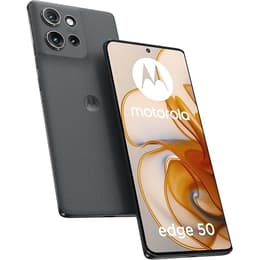

Asus Zenfone 9 vs Motorola Edge 50

Asus Zenfone 9
Asus Zenfone 9
See options
Motorola Edge 50
Motorola Edge 50
See options

The Asus Zenfone 9, released in July 2022, and the Motorola Edge 50 Pro, launched in April 2024, represent distinct approaches to smartphone design and functionality. While the Zenfone 9 prioritizes a compact form factor with powerful internal components, the Edge 50 Pro offers a larger, more expansive display and a versatile camera system. Both devices run on the Android operating system, providing users with a wide range of customization and application options.

Scores

Durability

When considering the longevity of a smartphone, factors such as release timeline, software support, and physical resilience play a significant role. Both the Asus Zenfone 9 and the Motorola Edge 50 Pro offer robust build quality, but their respective release dates impact their expected software support duration.

  • Release Timeline: The Asus Zenfone 9 was released in July 2022, making it an older device compared to the Motorola Edge 50 Pro, which launched in April 2024. This two-year difference means the Edge 50 Pro will likely receive software updates for a longer period.
  • Software Longevity: Asus typically provides two major Android OS updates and four years of security updates for its Zenfone series. The Zenfone 9, having launched with Android 12, has likely received updates up to Android 14. Motorola generally offers three major OS updates and four years of security updates for its Edge series, meaning the Edge 50 Pro, starting with Android 14, is poised for longer future software support.
  • Physical Durability: Both devices feature an IP68 rating for dust and water resistance, indicating protection against immersion in up to 1.5 meters of water for 30 minutes. The Zenfone 9 utilizes Corning Gorilla Glass Victus for screen protection, a feature also found on the front of the Motorola Edge 50 Pro.

Release year

2022

2024

Compatible with latest Update

Yes

Yes

Operating system

Android

Android

Foldable

No

No

Performance

The performance capabilities of these two smartphones are influenced by their respective processors and memory configurations, impacting how smoothly they handle daily tasks and demanding applications.

  • Processing Power: The Asus Zenfone 9 is equipped with a flagship-tier processor from its release year, enabling it to handle demanding applications, complex multitasking, and graphically intensive games with fluidity. The Motorola Edge 50 Pro features an upper mid-range processor, which provides a responsive experience for everyday use, social media, and most mobile gaming, though it may not match the raw processing headroom of the Zenfone 9 for the most intensive tasks.
  • Multitasking and Storage: Both devices offer ample RAM configurations, allowing for efficient multitasking and quick switching between applications. The Zenfone 9 typically comes with LPDDR5 RAM and UFS 3.1 storage, contributing to faster app loading and data transfer speeds. The Edge 50 Pro offers LPDDR4X or LPDDR5 RAM and UFS 2.2 or UFS 3.1 storage, depending on the configuration, which provides a generally smooth experience.
  • Battery Behavior: The Zenfone 9, despite its smaller battery capacity, is noted by users for its efficient power management, often lasting through a full day of moderate to heavy use. The Edge 50 Pro features a larger battery capacity and supports very rapid wired charging, allowing for quick power top-ups, alongside wireless and reverse wireless charging capabilities.

Memory (GB)

6 GB

12 GB

Screen quality

The visual experience on a smartphone is largely defined by its display, and both the Asus Zenfone 9 and Motorola Edge 50 Pro offer distinct screen characteristics.

  • Display Technology and Clarity: The Asus Zenfone 9 features a 5.9-inch Super AMOLED display with a Full HD+ resolution (1080x2400 pixels), delivering vibrant colors and deep blacks in a compact format. The Motorola Edge 50 Pro boasts a larger 6.7-inch pOLED display with a higher 1.5K resolution (1220x2712 pixels), offering greater detail and a more expansive viewing area.
  • Brightness and Smoothness: The Zenfone 9's display offers a peak brightness of 1100 nits and a 120Hz refresh rate, ensuring smooth scrolling and good visibility in various lighting conditions. The Edge 50 Pro surpasses this with a peak brightness of 2000 nits and a 144Hz refresh rate, providing an even brighter and smoother visual experience, particularly beneficial for outdoor use and fast-paced content.
  • Design and Viewing Experience: The Zenfone 9 has a flat display, contributing to its compact and easy-to-handle design. The Edge 50 Pro features a curved display, which can offer a more immersive viewing experience, though some users may find curved edges prone to accidental touches.

Resolution

1080 x 2400

1220x2712

Audiovisual

The camera systems on the Asus Zenfone 9 and Motorola Edge 50 Pro are designed with different strengths, catering to varying photography and videography preferences.

  • Rear Camera Capabilities: The Zenfone 9 features a dual-camera setup with a 50MP main sensor that includes a unique 6-axis gimbal stabilization system, enhancing stability for both photos and videos. It also has a 12MP ultrawide lens with autofocus and macro capabilities. The Edge 50 Pro offers a more versatile triple-camera system, comprising a 50MP main sensor with optical image stabilization (OIS) and a wide f/1.4 aperture, a 13MP ultrawide lens with autofocus and macro functionality, and a 10MP telephoto lens with 3x optical zoom and OIS.
  • Photography Performance: The Zenfone 9's gimbal stabilization is particularly effective for capturing sharp images and smooth video in challenging conditions. User feedback suggests its main camera performs well in everyday scenarios, though some report inconsistencies in exposure. The Edge 50 Pro's camera system, validated by Pantone for color accuracy, is noted for capturing impressive detail and sharpness in well-lit environments, with its telephoto lens adding significant versatility. Its main camera also performs respectably in low-light conditions.
  • Video Recording and Front Camera: The Zenfone 9 supports video recording up to 8K resolution, while the Edge 50 Pro records up to 4K. For selfies, the Zenfone 9 has a 12MP front camera, whereas the Edge 50 Pro features a higher-resolution 50MP front camera with autofocus, which can be beneficial for detailed self-portraits and video calls.

Front camera

12 megapixels

32 megapixels

Miscellaneous

Beyond core specifications, several practical elements differentiate the user experience of the Asus Zenfone 9 and the Motorola Edge 50 Pro.

  • Connectivity and Ports: Both devices support 5G connectivity and Wi-Fi 6E for fast wireless internet. The Zenfone 9 includes a 3.5mm headphone jack, a feature less common in modern smartphones, catering to users who prefer wired audio. Both utilize a USB-C port for charging and data transfer. The Edge 50 Pro features Bluetooth 5.4, a newer standard than the Zenfone 9's Bluetooth 5.2.
  • Biometrics and Handling: The Zenfone 9 incorporates a side-mounted fingerprint sensor, which also offers gesture-based controls. The Edge 50 Pro features an optical in-display fingerprint sensor for unlocking. In terms of physical attributes, the Zenfone 9 is significantly smaller and lighter, measuring 146.5 x 68.1 x 9.1 mm and weighing 169g, making it ideal for one-handed use. The Edge 50 Pro is larger and slightly heavier at 161.2 x 72.4 x 8.2 mm and 186g, offering a more expansive screen but requiring a two-handed grip for some users.
  • Build Materials: The Zenfone 9 features an aluminum frame and a plastic/polymer back, contributing to its lighter weight. The Edge 50 Pro also has an aluminum frame, but offers a choice of vegan leather or acetate finishes for its back panel, providing a different tactile experience.

Weight

169 oz

180 oz

Screen size (in)

5.9

6.7

Network

5G

5G

SIM card

Dual Physical SIM

Physical SIM

Carrier compatibility

Unlocked

Unlocked

Connector

USB-C + Jack 3.5mm

USB-C

The Asus Zenfone 9 and Motorola Edge 50 Pro cater to different user preferences, each excelling in specific areas. The Zenfone 9 is frequently praised by users for its remarkably compact size, making it comfortable for one-handed operation, and its powerful performance for its form factor. Many appreciate its clean software experience and the inclusion of a 3.5mm headphone jack. However, some criticisms include occasional camera inconsistencies and the absence of a telephoto lens.

Conversely, the Motorola Edge 50 Pro receives positive feedback for its eye-catching design, vibrant and expansive display, and its versatile camera system, particularly the inclusion of a telephoto lens and Pantone-validated colors. Its rapid wired and wireless charging capabilities are also a significant advantage. Some users note that the curved display, while immersive, can sometimes lead to accidental touches.

Users prioritizing a highly portable device with strong raw processing power and a traditional headphone jack may find the Asus Zenfone 9 well-suited to their needs. Those who value a larger, more modern display, a comprehensive camera setup with optical zoom, and very fast charging will likely lean towards the Motorola Edge 50 Pro. Both devices offer an IP68 rating for durability, ensuring resilience against dust and water. For consumers seeking an eco-friendly alternative, both models are available as quality-assured refurbished options, providing a sustainable choice without compromising on functionality.


See all articles

Our recent comparisons