
Asus Zenfone 9 vs iPhone 12

Asus Zenfone 9
Asus Zenfone 9
See options
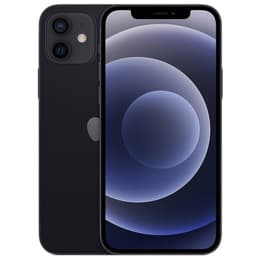
iPhone 12
iPhone 12
Starting at

Refurbished price:A$303.00

Versus A$1,129.00 new

See options

The Asus Zenfone 9, released in 2022, and the iPhone 12, launched in 2020, offer distinct smartphone experiences. While the Zenfone 9 runs on Android and emphasizes a compact design with robust performance, the iPhone 12 operates on Apple's iOS, known for its integrated ecosystem and consistent user interface. These devices cater to different user preferences, primarily differing in their operating system philosophies and hardware focus.

Scores

Durability

The practical lifespan of a smartphone is significantly influenced by its release date and the manufacturer's commitment to software updates.

  • Software Support: The iPhone 12, released in October 2020, typically receives major iOS updates for about 5 to 6 years from its launch, offering a long period of access to new features and security patches. The Asus Zenfone 9, launched in July 2022, generally receives 2 major Android OS updates and 4 years of security updates, meaning its software support window is shorter.
  • Repairability: Both devices are designed with IP68 water and dust resistance. The iPhone 12 has a well-established repair ecosystem, though some repairs may require specific tools or authorization. The Zenfone 9, being a less common model, might have more limited access to official parts and repair services in some regions.
  • Practical Longevity: Users prioritizing extended software support and a well-established repair network might find the iPhone 12 offers a slightly longer practical lifespan. The Zenfone 9, while newer, has a more limited software update commitment.

Release year

2022

2020

Compatible with latest Update

Yes

Yes

Operating system

Android

iOS

Foldable

No

No

Performance

Both the Asus Zenfone 9 and the iPhone 12 deliver capable performance for daily tasks, though they approach it with different hardware architectures.

  • Everyday Responsiveness: The Zenfone 9, with its more recent processor and higher RAM (8GB or 16GB), handles demanding applications, intensive multitasking, and graphic-heavy games with notable smoothness. The iPhone 12, equipped with its own powerful chip and 4GB of RAM, provides a consistently fluid experience for general use and moderate gaming.
  • Battery Behavior: The Asus Zenfone 9 features a larger 4300 mAh battery, which often translates to extended usage times, with many users reporting it comfortably lasts through a full day of heavy use. The iPhone 12 has a 2815 mAh battery, typically providing sufficient power for a day of moderate use, though heavy users might need to recharge before the day ends.
  • Storage Options: The Zenfone 9 offers storage options of 128GB and 256GB. The iPhone 12 provides choices starting from 64GB, also available in 128GB and 256GB configurations.

Memory (GB)

6 GB

4 GB

Screen quality

The visual experience on both devices is distinct, primarily due to differences in display technology and refresh rates.

  • Display Technology and Clarity: The Asus Zenfone 9 features a 5.9-inch AMOLED display, known for its deep blacks and vibrant color reproduction. The iPhone 12 sports a 6.1-inch Super Retina XDR OLED display, which also delivers excellent contrast and color accuracy. Both offer sharp visuals suitable for media consumption.
  • Brightness and Outdoor Visibility: Both displays offer high peak brightness levels, with the Zenfone 9 reaching up to 1100 nits and the iPhone 12 up to 1200 nits. This ensures good visibility even in bright outdoor conditions.
  • Smoothness and Responsiveness: A key difference lies in the refresh rate. The Zenfone 9 boasts a 120Hz refresh rate, resulting in noticeably smoother scrolling and more fluid animations. The iPhone 12 maintains a standard 60Hz refresh rate, which is adequate for most users but does not offer the same level of visual fluidity.

Resolution

1080 x 2400

1170 x 2532

Screen type

Super AMOLED

Super Retina XDR OLED

Audiovisual

Both smartphones offer capable camera systems and provide a satisfactory multimedia experience, though with different characteristics.

  • Photography Capabilities: The Asus Zenfone 9 features a dual-camera setup with a 50MP main sensor (OIS) and a 12MP ultrawide lens. It excels in capturing detailed images with good dynamic range. The iPhone 12 also has a dual 12MP camera system, comprising a main wide lens (OIS) and an ultrawide lens. It is known for its consistent image processing and natural color reproduction.
  • Low-Light Performance and Video: Both devices perform well in low-light scenarios, with the iPhone 12 often praised for its computational photography. The Zenfone 9 also offers strong low-light capabilities, benefiting from its larger main sensor. For video recording, both capture high-quality footage, with the iPhone 12 often highlighted for its video stability.
  • Audio Experience: The Zenfone 9 includes a 3.5mm headphone jack, a feature increasingly rare in modern smartphones. Both devices feature stereo speakers that provide a clear and immersive audio experience for media consumption and calls.

Main camera

50 megapixels

12 megapixels

Front camera

12 megapixels

12 megapixels

Miscellaneous

Beyond core performance, several practical features and design elements differentiate these two devices.

  • Connectivity Standards: Both the Zenfone 9 and iPhone 12 support 5G connectivity. The Zenfone 9 includes Wi-Fi 6E and Bluetooth 5.2, offering slightly newer wireless standards compared to the iPhone 12's Wi-Fi 6 and Bluetooth 5.0.
  • Physical Design and Handling: The Asus Zenfone 9 is notably compact and lightweight at 169g and dimensions of 146.5 x 68.1 x 9.1 mm, making it comfortable for one-handed use. The iPhone 12 is also relatively light at 164g and measures 146.7 x 71.5 x 7.4 mm, offering a slightly wider but thinner profile.
  • Authentication and Ports: The Zenfone 9 utilizes a side-mounted fingerprint sensor integrated into the power button. It also retains a 3.5mm headphone jack and uses a USB-C port. The iPhone 12 relies on Face ID for secure facial recognition and uses Apple's proprietary Lightning port.

Weight

169 oz

164 oz

Screen size (in)

5.9

6.1

Network

5G

5G

SIM card

Dual Physical SIM

Physical SIM + eSIM

Carrier compatibility

Unlocked

Unlocked

Connector

USB-C + Jack 3.5mm

Lightning

User sentiment for the Asus Zenfone 9 often highlights its compact size, strong performance for its form factor, and impressive battery life. Many appreciate the inclusion of a headphone jack and the smooth 120Hz display. Criticisms sometimes point to its limited software update policy compared to some competitors. For the iPhone 12, users frequently praise its consistent camera performance, the reliability of the iOS ecosystem, and its durable build quality. Common concerns can include the 60Hz display refresh rate and the battery life for heavy users, especially as the device ages.

Users prioritizing a compact Android device with a high refresh rate display, excellent battery life, and a traditional headphone jack will find the Asus Zenfone 9 well-suited to their needs. Its powerful internals make it ideal for those who demand strong performance in a smaller package. Conversely, users who value a long software support window, a highly integrated ecosystem, consistent camera performance, and Face ID authentication will likely lean towards the iPhone 12. Both devices offer a quality smartphone experience, and considering a quality-assured refurbished option for either can be a sustainable choice for consumers.


See all articles

Our recent comparisons