
Asus Zenfone 9 vs Motorola Edge 30 Pro

Asus Zenfone 9
Asus Zenfone 9
See options
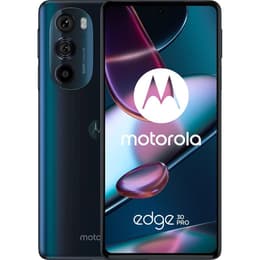
Motorola Edge 30 Pro
Starting at

Refurbished price:A$291.72

Versus A$2,709.00 new

See options

The Asus Zenfone 9 (2022) and the Motorola Edge 30 Pro (2022) are both Android smartphones released in the same year, offering distinct approaches to the premium mobile experience. While the Zenfone 9 focuses on a compact form factor with robust performance, the Edge 30 Pro provides a larger display and rapid charging capabilities. Both devices run on the Android operating system, offering a generally clean software experience with their respective customisations.

Scores

Durability

When considering the long-term usability of these devices, their release timelines and software support are key factors.

  • Release and Updates: The Motorola Edge 30 Pro was released in February/March 2022, while the Asus Zenfone 9 followed in July/September 2022. Motorola typically provides two major Android OS updates and three years of security updates for its Edge series. Asus guaranteed updates for the Zenfone 9 until August 2024, suggesting a similar or slightly shorter major OS update cycle.
  • Physical Durability: The Zenfone 9 features Gorilla Glass Victus on its display and an IP68 rating for dust and water resistance, indicating a high level of protection against environmental elements. The Motorola Edge 30 Pro uses Gorilla Glass 3 for its display and Gorilla Glass 5 for its back, with an IP52 rating, offering splash resistance but less comprehensive protection against dust and water submersion.
  • Repairability: The Asus Zenfone 9 received a repairability score of 4.5 out of 10, indicating that while some components are accessible, certain repairs, particularly screen replacement, can be challenging. Information on the Motorola Edge 30 Pro's repairability score is not as readily available, but its construction with a plastic frame might suggest varying ease of repair for different components.

Release year

2022

2022

Compatible with latest Update

Yes

Yes

Operating system

Android

Android

Foldable

No

No

Performance

Both smartphones deliver strong performance suitable for demanding applications and multitasking, though they achieve this with slightly different hardware configurations.

  • Processing Power: The Asus Zenfone 9 is equipped with a processor known for its efficiency and sustained performance, allowing it to handle intensive tasks and gaming smoothly within its compact design. The Motorola Edge 30 Pro features a powerful processor that provides a fast and consistent everyday user experience, excelling in app loading and fluid multitasking.
  • Memory and Storage: The Zenfone 9 offers configurations with up to 16GB of RAM and 256GB of internal storage, providing ample capacity for numerous applications and files. The Edge 30 Pro is available with up to 12GB of RAM and up to 512GB of storage, catering to users who require more memory for multitasking or extensive storage for media.
  • Battery Performance: The Zenfone 9, despite its smaller size, is noted for its impressive battery endurance, often lasting a full day or more with moderate to heavy use. The Edge 30 Pro, with a larger battery capacity, also offers good battery life, typically lasting a full day even with intensive use, though some users have noted that its processor can impact efficiency.

Memory (GB)

6 GB

8 GB

Screen quality

The visual experience on both devices is vibrant and responsive, though they differ in size and refresh rate capabilities.

  • Display Technology and Size: The Asus Zenfone 9 features a 5.9-inch AMOLED display, providing deep blacks and vibrant colors in a compact form factor. The Motorola Edge 30 Pro offers a larger 6.7-inch OLED display, which is well-suited for media consumption and users who prefer more screen real estate.
  • Resolution and Clarity: Both phones feature Full HD+ resolutions (1080x2400 pixels), ensuring sharp and detailed visuals for everyday viewing. The Zenfone 9's smaller screen size results in a higher pixel density, contributing to a very crisp image.
  • Refresh Rate and Brightness: The Zenfone 9 has an adaptive 120Hz refresh rate, contributing to smooth scrolling and responsiveness, with a peak brightness of 1100 nits for good outdoor visibility. The Edge 30 Pro boasts an ultra-smooth 144Hz refresh rate, making navigation and compatible content appear exceptionally fluid. Its display offers good brightness, though some comparisons suggest it may not reach the peak levels of some competitors.

Resolution

1080 x 2400

1080 x 2400

Screen type

Super AMOLED

OLED

Audiovisual

Both devices offer capable camera systems, each with distinct strengths in photography and videography.

  • Rear Camera System: The Asus Zenfone 9 features a 50MP main camera with a 6-axis gimbal stabilization system, which aids in capturing steady photos and videos, particularly in challenging conditions. It also includes a 12MP ultrawide camera. The Motorola Edge 30 Pro comes with a 50MP main camera with optical image stabilization (OIS) and a 50MP ultrawide camera, offering versatility for different shooting scenarios.
  • Photography Performance: The Zenfone 9's main camera produces detailed images with accurate colors in good lighting, and its larger sensor assists in low-light situations, though some users note that processing can be over-zealous. The Edge 30 Pro's camera system performs well in adequate lighting, but user feedback suggests that its low-light performance and overall image quality can be inconsistent, with some finding it to be a weaker point.
  • Video Recording and Front Camera: Both phones are capable of recording video up to 8K resolution. The Zenfone 9's gimbal stabilization is particularly effective for smooth video capture. For selfies, the Zenfone 9 has a 12MP front camera with autofocus, while the Edge 30 Pro features a high-resolution 60MP front camera.
  • Audio Experience: Both devices feature stereo speakers, enhancing the media consumption experience. The Zenfone 9 retains a 3.5mm headphone jack, a feature not present on the Edge 30 Pro.

Main camera

50 megapixels

50 megapixels

Front camera

12 megapixels

60 megapixels

Miscellaneous

Beyond core specifications, several practical elements differentiate these two smartphones in daily use.

  • Connectivity: Both the Asus Zenfone 9 and Motorola Edge 30 Pro support 5G connectivity, along with modern Wi-Fi standards (Wi-Fi 6/6E) and Bluetooth 5.2, ensuring fast and reliable wireless connections.
  • Ports and Biometrics: The Zenfone 9 includes a 3.5mm headphone jack, a feature that many users appreciate for wired audio. It also has a side-mounted fingerprint sensor integrated into the power button, which can be used for shortcuts. The Edge 30 Pro relies solely on its USB-C port for audio and charging, and also features a side-mounted fingerprint sensor.
  • Design and Handling: The Zenfone 9 is notable for its compact and lightweight design, making it comfortable for one-handed use. It features an aluminum frame and a polymer back panel. The Edge 30 Pro is a larger device with a plastic frame and glass back, offering a different in-hand feel.
  • Unique Features: The Zenfone 9 incorporates a 'ZenTouch' side button that offers customizable shortcuts. The Edge 30 Pro supports Motorola's 'Ready For' platform, which allows for a desktop-like experience when connected to an external display, and also offers stylus support.

Weight

169 oz

196 oz

Screen size (in)

5.9

6,7

Network

5G

5G

SIM card

Dual Physical SIM

Dual Physical SIM

Carrier compatibility

Unlocked

Unlocked

User feedback for the Asus Zenfone 9 frequently highlights its exceptional battery life for a compact device and its smooth, responsive performance. Many appreciate its smaller size, making it a comfortable option for one-handed use. Criticisms sometimes point to the camera's performance, which, while capable, may not always meet the expectations of users accustomed to top-tier smartphone photography, particularly in challenging lighting conditions.

The Motorola Edge 30 Pro is often praised for its fluid 144Hz display, fast charging capabilities, and strong overall performance for everyday tasks and gaming. Users also value its near-stock Android experience and the 'Ready For' desktop mode. However, common concerns include inconsistent camera performance, especially in low light, and some reports of the processor generating heat, which can impact battery efficiency for heavy users.

Users prioritizing a compact smartphone with excellent battery life and a premium, one-handed feel may find the Asus Zenfone 9 well-suited to their needs. Its gimbal-stabilized main camera offers a unique advantage for video capture. Conversely, individuals who prefer a larger, high-refresh-rate display for media consumption and gaming, coupled with very fast charging and a desktop-like experience, might lean towards the Motorola Edge 30 Pro. Both devices represent solid choices in the Android ecosystem, and considering a quality-assured refurbished option can be an eco-friendly alternative for either model.


See all articles

Our recent comparisons