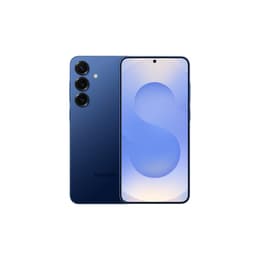

Galaxy S25+ vs Nokia X30

Galaxy S25+
Galaxy S25+
Starting at

Refurbished price:A$919.00

Versus A$1,699.00 new

See options
Nokia X30
Nokia X30
Starting at

Refurbished price:A$298.00

Versus A$965.00 new

See options

The Samsung Galaxy S25 Plus, released in February 2025, and the Nokia X30, launched in September 2022, represent different approaches to smartphone design and functionality. While the Galaxy S25 Plus offers a premium experience with advanced hardware and extensive software support, the Nokia X30 focuses on a balanced mid-range offering with a strong emphasis on sustainability and a reliable user experience. Both devices run on the Android operating system, but they differ significantly in their update policies and overall ecosystem integration.

Scores

Durability

The practical lifespan of a smartphone is heavily influenced by its release timeline, build quality, and software support. These two devices present distinct propositions in terms of longevity.

  • Release Timeline and Software Support: The Galaxy S25 Plus, being a more recent device from early 2025, benefits from Samsung's commitment to providing seven years of operating system upgrades and security updates, extending its software relevance until approximately 2032. In contrast, the Nokia X30, released in late 2022, offers three years of OS upgrades and three years of monthly security updates, meaning its official software support will conclude sooner.
  • Physical Durability: The Galaxy S25 Plus features Corning Gorilla Glass Victus 2 on both its front and back, coupled with an aluminum frame, and boasts an IP68 rating for dust and water resistance, allowing submersion up to 1.5 meters for 30 minutes. The Nokia X30 also incorporates Corning Gorilla Glass Victus for screen protection and an aluminum frame, alongside an IP67 rating, providing protection against dust and water immersion up to 1 meter for 30 minutes.
  • Expected Practical Lifespan: Users prioritizing extended software longevity and cutting-edge hardware will find the Galaxy S25 Plus designed for a longer functional life. The Nokia X30, while durable, is positioned for a solid, reliable lifespan within its update window, appealing to users who value a quality-assured refurbished option for a few years of consistent performance.

Release year

2025

2022

Operating system

Android

Android

Foldable

No

No

Performance

Performance in daily use is a key differentiator, with the internal components dictating how smoothly applications run and how efficiently the device handles demanding tasks.

  • Processor Capabilities: The Galaxy S25 Plus is equipped with a current-generation processor, optimized for high performance and efficiency, enabling it to handle graphically intensive games, complex applications, and extensive multitasking with ease. The Nokia X30 utilizes a mid-range processor, which provides a smooth experience for everyday tasks, social media, and light gaming, but may show limitations with the most demanding applications or prolonged heavy use.
  • System Responsiveness and Multitasking: With 12GB of RAM and fast internal storage, the Galaxy S25 Plus offers exceptional system responsiveness, allowing for seamless app switching and efficient multitasking without noticeable slowdowns. The Nokia X30, available with 6GB or 8GB of RAM and slightly slower storage technology, provides adequate performance for typical user scenarios, though heavy multitasking might occasionally lead to minor delays compared to the Galaxy S25 Plus.
  • Battery Behavior: The Galaxy S25 Plus features a 4900 mAh battery, generally providing a full day of mixed usage, with some users reporting up to 1.5 to 2 days under normal conditions. The Nokia X30 has a 4200 mAh battery, which typically lasts a full day for most users and can extend to two days with lighter usage patterns.

Memory (GB)

12 GB

8 GB

Screen quality

The display is the primary interface for interaction, and both devices offer vibrant viewing experiences, though with notable differences in their underlying technology and specifications.

  • Display Technology and Resolution: The Galaxy S25 Plus features a 6.7-inch Dynamic AMOLED 2X display with a WQHD+ resolution (3120 x 1440 pixels), delivering exceptionally sharp images and detailed text. The Nokia X30 comes with a 6.43-inch AMOLED display offering a Full HD+ resolution (1080 x 2400 pixels), which provides clear visuals suitable for most content consumption.
  • Brightness and Refresh Rate: The Galaxy S25 Plus boasts an adaptive refresh rate of 1-120Hz, ensuring smooth scrolling and animations while conserving power, and can reach a peak brightness of 2600 nits, making it highly visible even in direct sunlight. The Nokia X30 offers a 90Hz refresh rate for a fluid visual experience and a peak brightness of 700 nits, which is sufficient for indoor and moderate outdoor use.
  • Viewing Experience: Users prioritizing a larger, higher-resolution display with superior brightness and adaptive refresh rate for media consumption, detailed work, or outdoor visibility will find the Galaxy S25 Plus more suitable. The Nokia X30 provides a good quality AMOLED panel that offers a smooth and enjoyable viewing experience for everyday tasks.

Resolution

1440x3120

1080 x 2400

Audiovisual

Camera capabilities are a significant factor for many users, and these devices offer different photographic strengths and features.

  • Rear Camera System: The Galaxy S25 Plus is equipped with a versatile triple-camera setup, including a 50MP main sensor with optical image stabilization (OIS), a 12MP ultrawide lens, and a 10MP telephoto lens with 3x optical zoom and OIS, providing flexibility for various shooting scenarios. The Nokia X30 features a dual-camera system with a 50MP main sensor with OIS and a 13MP ultrawide lens, focusing on core photographic needs.
  • Photography Performance: The Galaxy S25 Plus delivers detailed and color-accurate photos in good lighting, with its telephoto lens offering enhanced zoom capabilities. Its low-light performance is generally strong, though some users note occasional softness. The Nokia X30's main camera performs well in daylight and offers surprisingly good low-light performance thanks to features like Night Mode 2.0 and Dark Vision, though some images may appear less dynamic.
  • Video Recording and Front Camera: The Galaxy S25 Plus supports up to 8K video recording at 30 frames per second and includes a 12MP front camera with autofocus. The Nokia X30 records video at up to 1080p at 60 frames per second, lacking 4K capability, and has a 16MP front camera.

Miscellaneous

Beyond the core specifications, several practical elements contribute to the overall user experience and daily usability of these smartphones.

  • Connectivity and Ports: The Galaxy S25 Plus supports the latest connectivity standards, including Wi-Fi 7 and Bluetooth 5.4, alongside 5G capabilities, and features a USB-C port. The Nokia X30 offers Wi-Fi 6 (ax-ready) and Bluetooth 5.1, with 5G support and a USB-C 2.0 port. Both devices include NFC for contactless payments.
  • Biometrics and Design: Both phones feature under-display fingerprint sensors for secure unlocking. The Galaxy S25 Plus has an ultrasonic sensor, while the Nokia X30 uses an optical sensor. In terms of design, the Galaxy S25 Plus measures 158.4 x 75.8 x 7.3mm and weighs 190g, featuring a premium glass and aluminum build. The Nokia X30 is slightly thicker and lighter at 158.9 x 73.9 x 7.99mm and 185g, with an aluminum frame and a plastic back, notably incorporating recycled materials in its construction.
  • Audio Experience: The Galaxy S25 Plus includes stereo speakers with Dolby Atmos support, providing a more immersive audio experience. The Nokia X30 features a single loudspeaker but offers OZO Spatial Audio capture for video recording and aptX HD for enhanced Bluetooth audio.

Weight

190 oz

185 oz

Screen size (in)

6.7

6.43

Network

5G

5G

SIM card

Physical SIM + eSIM

Dual Physical SIM

Carrier compatibility

Unlocked

Unlocked

User feedback for the Galaxy S25 Plus frequently highlights its exceptionally smooth performance, vibrant and bright display, and reliable battery life that typically lasts a full day or more for many users. Its long-term software support is also a significant praise point, ensuring the device remains current for many years. Criticisms sometimes point to the camera, with some users feeling it's not a substantial upgrade from previous generations and can occasionally produce soft images, particularly in challenging lighting. The Nokia X30 is often commended for its eco-friendly construction using recycled materials, its bright AMOLED display with a smooth 90Hz refresh rate, and its capable main camera, especially in low-light conditions. Users appreciate its consistent performance for everyday tasks and its commitment to software updates, though for a shorter period than the Galaxy S25 Plus. A common concern is the absence of 4K video recording and the processor's potential limitations for very heavy gaming over its lifespan.

Users prioritizing cutting-edge performance, a top-tier display, extensive software longevity, and advanced camera features, including telephoto zoom and 8K video, may find the Samsung Galaxy S25 Plus well-suited to their needs. Conversely, individuals who value a balanced smartphone for daily use, a strong emphasis on sustainable manufacturing, and a reliable camera for general photography might lean towards the Nokia X30. Both devices offer compelling features, and choosing a quality-assured refurbished option for either can be an eco-friendly alternative to purchasing new.


See all articles

Our recent comparisons