
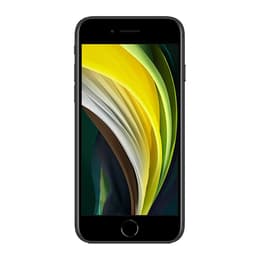

Asus Zenfone 9 vs iPhone SE (2020)

Asus Zenfone 9
Asus Zenfone 9
See options
iPhone SE (2020)
iPhone SE (2020)
Starting at

Refurbished price:A$108.00

Versus A$529.00 new

See options

The Asus Zenfone 9, released in July 2022, and the iPhone SE 2020, launched in April 2020, represent distinct approaches to smartphone design and user experience. While both offer compact form factors, the Zenfone 9 operates on Android and emphasizes modern hardware and a high refresh rate display, whereas the iPhone SE 2020 runs on iOS, featuring a classic iPhone design with a focus on core performance and camera capabilities. These differences cater to varying user preferences regarding operating system, display technology, and overall feature set.

Scores

Durability

The practical lifespan of a smartphone is influenced by its release date, software support, and repairability.

  • Release Timeline: The iPhone SE 2020 was released in April 2020, making it an older device compared to the Asus Zenfone 9, which launched in July 2022. This age difference impacts their remaining software support windows.
  • OS Support Duration: Apple is known for extended software support, with the iPhone SE 2020 still receiving official iOS updates, even six years after its release. It is expected to receive major iOS updates for approximately 5-7 years from its release, with security updates potentially extending longer. In contrast, Asus typically provides 2 major Android OS updates and 3-4 years of security updates for the Zenfone 9. This means the Zenfone 9's major OS update cycle is likely nearing its end, while the iPhone SE 2020 may continue to receive updates for a longer period.
  • Repairability: The iPhone SE 2020 received a repairability score of 6 out of 10 from iFixit, noting that common parts like the display and battery are relatively straightforward to replace. The Asus Zenfone 9, however, received a lower repairability score of 4.5 out of 10, with the screen being particularly difficult to replace.

Release year

2022

2020

Compatible with latest Update

Yes

Yes

Operating system

Android

iOS

Foldable

No

No

Performance

Performance in smartphones is determined by the internal components and how they handle daily tasks, multitasking, and demanding applications.

  • Processor Capabilities: The Asus Zenfone 9 features a more recent-generation processor, which translates to smoother handling of demanding applications and multitasking. Users report outstanding performance, with the device only getting warm during charging. The iPhone SE 2020, while equipped with a powerful processor for its release year, offers strong performance for everyday tasks and gaming, but its older architecture means it may not match the raw speed of newer devices in highly intensive scenarios.
  • Battery Behavior: The Asus Zenfone 9 is equipped with a 4300 mAh battery, which users report provides excellent battery life, often lasting through a full day of heavy use and outperforming many larger phones. The iPhone SE 2020 has a smaller 1821 mAh battery, which can lead to more frequent charging for heavy users, with some reporting it struggles to last a full day with intensive use.
  • Storage Options: Both devices offer various storage configurations. The Asus Zenfone 9 is available with 128GB or 256GB of internal storage, paired with 8GB or 16GB of RAM. The iPhone SE 2020 comes with 64GB, 128GB, or 256GB storage options, typically with 3GB of RAM.

Memory (GB)

6 GB

3 GB

Screen quality

The display is a primary interface for smartphone interaction, with technology, resolution, and refresh rate significantly impacting the visual experience.

  • Display Technology and Size: The Asus Zenfone 9 features a 5.9-inch AMOLED display, offering vibrant colors, deep blacks, and a high contrast ratio. The iPhone SE 2020 has a smaller 4.7-inch IPS LCD Retina HD display, which provides good color accuracy but does not achieve the same contrast levels or true blacks as an AMOLED panel.
  • Refresh Rate and Smoothness: The Zenfone 9 boasts a 120Hz refresh rate, contributing to a smoother scrolling experience and more fluid animations. The iPhone SE 2020 has a standard 60Hz refresh rate, which is adequate for most tasks but lacks the enhanced fluidity of higher refresh rate displays.
  • Brightness and Clarity: The Zenfone 9's AMOLED panel offers up to 1100 nits peak brightness, ensuring good visibility even in bright outdoor conditions. The iPhone SE 2020's display provides sufficient brightness for typical indoor and outdoor use, though it may not be as bright as the Zenfone 9 in direct sunlight.

Resolution

1080 x 2400

750 x 1334

Screen type

Super AMOLED

Retina IPS LCD

Audiovisual

Camera performance is a key consideration for many users, encompassing photo and video quality, especially in various lighting conditions.

  • Camera System Capabilities: The Asus Zenfone 9 features a dual-camera system with a 50MP main sensor with optical image stabilization (OIS) and a 6-axis gimbal stabilization system, alongside a 12MP ultrawide lens. The iPhone SE 2020 has a single 12MP wide camera with OIS on the rear and a 7MP front camera.
  • Photography Performance: The Zenfone 9's main camera is capable of capturing detailed images, and its gimbal stabilization aids in reducing blur, particularly in video. Users note strong ultrawide and selfie camera performance. However, some users report mixed results from the main camera's image processing, with photos sometimes appearing too warm or not consistently best-in-class in auto mode. The iPhone SE 2020's single camera delivers impressive image quality in good lighting conditions, benefiting from computational photography features.
  • Low-Light and Video: The Zenfone 9 offers good nighttime capture and excellent video recording capabilities, including 4K and 8K, with impressive stabilization. The iPhone SE 2020 lacks a dedicated Night Mode, which can result in dimmer and muddier photos in very low light compared to devices with this feature. However, it records stabilized 4K video at up to 60 frames per second, offering good video quality.

Main camera

50 megapixels

12 megapixels

Front camera

12 megapixels

7 megapixels

Miscellaneous

Beyond core features, practical elements like connectivity, physical ports, and build quality contribute to the overall user experience.

  • Connectivity and Ports: The Asus Zenfone 9 supports 5G connectivity, Wi-Fi 6E, Bluetooth 5.2, NFC, and includes a USB-C 2.0 port and a 3.5mm headphone jack. The iPhone SE 2020 supports 4G LTE, Wi-Fi 6, Bluetooth 5.0, NFC, and uses a Lightning port. It does not feature a 3.5mm headphone jack.
  • Biometric Security: The Zenfone 9 integrates a side-mounted fingerprint sensor into its power button, which also offers gesture-based controls. The iPhone SE 2020 utilizes a front-mounted fingerprint sensor (Touch ID) for secure authentication.
  • Build Materials and Durability: The Zenfone 9 features an aluminum frame, a plastic back, and Gorilla Glass Victus on the front, with an IP68 rating for dust and water resistance. The iPhone SE 2020 has a glass front and back with an aluminum frame, and an IP67 rating for water and dust resistance.

Weight

169 oz

148 oz

Screen size (in)

5.9

4.7

Network

5G

4G

SIM card

Dual Physical SIM

Physical SIM + eSIM

Carrier compatibility

Unlocked

Unlocked

Connector

USB-C + Jack 3.5mm

Lightning

The Asus Zenfone 9 is often praised by users for its compact size, powerful performance, and excellent battery life, especially considering its dimensions. Many appreciate its clean software experience and the inclusion of a 3.5mm headphone jack. Criticisms sometimes point to its camera's image processing, which can be inconsistent, and the lack of wireless charging. Some users also express concerns about Asus's software update policy, which offers fewer major OS updates compared to some competitors.

The iPhone SE 2020 is frequently lauded for its robust performance, driven by its capable processor, and its integration into the Apple ecosystem. Users value its familiar design with Touch ID and its strong video recording capabilities. Common criticisms include its dated display technology, smaller battery capacity leading to shorter battery life for heavy users, and the absence of a Night Mode for photography. The lack of 5G connectivity is also a point of consideration for some.

Users prioritizing a modern Android experience with a high refresh rate display, superior battery life, and a headphone jack in a compact form factor may find the Asus Zenfone 9 well-suited to their needs. Conversely, those who prefer the iOS ecosystem, a classic iPhone design with Touch ID, and a longer history of software support, and who do not require the latest display technology or extensive battery life, might lean towards the iPhone SE 2020. Both devices offer a quality-assured refurbished option, providing an eco-friendly alternative for consumers.


See all articles

Our recent comparisons