
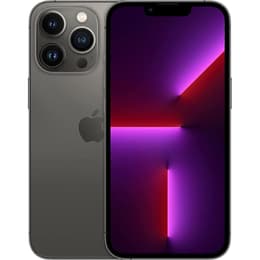

Asus Zenfone 9 vs iPhone 13 Pro

Asus Zenfone 9
Asus Zenfone 9
See options
iPhone 13 Pro
iPhone 13 Pro
Starting at

Refurbished price:A$545.00

Versus A$1,539.00 new

See options

The Asus Zenfone 9, an Android smartphone released in September 2022, and the iPhone 13 Pro, an iOS smartphone launched in September 2021, represent distinct approaches to premium mobile technology. While the Zenfone 9 emphasizes a compact form factor with a focus on raw Android performance and unique features, the iPhone 13 Pro offers a refined iOS experience with advanced camera capabilities and a high-quality display. Both devices aim to deliver a flagship experience, but cater to different user preferences regarding operating system and design philosophy.

Scores

Durability

When considering the long-term usability of these devices, several factors contribute to their expected practical lifespan.

  • Release Timeline and OS Support: The iPhone 13 Pro, released in late 2021, typically receives iOS updates for approximately five to six years from its launch. The Asus Zenfone 9, released a year later in 2022, runs on Android and is expected to receive major Android version updates for a shorter period, typically two to three years, with security updates extending slightly longer. This means the iPhone 13 Pro may offer a longer period of official software support.
  • Repairability: The iPhone 13 Pro received a repairability score of 5 out of 10 from iFixit, noting that display and battery replacements are prioritized in its design, though software limitations can complicate third-party repairs. The Asus Zenfone 9 received a slightly lower repairability score of 4.5 out of 10 from PBK Reviews, with screen replacement identified as a particularly difficult component to service.
  • Physical Durability: Both devices feature an IP68 rating for dust and water resistance, indicating protection against immersion. The iPhone 13 Pro incorporates a Ceramic Shield front cover, designed for enhanced drop performance. The Zenfone 9 uses Corning Gorilla Glass Victus for screen protection.

Release year

2022

2021

Compatible with latest Update

Yes

Yes

Operating system

Android

iOS

Foldable

No

No

Performance

Both the Asus Zenfone 9 and the iPhone 13 Pro deliver robust performance, though they achieve this through different hardware and software optimizations.

  • Processing Power: The Zenfone 9 is equipped with a powerful current-generation Android processor, enabling it to handle demanding applications, intensive gaming, and multitasking with fluidity. The iPhone 13 Pro features Apple's A15 Bionic chip, which provides exceptional speed and efficiency for a wide range of tasks, from everyday navigation to graphically intensive games and video editing.
  • Battery Behavior: The Asus Zenfone 9, despite its compact size, houses a 4300mAh battery, which reviewers note often provides excellent endurance, frequently lasting a day and a half or even two days for average use. The iPhone 13 Pro, with its 3095mAh battery, also offers significantly improved battery life compared to its predecessors, reliably lasting a full day for most users.
  • System Responsiveness and Multitasking: Both phones offer a highly responsive user experience. The Zenfone 9 comes with generous RAM options, up to 16GB, which contributes to smooth multitasking and app retention. The iPhone 13 Pro's optimized iOS and 6GB of RAM ensure efficient app management and seamless transitions.

Memory (GB)

6 GB

6 GB

Screen quality

The display experience on the Asus Zenfone 9 and iPhone 13 Pro offers distinct characteristics, primarily influenced by their size and underlying technology.

  • Display Technology and Clarity: Both devices feature vibrant OLED displays, known for deep blacks and excellent contrast. The Zenfone 9 has a 5.9-inch Super AMOLED screen with a 1080x2400 resolution, resulting in a crisp 445 pixels per inch (ppi). The iPhone 13 Pro sports a 6.1-inch Super Retina XDR OLED display with a 2532x1170 resolution, yielding a slightly higher 460 ppi, providing sharp visuals.
  • Brightness and Outdoor Visibility: The Zenfone 9 offers a peak brightness of 1100 nits, which is generally sufficient for outdoor use, though some users have noted it can struggle in very bright sunlight. The iPhone 13 Pro reaches 1000 nits typical brightness and up to 1200 nits for HDR content, ensuring excellent visibility even in direct sunlight.
  • Refresh Rate and Smoothness: A key differentiator is the refresh rate. The Zenfone 9 features a 120Hz refresh rate, providing smooth scrolling and animations, though some users report inconsistent auto-refresh rate behavior in certain apps. The iPhone 13 Pro introduces ProMotion technology, offering an adaptive refresh rate that scales from 10Hz to 120Hz, dynamically adjusting for optimal smoothness and power efficiency.

Resolution

1080 x 2400

1170 x 2532

Screen type

Super AMOLED

Super Retina XDR OLED

Audiovisual

The camera systems on the Asus Zenfone 9 and iPhone 13 Pro offer different strengths, catering to varied photography and videography needs.

  • Rear Camera Systems: The Zenfone 9 features a dual-camera setup with a 50MP main sensor (Sony IMX766) and a 12MP ultrawide lens. Its main camera benefits from a unique 6-axis gimbal stabilization system, which significantly enhances video stability. The iPhone 13 Pro boasts a versatile triple 12MP camera system, including a wide, ultrawide, and a 3x telephoto lens. It features sensor-shift optical image stabilization on the wide lens and offers a dedicated macro mode.
  • Photography Performance: The Zenfone 9's main camera generally produces detailed images with strong low-light performance, though some reviews note inconsistent image processing, oversharpening, and noise in certain conditions. The iPhone 13 Pro delivers consistently excellent photos across various lighting conditions, with natural colors, impressive detail, and strong low-light capabilities across all its lenses.
  • Video Recording Capabilities: The Zenfone 9 excels in video, with its gimbal stabilization providing remarkably smooth footage, supporting up to 8K resolution. The iPhone 13 Pro offers high-quality video recording up to 4K, with features like Cinematic Mode for depth-of-field effects and ProRes video recording (via a software update) for professional-grade editing.
  • Front Camera: Both devices feature 12MP front-facing cameras. The Zenfone 9's selfie camera includes autofocus and can record 4K video. The iPhone 13 Pro's TrueDepth camera also provides high-quality selfies and supports advanced features like Face ID.

Main camera

50 megapixels

12 megapixels

Front camera

12 megapixels

12 megapixels

Miscellaneous

Beyond core performance, several practical elements differentiate the user experience of the Asus Zenfone 9 and the iPhone 13 Pro.

  • Connectivity and Ports: The Zenfone 9 includes a 3.5mm headphone jack, a feature increasingly rare in modern smartphones, alongside a USB-C port for charging and data transfer. It supports Wi-Fi 6E and Bluetooth 5.2. The iPhone 13 Pro utilizes Apple's proprietary Lightning port and supports Wi-Fi 6 and Bluetooth 5.0. Both devices offer 5G connectivity.
  • Biometric Security: The Zenfone 9 features a side-mounted fingerprint sensor integrated into the power button, which users often praise for its speed and reliability. The iPhone 13 Pro relies on Face ID, Apple's facial recognition system, for secure unlocking and authentication.
  • Design and Handling: The Asus Zenfone 9 is notably compact and lightweight at 169g, with a 5.9-inch screen, making it ideal for one-handed use. It features a textured polymer back for improved grip. The iPhone 13 Pro, with its 6.1-inch display, weighs 204g and features a stainless steel frame and glass back.
  • Audio Experience: The Zenfone 9 includes stereo speakers tuned by Dirac, offering a good audio experience, complemented by the presence of a headphone jack. The iPhone 13 Pro also provides stereo speakers for media consumption.

Weight

169 oz

203 oz

Screen size (in)

5.9

6,1

Network

5G

5G

SIM card

Dual Physical SIM

Physical SIM + eSIM

Carrier compatibility

Unlocked

Unlocked

Connector

USB-C + Jack 3.5mm

Lightning

The Asus Zenfone 9 and iPhone 13 Pro cater to users with distinct priorities. The Zenfone 9 is frequently praised by users for its remarkably compact size, which makes it comfortable for one-handed operation, and its impressive battery life for a device of its dimensions. Its clean Android interface and the inclusion of a 3.5mm headphone jack are also common points of appreciation. However, some users have noted inconsistencies in its camera performance, particularly with oversharpening and noise, and occasional issues with its adaptive refresh rate. The iPhone 13 Pro, on the other hand, receives consistent acclaim for its exceptional camera system, offering versatile lenses and advanced video features like Cinematic Mode. Its ProMotion display is highly regarded for its adaptive smoothness and brightness, and its overall performance is consistently fluid. Criticisms are less frequent but sometimes point to the proprietary Lightning port and the higher weight compared to some Android counterparts.

Users prioritizing a highly compact Android device with excellent battery life and a traditional headphone jack may find the Asus Zenfone 9 well-suited to their needs. Conversely, users who prioritize a consistently high-performing camera system, a refined iOS ecosystem, and a display with adaptive refresh rate technology will likely lean towards the iPhone 13 Pro. Both devices offer a premium experience, and choosing between them often comes down to personal preference for operating system and specific feature emphasis. For those seeking a quality-assured refurbished option, both models are available, providing a sustainable choice for extending the life cycle of these capable smartphones.


See all articles

Our recent comparisons