
iPhone 13 vs iPhone 13 Pro

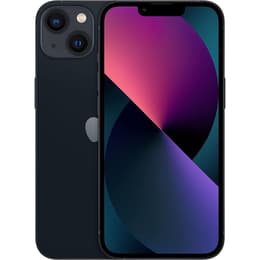
iPhone 13
iPhone 13
Starting at

Refurbished price:A$432.04

Versus A$1,099.00 new

See options
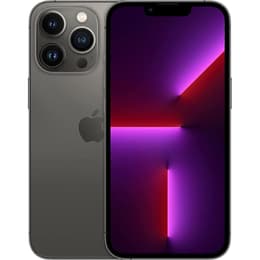
iPhone 13 Pro
iPhone 13 Pro
Starting at

Refurbished price:A$535.00

Versus A$1,539.00 new

See options

Ratings

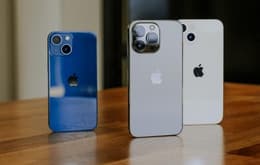
The iPhone 13 and iPhone 13 Pro, both released in September 2021, are smartphones from the same generation that share a similar design language and core operating system. While the standard iPhone 13 offers a robust experience for everyday users, the iPhone 13 Pro introduces several advanced features, particularly in its display technology, camera system, and overall performance capabilities, catering to users with more demanding needs. Both devices operate on Apple's iOS platform, ensuring a consistent software experience.

Scores

Durability

When considering the longevity of these devices, both the iPhone 13 and iPhone 13 Pro offer a comparable practical lifespan, primarily due to their shared release year and software support.

  • Release Timeline and OS Support: Both models were released on September 24, 2021, and shipped with iOS 15. They are compatible with current iOS versions and are expected to receive software updates for several years, typically 5-6 years from their release date. This means users can anticipate a similar duration of software support for both devices.
  • Durability Features: Both the iPhone 13 and iPhone 13 Pro feature a Ceramic Shield front cover, which provides enhanced drop performance, and an IP68 rating for water and dust resistance, allowing submersion in up to 6 meters of water for 30 minutes. The iPhone 13 uses an aerospace-grade aluminum frame, while the iPhone 13 Pro features a surgical-grade stainless steel frame, which can offer slightly more resistance to everyday bumps and drops.
  • Repairability: Initially, both models received a repairability score of 5 out of 10 from iFixit, partly due to complexities with Face ID functionality after screen replacements. However, an iOS 15.2 update later improved this, bringing their repairability score to 6 out of 10, aligning them with other recent iPhone models. Display and battery replacements are generally considered priorities in their design, though replacing the rear glass remains challenging.

Release year

2021

2021

Compatible with latest Update

Yes

Yes

Operating system

iOS

iOS

Foldable

No

No

Performance

Both the iPhone 13 and iPhone 13 Pro are powered by the same generation of processor, ensuring smooth operation for most tasks, but there are distinctions in their graphical capabilities and memory that influence performance for more intensive applications.

  • Processor Capabilities: Both devices utilize a powerful processor that handles demanding applications and multitasking smoothly. The iPhone 13 features a processor with a 4-core graphics processing unit, while the iPhone 13 Pro is equipped with a processor that includes a 5-core graphics processing unit. This additional core in the Pro model provides a noticeable advantage in graphics-intensive tasks, such as high-fidelity gaming and video editing.
  • Multitasking and Storage: The iPhone 13 comes with 4GB of RAM, suitable for typical daily use and app switching. The iPhone 13 Pro, however, includes 6GB of RAM, which allows for better multitasking and keeps more applications active in the background, benefiting users who frequently switch between demanding apps. Both models offer storage options of 128GB, 256GB, and 512GB, with the iPhone 13 Pro also providing a 1TB option for users requiring extensive storage.
  • Battery Behavior: While the iPhone 13 has a slightly larger battery capacity (3227 mAh) compared to the iPhone 13 Pro (3095 mAh), the Pro model often achieves longer battery life in video playback tests, rated for up to 22 hours compared to the iPhone 13's 19 hours. This is partly due to the ProMotion display's adaptive refresh rate, which can conserve power by lowering the refresh rate for static content. However, in some real-world usage scenarios involving mixed tasks, the difference in battery longevity can be less pronounced, with some users reporting similar or even slightly better performance from the standard iPhone 13.

Memory (GB)

4 GB

6 GB

Screen quality

Both the iPhone 13 and iPhone 13 Pro feature high-quality displays, but the Pro model introduces key enhancements that provide a smoother and brighter visual experience.

  • Display Technology and Clarity: Both devices are equipped with 6.1-inch Super Retina XDR OLED displays, offering excellent color accuracy and deep blacks. The resolution is identical, providing sharp and clear visuals for everyday viewing. The iPhone 13 Pro also supports 10-bit color depth, which allows for finer gradients and more subtle color variations compared to the iPhone 13's 8-bit color.
  • Brightness Levels: The iPhone 13 offers a typical maximum brightness of 800 nits, while the iPhone 13 Pro reaches a higher typical maximum brightness of 1000 nits. Both models can achieve a peak brightness of 1200 nits when displaying HDR content, ensuring vibrant and impactful visuals. The increased typical brightness on the Pro model makes it easier to view content clearly in bright outdoor conditions.
  • Refresh Rate and Smoothness: A significant differentiator is the refresh rate. The iPhone 13 features a standard 60Hz refresh rate. In contrast, the iPhone 13 Pro incorporates ProMotion technology, offering an adaptive refresh rate that can dynamically adjust from 10Hz to 120Hz. This results in noticeably smoother scrolling, more fluid animations, and a more responsive feel, particularly beneficial for gaming and fast-paced content.

Resolution

1170 x 2532

1170 x 2532

Screen type

Super Retina XDR OLED

Super Retina XDR OLED

Audiovisual

The camera systems are a primary area of distinction between the iPhone 13 and iPhone 13 Pro, with the Pro model offering a more versatile and advanced setup for photography and videography enthusiasts.

  • Camera System Configuration: The iPhone 13 features a dual-camera system on the rear, comprising a 12MP Wide camera and a 12MP Ultra Wide camera. The iPhone 13 Pro elevates this with a triple-camera system, adding a 12MP Telephoto lens to the Wide and Ultra Wide cameras.
  • Photography Performance and Features: Both models benefit from improved low-light performance compared to previous generations. However, the iPhone 13 Pro's Wide and Ultra Wide cameras feature larger sensors and wider apertures, allowing them to capture significantly more light, leading to superior low-light photography with reduced noise. The Pro model also includes a Telephoto lens, enabling 3x optical zoom in for distant subjects, a feature absent on the standard iPhone 13. Additionally, the iPhone 13 Pro introduces macro photography capabilities, allowing users to capture intricate details from as close as 2 centimeters, and integrates a LiDAR scanner for enhanced low-light portraits and faster autofocus.
  • Video Recording Quality: Both devices support Cinematic mode for video, which applies a shallow depth of field with automatic focus transitions. The iPhone 13 Pro further enhances video capabilities with support for ProRes video recording, a professional video format that offers higher color fidelity and less compression, though 4K ProRes recording requires models with 256GB storage or more.

Main camera

12 megapixels

12 megapixels

Front camera

12 megapixels

12 megapixels

Miscellaneous

Beyond core performance and display, several practical elements differentiate the iPhone 13 and iPhone 13 Pro, impacting daily handling and connectivity.

  • Connectivity and Ports: Both the iPhone 13 and iPhone 13 Pro support 5G cellular connectivity for faster network speeds, along with Wi-Fi 6 and Bluetooth 5.0 for robust wireless connections. Both devices continue to use the Lightning port for charging and data transfer.
  • Sensors and Biometrics: Both models rely on Face ID for secure facial recognition. The iPhone 13 Pro, however, includes an additional LiDAR scanner, which not only assists with camera features like low-light portraits and faster autofocus but also enhances augmented reality (AR) experiences by accurately mapping environments.
  • Physical Characteristics: The iPhone 13 weighs approximately 174 grams, while the iPhone 13 Pro is noticeably heavier at around 204 grams. This weight difference is primarily due to the iPhone 13 Pro's stainless steel frame and its more advanced camera module. Both models share similar overall dimensions for their 6.1-inch screen size, but the iPhone 13 Pro's camera bump is slightly more prominent. The iPhone 13 features an aerospace-grade aluminum frame, contributing to its lighter feel, while the iPhone 13 Pro uses a surgical-grade stainless steel frame, which offers a more substantial in-hand feel.

Weight

173 oz

203 oz

Screen size (in)

6.1

6,1

Network

5G

5G

SIM card

Physical SIM + eSIM

Physical SIM + eSIM

Carrier compatibility

Unlocked

Unlocked

Connector

Lightning

Lightning

User sentiment regarding the iPhone 13 and iPhone 13 Pro often highlights their respective strengths. The iPhone 13 is frequently praised for its comfortable weight, excellent everyday performance, and a highly capable camera system that meets the needs of most users. Its battery life is also often noted as being very good for a standard model. Conversely, the iPhone 13 Pro receives acclaim for its 120Hz ProMotion display, which offers a significantly smoother visual experience, and its highly versatile camera system, including a telephoto lens, macro capabilities, and ProRes video recording. Its extended battery life is also a frequently highlighted positive in some usage scenarios. Some users note its heavier weight compared to the standard model, and initial concerns about repairability were present, though later addressed by software updates.

For users prioritizing a lighter device, excellent everyday performance, and a capable camera system without needing advanced photographic tools like optical zoom or macro capabilities, the iPhone 13 remains a strong choice. Its performance is robust for daily tasks, and its display is vibrant. However, users who value a smoother display experience for scrolling and gaming, advanced camera features such as a telephoto lens, macro photography, and professional video recording options, along with a slightly more robust build, may find the iPhone 13 Pro better suited to their needs. The additional RAM in the Pro model also provides a subtle advantage for heavy multitasking. Both devices offer a quality experience, and choosing between them often comes down to specific feature priorities. For those considering a more sustainable choice, quality-assured refurbished options for both models are available, providing an eco-friendly alternative.