


Asus Zenfone 9 vs Google Pixel 7

Asus Zenfone 9
Asus Zenfone 9
See options
Google Pixel 7
Google Pixel 7
Starting at

Refurbished price:A$348.00

Versus A$879.00 new

See options

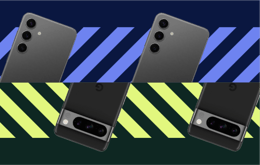
The Asus Zenfone 9 (2022) and the Google Pixel 7 (2022) are both Android smartphones released in the same year, offering distinct approaches to the premium smartphone experience. While the Zenfone 9 emphasizes a compact form factor and extended battery life, the Pixel 7 focuses on advanced computational photography and a streamlined software experience. Both devices run on the Android operating system, providing users with a wide range of customization and application options.

Scores

Durability

When considering the long-term usability of these devices, their release timelines and software support policies are key differentiators.

  • Release Timeline: The Asus Zenfone 9 was released in July 2022, while the Google Pixel 7 followed in October 2022. This means the Pixel 7 benefits from a slightly newer starting point for its software support cycle. [2, 4, 11, 12]
  • OS Support Duration: Google guarantees five years of OS and security updates for the Pixel 7, extending its support until October 2027. In contrast, Asus typically provides two major Android OS updates and three years of security updates for the Zenfone 9, which means its official software support concluded earlier. [17, 18, 21, 24, 35, 40, 41, 42]
  • Repairability: The Google Pixel 7 generally receives a repairability score around 6 to 6.5 out of 10, with screen replacements being relatively straightforward, though battery removal can be complex due to strong adhesive. The Asus Zenfone 9 has a lower repairability score, often around 4.5 out of 10, with screen repairs noted as particularly challenging. [6, 10, 15, 20, 23, 25]

Release year

2022

2022

Compatible with latest Update

Yes

Yes

Foldable

No

No

Performance

Both smartphones deliver robust performance for daily tasks, though they achieve this through different internal architectures.

  • Processor Capabilities: The Asus Zenfone 9 is equipped with a processor known for its efficiency and strong performance in demanding applications and gaming. The Google Pixel 7 features a proprietary processor designed to optimize artificial intelligence and machine learning tasks, contributing to its camera capabilities and overall system responsiveness. [2, 4, 11, 13]
  • Multitasking and Storage: The Zenfone 9 offers various RAM configurations, including options for higher capacities, which can benefit users who frequently switch between many applications. Both devices come with standard storage options, providing ample space for apps and media. [4, 11, 14, 19]
  • Battery Behavior: The Zenfone 9, despite its compact size, is frequently praised for its extended battery life, often lasting through a full day of heavy use. The Pixel 7 also offers reliable battery performance, typically providing a full day of usage for most users. [19, 26, 29, 32, 33, 34]

Memory (GB)

6 GB

8 GB

Screen quality

The visual experience on both devices is characterized by vibrant displays, though with some distinctions in size and refresh rate.

  • Display Technology and Size: The Asus Zenfone 9 features a 5.9-inch Super AMOLED display, offering deep blacks and vibrant colors in a compact form factor. The Google Pixel 7 has a slightly larger 6.3-inch AMOLED display, providing a more expansive viewing area. Both displays utilize OLED technology for rich contrast. [2, 4, 9, 11, 14, 19]
  • Resolution and Clarity: Both phones offer a 1080x2400 pixel resolution, resulting in sharp and clear visuals for everyday viewing, web browsing, and media consumption. [2, 4, 9, 19]
  • Refresh Rate and Brightness: The Zenfone 9 boasts a 120Hz refresh rate, contributing to smoother scrolling and a more fluid user interface experience, with a peak brightness of 1100 nits. The Pixel 7 features a 90Hz refresh rate, which still provides a smooth experience, and also offers good brightness levels for outdoor visibility. [9, 14, 19]

Resolution

1080 x 2400

1080 x 2400

Screen type

Super AMOLED

AMOLED

Audiovisual

Both smartphones offer capable camera systems, but they excel in different aspects of photography and videography.

  • Main Camera Performance: Both the Zenfone 9 and Pixel 7 feature a 50-megapixel main camera. The Pixel 7 is widely recognized for its advanced computational photography, producing images with excellent detail, accurate colors, and strong low-light performance. The Zenfone 9's main camera includes gimbal optical image stabilization, which aids in capturing stable photos and videos, though its image processing can sometimes lead to less consistent results compared to the Pixel. [11, 19, 27, 28, 29, 30, 37]
  • Ultra-wide and Front Cameras: Both devices include a 12-megapixel ultra-wide camera. The Pixel 7's ultra-wide lens is noted for good image quality with minimal distortion. The Zenfone 9 also has a capable ultra-wide and a 12-megapixel front camera with autofocus, while the Pixel 7 features a 10.8-megapixel front camera that performs well in various lighting conditions. Neither phone includes a dedicated telephoto lens. [11, 19, 28, 30, 37]
  • Video Recording: The Zenfone 9 offers impressive video capabilities, including recording up to 8K resolution at 24 frames per second and 4K at 120 frames per second, benefiting from its gimbal stabilization. The Pixel 7 records video up to 4K at 60 frames per second, with strong stabilization and good overall quality. [11, 13, 19, 29, 33, 37]

Main camera

50 megapixels

50 megapixels

Front camera

12 megapixels

10.8 megapixels

Miscellaneous

Beyond core features, several practical elements distinguish these two devices in terms of connectivity, design, and user interaction.

  • Connectivity and Ports: Both phones support 5G connectivity and modern Wi-Fi standards. The Asus Zenfone 9 retains a 3.5mm headphone jack, a feature absent on the Google Pixel 7. Both utilize a USB-C port for charging and data transfer. [11, 12, 14, 30]
  • Biometric Security: The Zenfone 9 features a side-mounted fingerprint sensor integrated into the power button, which some users find fast and convenient. The Pixel 7 uses an under-display optical fingerprint scanner and also offers face unlock functionality. [11, 12, 14, 16, 31, 33]
  • Design and Handling: The Zenfone 9 is notably more compact and lighter, weighing 169g with dimensions of 146.5 x 68.1 x 9.1 mm, making it well-suited for one-handed use. The Pixel 7 is slightly larger and heavier at 197g and 155.6 x 73.2 x 8.7 mm. Both devices feature an IP68 rating for dust and water resistance, and Gorilla Glass Victus for display protection. [4, 11, 12, 14, 19, 32, 33]

Weight

169 oz

212 oz

Screen size (in)

5.9

6.3

SIM card

Dual Physical SIM

Physical SIM + eSIM

Carrier compatibility

Unlocked

Unlocked

User feedback for the Asus Zenfone 9 frequently highlights its compact size, which is a significant draw for those seeking a smaller, more manageable device. Its exceptional battery life for its form factor and the inclusion of a headphone jack are also common praise points. Some criticisms revolve around its software update policy, which offers fewer major Android versions compared to competitors, and occasional inconsistencies in camera processing. [16, 29, 32, 34, 38, 40, 41, 42]

The Google Pixel 7 is widely lauded for its outstanding camera capabilities, particularly its computational photography features that deliver impressive results in various conditions, including low light. Users also appreciate its clean Android experience and longer software support. Common concerns include its battery life, which, while good, may not be class-leading for heavy users, and the absence of a telephoto lens. [16, 26, 27, 28, 30, 31]

Users prioritizing a highly compact device with excellent battery longevity and a traditional headphone jack may find the Asus Zenfone 9 well-suited to their needs. Conversely, those who place a premium on advanced camera performance, a longer software support window, and a pure Android experience will likely lean towards the Google Pixel 7. Both devices offer a quality-assured refurbished option, providing an eco-friendly alternative for consumers.

See all articles

Our recent comparisons