
Compare models

Galaxy A34 vs Galaxy Z Fold6

  • 1-year warranty
  • Free standard shipping
  • Free 30-day returns
Galaxy A34
Starting at

Refurbished price:A$214.00

Versus A$476.00 new

See options
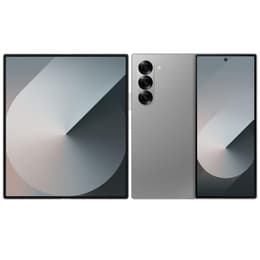
Galaxy Z Fold6
Starting at

Refurbished price:A$932.00

Versus A$2,740.06 new

See options

Differences at a glance

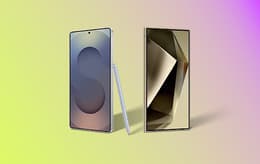
The Samsung Galaxy A34 (2023) and Samsung Galaxy Z Fold6 (2024) represent two entirely different approaches to modern smartphone engineering. While the Galaxy A34 provides a conventional slate design focused on reliable everyday utility, the Galaxy Z Fold6 introduces an innovative folding form factor with a tablet-sized inner screen. Both run on the Android operating system with Samsung's custom interface, but they cater to vastly different device preferences and hardware expectations.

Available Models

Colour

Storage

Scores

Durability

These devices differ significantly in their launch timelines, software support longevity, and structural design complexities that influence their overall physical lifespans.

  • Release timeline and software support: The Galaxy Z Fold6 benefits from an extended software support window spanning multiple years of major updates, whereas the Galaxy A34 launched a year earlier and operates on a shorter total update schedule.
  • Build and structural complexity: The Galaxy A34 features a traditional monolithic slate body with solid dust and water resistance, while the Galaxy Z Fold6 utilizes a complex folding hinge mechanism and specialized folding display layers requiring careful physical handling.
  • Expected practical lifespan: Both models maintain strong daily utility during their active support windows, though traditional slate designs generally present fewer mechanical wear points over years of continuous usage.

Release year

2023

2024

Compatible with latest Update

Yes

Yes

Operating system

Android

Android

Foldable

No

Yes

Performance

System responsiveness, multitasking capabilities, and energy management vary notably due to the distinct hardware tiers of each device.

  • Processor capabilities and multitasking: The Galaxy Z Fold6 handles demanding productivity applications, intensive gaming, and split-screen multitasking with exceptional fluidity, whereas the Galaxy A34 manages standard daily tasks, web browsing, and casual apps smoothly with its mid-range processing configuration.
  • Storage configurations: The Galaxy Z Fold6 offers high-capacity storage tiers starting at larger baselines without expandable memory, while the Galaxy A34 provides moderate internal storage paired with a microSD card slot for physical media expansion.
  • Battery behavior: The Galaxy A34 features a slightly larger physical battery capacity combined with efficient mid-range components to comfortably sustain a full day of mixed use, while the Galaxy Z Fold6 powers two separate displays, meaning heavy utilization of the large inner screen requires more frequent charging.

Screen quality

Display architecture is one of the most prominent points of divergence between these two smartphones, shaping how media and documents are consumed.

  • Display technology and form factor: The Galaxy A34 features a single, flat 6.6-inch Super AMOLED display, whereas the Galaxy Z Fold6 deploys a dual-screen setup with a 6.3-inch outer cover screen and an expansive 7.6-inch folding main display.
  • Brightness and outdoor visibility: Both models achieve high peak brightness levels to ensure clear visibility under bright sunlight, though the flagship folding panels on the Z Fold6 reach higher maximum luminance thresholds.
  • Refresh rate and smoothness: Both devices support a smooth 120Hz refresh rate across their primary screens, ensuring fluid scrolling through web pages, feeds, and user interface animations.

Resolution

1080 x 2340

1856x2160

Screen type

Super AMOLED

Foldable Dynamic LTPO AMOLED 2X

Audiovisual

Optics and media playback hardware reflect the different market segments and engineering priorities of each smartphone model.

  • Camera system versatility: The Galaxy Z Fold6 incorporates a versatile triple-camera array including a dedicated telephoto lens for optical zoom, while the Galaxy A34 utilizes a simpler triple setup focused on a main sensor and an ultra-wide lens without optical zoom hardware.
  • Video and low-light performance: The Galaxy Z Fold6 supports higher-resolution video recording modes and advanced low-light image processing, whereas the Galaxy A34 delivers dependable everyday snapshots and standard definition video suitable for casual sharing.
  • Audio output: Both devices are equipped with stereo speakers that provide clear sound separation for media consumption, hands-free calls, and video playback.

Main camera

48 megapixels

50 megapixels

Front camera

13 megapixels

4 megapixels

Miscellaneous

Physical dimensions, connectivity standards, and daily handling characteristics establish distinct user experiences for each model.

  • Dimensions and weight: The Galaxy A34 presents a standard slim profile with a balanced weight distribution, while the Galaxy Z Fold6 is heavier and thicker when folded due to its dual-screen folding assembly, though it unfolds into a much wider tablet footprint.
  • Connectivity options: Both smartphones offer 5G network compatibility, modern Wi-Fi standards, and Bluetooth support for wireless accessories.
  • Biometrics and ports: Each device utilizes a USB Type-C port for charging and data transfer, alongside secure authentication features combining facial recognition and fingerprint sensors.

Weight

199 oz

239 oz

Screen size (in)

6,6

7.6

Network

5G

5G

SIM card

Physical SIM

Physical SIM + eSIM

Carrier compatibility

Unlocked

Unlocked

What the community thinks

User feedback highlights distinct preferences for each smartphone. Owners of the Galaxy A34 frequently praise its reliable battery longevity, bright display, and dependable daily performance for standard communication tasks. Conversely, users of the Galaxy Z Fold6 often emphasize the productivity benefits of the large inner screen and the convenience of multitasking across multiple open windows, though some note the heavier folded weight and visible screen crease as trade-offs. Choosing between these devices depends entirely on individual workflow priorities.

Users who prioritize traditional ergonomics, expandable storage, and straightforward everyday reliability will find the Galaxy A34 well-suited to their needs. Meanwhile, users who require a versatile multi-window workspace, an expansive tablet-sized screen, and advanced processing power will lean toward the Galaxy Z Fold6. For those exploring sustainable purchasing routes, choosing a quality-assured refurbished option provides an eco-friendly alternative that minimizes electronic waste while delivering fully tested hardware.