Motorola Razr 40 Ultra vs Nokia X30

Motorola Razr 40 Ultra
See options
Nokia X30
Nokia X30
Starting at

Refurbished price:A$298.00

Versus A$965.00 new

See options

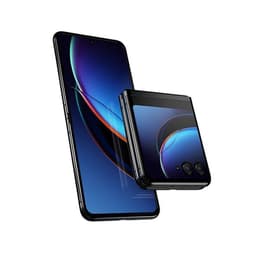
The Motorola Razr 40 Ultra, released in June 2023, is a modern foldable smartphone that emphasizes a compact form factor and a highly functional external display. In contrast, the Nokia X30, launched in September 2022, is a traditional slab smartphone that highlights durability and a commitment to sustainable design. Both devices operate on the Android platform, but they cater to different user preferences through their distinct designs and performance tiers.

Scores

Durability

When considering the longevity of these devices, several factors come into play, including their release timelines, software support, and physical construction.

  • Release Timeline: The Motorola Razr 40 Ultra was released in June 2023, making it a newer device compared to the Nokia X30, which launched in September 2022. This difference in release date typically translates to a longer period of software support for the newer model.
  • Software Support: Motorola generally provides 3 major OS updates and 4 years of security updates for the Razr 40 Ultra. Nokia, known for its software commitment, promises 3 OS updates and 3 years of security updates for the X30. This means both devices offer a solid commitment to keeping their software current and secure for several years.
  • Physical Durability: The Razr 40 Ultra features a robust build with Gorilla Glass Victus on its cover screen, an aluminum frame, and a teardrop hinge designed for a gapless closure, contributing to its overall resilience. It also carries an IP52 rating for splash resistance. The Nokia X30 is built with a recycled aluminum frame and a recycled plastic back, emphasizing its eco-friendly design, and its display is protected by Gorilla Glass Victus. It boasts a higher IP67 rating for dust and water resistance, offering more protection against environmental elements.

Release year

2023

2022

Compatible with latest Update

Yes

No

Operating system

Android

Android

Foldable

Yes

No

Performance

The performance of a smartphone is largely determined by its internal components, impacting everything from app responsiveness to gaming capabilities and battery endurance.

  • Processing Power: The Motorola Razr 40 Ultra is equipped with a high-end processor, enabling it to handle demanding applications, intensive multitasking, and graphic-heavy games with notable smoothness. The Nokia X30 features a mid-range processor, which provides a responsive experience for everyday tasks and general use, though it may show some limitations when running a large number of applications simultaneously or very complex processes.
  • Memory and Storage: The Razr 40 Ultra offers configurations with 8GB or 12GB of RAM and 256GB or 512GB of internal storage, utilizing UFS 3.1 technology for faster data access. The Nokia X30 comes with 6GB or 8GB of RAM and 128GB or 256GB of storage, with UFS 2.2 or UFS 3.0 depending on the variant.
  • Battery and Charging: The Razr 40 Ultra houses a 3800 mAh battery, supporting 30W wired fast charging and 5W wireless charging. The Nokia X30 has a larger 4200 mAh battery and supports 33W wired fast charging, but it does not offer wireless charging capabilities.

Memory (GB)

8 GB

8 GB

Screen quality

The display is a primary interface for any smartphone, and both devices offer distinct visual experiences tailored to their form factors.

  • Main Display Technology: The Motorola Razr 40 Ultra features a 6.9-inch Foldable LTPO AMOLED main display with a resolution of 1080x2640 pixels and a high 165Hz refresh rate, providing vibrant colors and exceptionally smooth scrolling. The Nokia X30 comes with a 6.43-inch AMOLED display, offering a resolution of 1080x2400 pixels and a 90Hz refresh rate, which ensures a responsive and clear viewing experience for everyday use.
  • Brightness and Clarity: The Razr 40 Ultra's main display can reach a peak brightness of 1400 nits, making it highly visible even in bright outdoor conditions. Its cover display also offers up to 1100 nits peak brightness. The Nokia X30's display has a peak brightness of 700 nits, which is sufficient for most indoor and outdoor environments.
  • External Display Functionality: A key differentiator for the Razr 40 Ultra is its large 3.6-inch AMOLED cover display with a 144Hz refresh rate, protected by Gorilla Glass Victus. This external screen is highly functional, allowing users to interact with apps, notifications, and widgets without opening the phone. The Nokia X30, being a traditional smartphone, does not feature an external display.

Resolution

1080 x 2640

1080 x 2400

Screen type

Foldable LTPO AMOLED

AMOLED

Audiovisual

Camera capabilities are a significant consideration for many users, and both smartphones offer different approaches to photography and video recording.

  • Rear Camera Systems: The Motorola Razr 40 Ultra is equipped with a dual-camera setup on the rear, featuring a 12 MP main sensor with optical image stabilization (OIS) and a bright f/1.5 aperture, alongside a 13 MP ultra-wide sensor with autofocus. The Nokia X30 also has a dual rear camera system, comprising a 50 MP main sensor with OIS and an f/1.9 aperture, paired with a 13 MP ultra-wide sensor.
  • Front Camera and Video: For selfies, the Razr 40 Ultra has a 32 MP front camera, which typically outputs 8 MP images. It supports 4K video recording at 30 or 60 frames per second. The Nokia X30 features a 16 MP front camera and records Full HD video at 30 or 60 frames per second.
  • Audio Experience: The Razr 40 Ultra includes stereo speakers with Dolby Atmos support, providing a rich audio experience for media consumption. The Nokia X30 does not feature a 3.5mm headphone jack, relying on USB-C audio or wireless solutions.

Main camera

12 megapixels

50 megapixels

Front camera

32 megapixels

16 megapixels

Miscellaneous

Beyond core features, several practical elements contribute to the overall user experience and daily usability of a smartphone.

  • Connectivity: The Motorola Razr 40 Ultra supports 5G connectivity, Wi-Fi 6E, and Bluetooth 5.3, offering advanced and fast wireless connections. The Nokia X30 also provides 5G capabilities, along with Wi-Fi 6 and Bluetooth 5.1.
  • Ports and Biometrics: Both devices feature a USB-C port for charging and data transfer. The Razr 40 Ultra incorporates a side-mounted fingerprint sensor for secure unlocking. The Nokia X30 utilizes an in-display optical fingerprint sensor. Neither phone includes a 3.5mm headphone jack.
  • Design and Handling: The Razr 40 Ultra, when unfolded, measures approximately 170.83 x 73.95 x 7.35 mm and weighs around 188 grams. Its foldable design allows for a more compact footprint when closed. The Nokia X30 has dimensions of 158.9 x 73.9 x 8 mm and weighs 185 grams, offering a more traditional smartphone feel. The Razr 40 Ultra uses glass, aluminum, and vegan leather/plastic in its construction, while the Nokia X30 emphasizes recycled materials in its aluminum frame and plastic back.

Weight

1 oz

185 oz

Screen size (in)

6.9

6.43

Network

5G

5G

SIM card

Dual Physical SIM

Dual Physical SIM

Carrier compatibility

Unlocked

Unlocked

The Motorola Razr 40 Ultra and Nokia X30 offer distinct propositions in the smartphone market, each with its own set of strengths and considerations based on user feedback and specifications.

The Motorola Razr 40 Ultra is frequently praised for its innovative foldable design, particularly its large and highly functional external display, which users find convenient for quick interactions without needing to open the phone. Its powerful processor ensures smooth performance for demanding applications and gaming, making it a strong contender for users who prioritize speed and responsiveness. However, some users note that while its camera performance is good, it may not always match the top-tier results seen in some other flagship devices, and its battery capacity, while improved for a foldable, might require more frequent charging for very heavy users.

Conversely, the Nokia X30 garners appreciation for its robust build quality and its strong emphasis on sustainability, utilizing recycled materials in its construction. Users value Nokia's commitment to software updates, ensuring a consistent and secure experience over time. Criticisms sometimes point to its mid-range performance, which, while adequate for daily tasks, might not satisfy users seeking the fastest possible experience for intensive applications or gaming. Its camera, while capable, may also be seen as less advanced compared to higher-end competitors.

Users prioritizing a unique, compact form factor with a highly interactive external display and strong performance for demanding tasks may find the Motorola Razr 40 Ultra well-suited to their needs. On the other hand, individuals who value environmental responsibility, a durable traditional smartphone design, and a consistent software experience for everyday use might lean towards the Nokia X30. Both devices, especially when considered as quality-assured refurbished options, present eco-friendly alternatives for making informed purchasing decisions.

See all articles

Our recent comparisons