
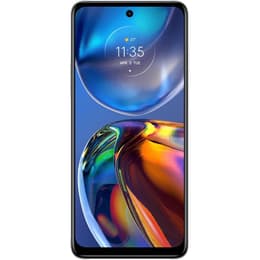

Asus Zenfone 9 vs Motorola Moto E32

Asus Zenfone 9
Asus Zenfone 9
See options
Motorola Moto E32
Motorola Moto E32
See options

The Asus Zenfone 9 and the Motorola Moto E32, both released in 2022, represent distinct approaches to smartphone design and functionality. The Zenfone 9 is positioned as a compact device offering high-end performance, while the Moto E32 focuses on delivering essential smartphone features in a larger form factor. Both devices operate on the Android platform, but they cater to different user priorities through their hardware and software implementations.

Scores

Durability

When considering the long-term usability of these devices, several factors come into play, including their release timelines, software support, and physical construction.

  • Release Timeline: Both the Asus Zenfone 9 and the Motorola Moto E32 were released in 2022. The Zenfone 9 launched in July 2022, while the Moto E32 saw a staggered release, appearing in some regions as early as May 2022 and in others, like India, in October 2022. This means both devices have been on the market for a similar duration.
  • Software Longevity: The Asus Zenfone 9 launched with Android 12 and typically receives two major OS updates and four years of security updates, extending its software support further into the future. The Motorola Moto E32, depending on the region, launched with Android 11 or Android 12. Motorola's update policy for its E-series devices generally includes one major OS update and two years of security updates, suggesting a shorter period of official software support compared to the Zenfone 9.
  • Physical Durability: The Zenfone 9 features a glass front with Gorilla Glass Victus protection, a plastic back, and an aluminum frame, along with an IP68 rating for dust and water resistance. This construction offers a higher degree of protection against environmental elements. The Moto E32, on the other hand, is constructed with a glass front, plastic frame, and plastic back, and carries an IP52 rating, indicating splash resistance.

Release year

2022

2022

Compatible with latest Update

Yes

No

Operating system

Android

Android

Foldable

No

No

Performance

The performance capabilities of these two smartphones differ significantly, impacting how smoothly they handle various applications and tasks.

  • Processing Power: The Asus Zenfone 9 is equipped with a high-performance processor, enabling it to manage demanding applications and multitasking with ease. This results in a responsive user experience, even during intensive gaming or video editing. The Motorola Moto E32 features an entry-level processor, which is suitable for everyday tasks like browsing, social media, and light applications. Users may experience slower app loading times and occasional stutters when running more resource-intensive programs or engaging in heavy multitasking.
  • Memory and Storage: The Zenfone 9 offers configurations with 8GB or 16GB of RAM and 128GB or 256GB of internal storage, providing ample space for applications and media, and supporting smooth multitasking. The Moto E32 typically comes with 4GB of RAM and 64GB of internal storage, which can be expanded via a microSD card. While the expandable storage is a benefit, the lower RAM capacity may lead to more frequent app reloads when switching between multiple applications.
  • Battery Behavior: The Asus Zenfone 9 features a 4300 mAh battery, which, combined with its efficient components and smaller display, generally provides a full day of use for many users. The Moto E32 houses a larger 5000 mAh battery, and with its less demanding hardware, it can often last for more than a day on a single charge, particularly with moderate usage.

Memory (GB)

6 GB

4 GB

Screen quality

The visual experience on these two devices is shaped by their distinct display technologies and specifications.

  • Display Technology and Clarity: The Asus Zenfone 9 features a 5.9-inch Super AMOLED display with a resolution of 2400 x 1080 pixels, resulting in sharp images and vibrant colors with deep blacks. The Motorola Moto E32 comes with a larger 6.5-inch IPS LCD screen, offering a resolution of 1600 x 720 pixels. This difference in resolution and display type means the Zenfone 9 provides a more detailed and visually rich viewing experience.
  • Refresh Rate and Smoothness: The Zenfone 9 boasts an adaptive 120Hz refresh rate, contributing to smoother scrolling and more fluid animations. The Moto E32 offers a 90Hz refresh rate, which is an improvement over standard 60Hz displays and provides a noticeably smoother experience for everyday interactions.
  • Brightness and Outdoor Visibility: The Zenfone 9's AMOLED panel can achieve higher peak brightness levels, enhancing visibility in bright outdoor conditions. The Moto E32's IPS LCD display, while generally bright enough for indoor use, may struggle more under direct sunlight.

Resolution

1080 x 2400

720 x 1600

Screen type

Super AMOLED

IPS LCD

Audiovisual

The camera systems on the Asus Zenfone 9 and Motorola Moto E32 are designed for different levels of photographic capability.

  • Rear Camera System: The Asus Zenfone 9 features a dual-camera setup with a 50MP main sensor that includes a 6-axis hybrid gimbal stabilization system, and a 12MP ultrawide camera. This advanced stabilization helps in capturing steady photos and videos, especially in challenging conditions. The Moto E32 typically includes a triple-camera array, often with a 16MP or 50MP main sensor (depending on the region), a 2MP macro camera, and a 2MP depth sensor. The Zenfone 9's main camera generally produces more detailed images with better low-light performance due to its larger sensor and stabilization.
  • Video Recording Capabilities: The Zenfone 9 is capable of recording video at up to 8K resolution at 24 frames per second, or 4K at up to 120 frames per second, with the benefit of its gimbal stabilization for smooth footage. The Moto E32 records video at 1080p resolution at 30 frames per second.
  • Front Camera: For selfies and video calls, the Zenfone 9 has a 12MP front camera with autofocus. The Moto E32 features an 8MP front camera.

Main camera

50 megapixels

16 megapixels

Front camera

12 megapixels

8 megapixels

Miscellaneous

Beyond the core specifications, several practical elements contribute to the overall user experience of these devices.

  • Connectivity and Ports: The Asus Zenfone 9 supports 5G connectivity, Wi-Fi 6E, and Bluetooth 5.2, offering faster wireless speeds and more reliable connections. It includes a USB-C port and a 3.5mm headphone jack. The Motorola Moto E32 supports 4G LTE, Wi-Fi 5, and Bluetooth 5.0. It also features a USB-C port and a 3.5mm headphone jack.
  • Biometric Security: Both devices offer side-mounted fingerprint sensors for secure unlocking. They also support face recognition for an alternative unlocking method.
  • Design and Handling: The Zenfone 9 is notable for its compact size and lighter weight (169 grams), making it suitable for one-handed use. It features a unique textured plastic back and an aluminum frame. The Moto E32 is a larger device, weighing 184 grams, with a plastic build.

Weight

169 oz

184 oz

Screen size (in)

5.9

6,5

Network

5G

4G

SIM card

Dual Physical SIM

Dual Physical SIM

Carrier compatibility

Unlocked

Unlocked

Connector

USB-C + Jack 3.5mm

USB-C + Jack 3.5mm

User feedback for the Asus Zenfone 9 often highlights its appeal as a compact, high-performance Android device. Many users appreciate its powerful internal components, smooth display, and the inclusion of a 3.5mm headphone jack, a feature becoming less common in modern smartphones. The gimbal-stabilized main camera is also frequently praised for its ability to capture steady photos and videos. Some common criticisms include its average battery life for a flagship, despite its efficient components, and the absence of wireless charging. The design, particularly the prominent camera modules, has been noted as an acquired taste.

For the Motorola Moto E32, users generally commend its long battery life, which can often extend beyond a single day of use. The 90Hz display is also a positive point, offering a smoother visual experience than many devices in its category. However, frequent criticisms revolve around its entry-level performance, which can lead to slower app loading and occasional lag, especially with demanding applications. The camera performance is often described as ordinary, and the limited software update policy is a concern for some users.

Users prioritizing a compact form factor with top-tier performance, a high-quality display, and advanced camera stabilization will find the Asus Zenfone 9 well-suited to their needs. It is ideal for those who engage in mobile gaming, intensive multitasking, or high-resolution content creation. Conversely, users seeking a device for essential daily tasks, extended battery life, and a larger screen for media consumption, without the need for high-end processing power, may prefer the Motorola Moto E32. Both devices offer a quality-assured refurbished option, providing a sustainable choice for consumers.


See all articles

Our recent comparisons