Galaxy S25+ vs iPhone 15 Plus

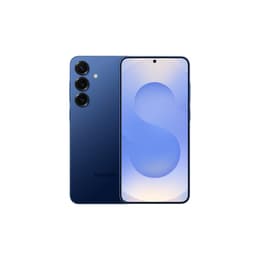
Galaxy S25+
Galaxy S25+
Starting at

Refurbished price:A$922.00

Versus A$1,699.00 new

See options
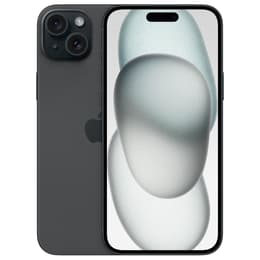
iPhone 15 Plus
iPhone 15 Plus
Starting at

Refurbished price:A$719.00

Versus A$1,399.00 new

See options

The Samsung Galaxy S25 Plus, released in February 2025, and the Apple iPhone 15 Plus, launched in September 2023, are both large-screen smartphones offering distinct experiences within their respective ecosystems. While the Galaxy S25 Plus runs on Android 15 with Samsung's One UI, the iPhone 15 Plus operates on iOS. Key differentiators include their display refresh rates, camera systems, and software support timelines.

Scores

Durability

When considering the long-term usability of these devices, their release timelines and software support policies are important factors. The Galaxy S25 Plus, being a newer device, benefits from a more extended support period from its launch date.

  • Release Timeline: The iPhone 15 Plus was released in September 2023, while the Galaxy S25 Plus followed in February 2025, making the Samsung device approximately 17 months newer. This difference in launch dates directly impacts their expected software longevity.
  • OS Support: Samsung has committed to seven years of OS and security updates for the Galaxy S25 Plus, providing a long support window. The iPhone 15 Plus is expected to receive iOS updates for approximately 6 to 7 years from its release, offering substantial software longevity as well.
  • Build Durability: Both devices feature robust construction. The iPhone 15 Plus incorporates a Ceramic Shield front and an aluminium design with a colour-infused glass back, contributing to its durability. The Galaxy S25 Plus uses Gorilla Glass Victus 2 on both the front and back, paired with an aluminium body, offering strong protection against everyday wear. Both are rated IP68 for water and dust resistance, capable of submersion up to 6 metres for 30 minutes.

Performance

Performance is a critical aspect for users, influencing how smoothly applications run and how efficiently the device handles demanding tasks. Both the Galaxy S25 Plus and iPhone 15 Plus offer capable hardware designed for a responsive user experience.

  • Processing Power: The Galaxy S25 Plus is equipped with a current-generation processor, which provides a significant boost in CPU, GPU, and neural processing unit (NPU) performance compared to its predecessors, ensuring smooth operation for complex applications and AI features. The iPhone 15 Plus features a powerful chip that delivers efficient performance, allowing it to handle heavy usage, including gaming and video editing, throughout a full day.
  • Multitasking and Responsiveness: With 12GB of RAM, the Galaxy S25 Plus is well-suited for extensive multitasking and running numerous applications simultaneously without slowdowns. The iPhone 15 Plus comes with 6GB of RAM, which, combined with iOS optimisation, provides a fluid experience for daily tasks and app switching.
  • Storage Options: The iPhone 15 Plus is available with 128GB, 256GB, or 512GB of internal storage. The Galaxy S25 Plus typically offers 256GB or 512GB storage options, with some regions potentially having a 128GB variant.

Memory (GB)

12 GB

6 GB

Screen quality

The display is the primary interface for user interaction, and both devices offer large, vibrant screens, though with some key differences in technology and capabilities.

  • Display Technology and Resolution: The Galaxy S25 Plus features a 6.7-inch Dynamic LTPO AMOLED 2X display with a QHD+ resolution of 3120x1440 pixels, resulting in a high pixel density of approximately 513 PPI. The iPhone 15 Plus also has a 6.7-inch Super Retina XDR OLED display, offering a resolution of 2796x1290 pixels at about 460 PPI.
  • Refresh Rate and Brightness: A notable difference is the refresh rate; the Galaxy S25 Plus boasts a 120 Hz adaptive refresh rate, providing smoother scrolling and more fluid animations. The iPhone 15 Plus maintains a 60 Hz refresh rate. Both displays offer high brightness levels for outdoor visibility, with the Galaxy S25 Plus reaching up to 2600 nits peak brightness and the iPhone 15 Plus up to 2000 nits peak outdoor brightness.
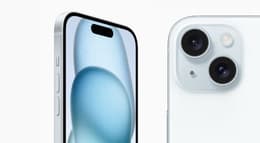
  • Special Features: The iPhone 15 Plus includes the Dynamic Island, which integrates alerts and background activities into a dynamic notification area. The Galaxy S25 Plus features an ultrasonic in-screen fingerprint sensor for biometric authentication.

Audiovisual

Both smartphones are equipped with advanced camera systems designed to capture high-quality photos and videos in various conditions, catering to different photographic needs.

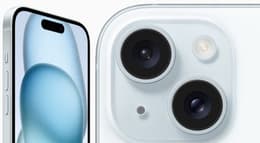
  • Rear Camera System: The Galaxy S25 Plus features a versatile triple-camera setup, including a 50 MP main wide-angle lens with optical image stabilisation (OIS), a 12 MP ultra-wide lens, and a 10 MP telephoto lens offering 3x optical zoom. The iPhone 15 Plus has a dual-camera system, comprising a 48 MP main camera with sensor-shift OIS and a 12 MP ultra-wide camera. It also offers a 2x optical zoom capability through its quad-pixel main sensor.
  • Photography Features: Both devices excel in computational photography. The Galaxy S25 Plus benefits from Samsung's Pro Visual Engine, enhancing object recognition and colour reproduction, and improving low-light performance. The iPhone 15 Plus includes features like Photonic Engine, Deep Fusion, Smart HDR 5, and an advanced Night mode for detailed and vibrant images, even in challenging lighting.
  • Video Capabilities: The Galaxy S25 Plus supports 8K video recording. The iPhone 15 Plus offers 4K video recording with Cinematic mode and Action mode for stable footage. Both provide quality microphone performance for calls and video recording.

Miscellaneous

Beyond core specifications, several practical elements contribute to the overall user experience, from connectivity to physical design and security features.

  • Connectivity and Ports: Both devices support 5G connectivity for fast mobile data. The iPhone 15 Plus has transitioned to a USB-C port, aligning with modern standards. The Galaxy S25 Plus also uses a USB-C port, which is standard for Android flagships. Both support current Wi-Fi and Bluetooth standards for wireless connections.
  • Biometric Security: The iPhone 15 Plus relies on Face ID for secure facial recognition. The Galaxy S25 Plus incorporates an ultrasonic in-screen fingerprint sensor for convenient and secure unlocking.
  • Design and Handling: The iPhone 15 Plus measures 160.9 x 77.8 x 7.8 mm and weighs 201 grams. The Galaxy S25 Plus is slightly more compact and lighter at 158.4 x 75.8 x 7.3 mm and 190 grams, potentially offering a more comfortable grip for some users. Both devices feature premium build materials, with aluminium frames and glass backs.

Screen size (in)

6.7

6.7

Network

5G

5G

SIM card

Physical SIM + eSIM

Physical SIM + eSIM

Carrier compatibility

Unlocked

Unlocked

The Samsung Galaxy S25 Plus and iPhone 15 Plus cater to users seeking a large-screen smartphone experience, each with its unique strengths. User feedback for the iPhone 15 Plus often highlights its exceptional battery life, with many reporting it can comfortably last a full day, and for some, even two days on a single charge. Its camera system, particularly the 48MP main sensor and features like Dynamic Island, also receive praise. However, a common point of discussion is its 60Hz display, which some users find less fluid compared to higher refresh rate screens on competing devices.

The Galaxy S25 Plus is frequently lauded for its vibrant 120Hz QHD+ display, offering a smoother visual experience and higher resolution. Its powerful processor and 12GB of RAM are noted for delivering excellent performance and multitasking capabilities. The commitment to seven years of software updates is also a significant advantage for long-term users. Some user reviews suggest the camera, while capable, might not represent a substantial leap from its predecessor, and the lack of the anti-reflective coating found on the Ultra model is sometimes mentioned.

Users who prioritise a consistently smooth display experience, extensive customisation options within the Android ecosystem, and a longer software support window may find the Galaxy S25 Plus well-suited to their needs. Conversely, those who value industry-leading battery longevity, the intuitive iOS ecosystem, and a robust camera system with advanced computational photography features might lean towards the iPhone 15 Plus. Both devices represent quality-assured options, and considering a refurbished model can be an eco-friendly alternative for consumers looking to make a sustainable choice.