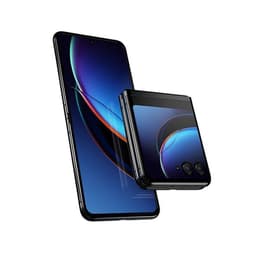

Motorola Moto G53 vs Motorola Razr 40 Ultra

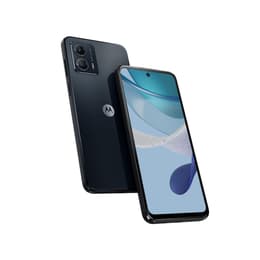
Motorola Moto G53
Motorola Moto G53
Starting at

Refurbished price:A$203.77

Versus A$975.00 new

See options
Motorola Razr 40 Ultra
See options

The Motorola Moto G53 (released December 2022) and the Motorola Razr 40 Ultra (released June 2023) represent distinct approaches within the smartphone market. The Moto G53 is a traditional slab-style device, while the Razr 40 Ultra offers a unique foldable clamshell design. Both run on the Android operating system, but they cater to different user priorities, primarily differing in their form factor, display technology, and overall performance capabilities.

Scores

Durability

When considering the practical lifespan of these devices, their release timelines and software support policies are key factors.

  • Software Longevity: The Motorola Moto G53 launched with Android 13 and is expected to receive one major Android OS update, bringing it to Android 14. Security updates are typically provided for three years, with bi-monthly patches until January 2026. In contrast, the Motorola Razr 40 Ultra, also launching with Android 13, is promised three major Android OS upgrades, extending its support to Android 16, along with four years of bi-monthly security updates. This difference means the Razr 40 Ultra will maintain current software features and security longer. [1, 2, 3, 5, 7, 9, 10, 12, 13, 25, 37]
  • Physical Durability: The Moto G53 features a plastic back and frame with a water-repellent design, offering protection against splashes and light rain. The Razr 40 Ultra, with its foldable design, incorporates a 7000-series aluminum frame, Gorilla Glass Victus on its cover screen, and a vegan leather option for the rear, alongside an IP52 water-repellent rating. While the Razr's hinge mechanism is designed for frequent folding, some user reports indicate that its cover screen may be susceptible to damage under unusual pressure. [8, 9, 11, 16, 22, 23, 28, 29, 32, 37]
  • Repairability: Repairability for foldable phones like the Razr 40 Ultra can be more complex due to their intricate design, with some assessments giving similar foldable designs a lower repairability score. The Moto G53, being a more conventional smartphone, generally presents fewer challenges for common repairs like screen or battery replacement. [27, 31, 36]

Release year

2022

2023

Compatible with latest Update

Yes

Yes

Operating system

Android

Android

Foldable

No

Yes

Performance

The performance capabilities of the Moto G53 and Razr 40 Ultra diverge significantly, impacting how smoothly they handle various tasks.

  • Processing Power: The Moto G53 is equipped with a processor designed for everyday tasks, allowing for smooth navigation, quick app launches, and efficient multitasking for common applications. It handles casual gaming and media consumption without issues. The Razr 40 Ultra, however, features a more advanced processor, delivering a noticeably faster and more responsive experience. This translates to quicker loading times for demanding applications, seamless high-fidelity gaming, and effortless multitasking with numerous apps open simultaneously. [1, 2, 3, 5, 6, 7, 8, 9, 11, 16, 17, 19, 21, 22]
  • Storage and RAM: The Moto G53 typically comes with 4GB or 6GB of RAM and 128GB of internal storage, which is expandable via a microSD card. The Razr 40 Ultra offers higher configurations, usually starting with 8GB of RAM and 256GB of internal storage, with options for 12GB RAM and 512GB storage. The increased RAM in the Razr 40 Ultra contributes to its superior multitasking capabilities, while the larger, faster internal storage (UFS 3.1) ensures quicker data access and app performance. [2, 4, 5, 6, 7, 9, 11, 15, 16, 18, 19, 22]
  • Battery Behavior: The Moto G53 houses a larger 5000mAh battery, which, combined with its less demanding display and processor, often results in extended usage times, potentially lasting up to two days for moderate users. The Razr 40 Ultra has a 3800mAh battery. Despite its smaller capacity, user reports suggest it can last a full day with moderate use, partly due to the efficiency of its processor and the utility of its external display, which can reduce the need to open the main screen. [2, 4, 5, 7, 9, 11, 14, 15, 17, 18, 19, 20, 21, 22, 23]

Memory (GB)

8 GB

8 GB

Screen quality

The display experience is a major differentiator between these two Motorola smartphones, both in terms of technology and form factor.

  • Display Technology and Resolution: The Moto G53 features a 6.5-inch IPS LCD display with an HD+ resolution (1600x720 pixels). While it offers a smooth 120Hz refresh rate, the resolution results in a lower pixel density, meaning content may appear less sharp compared to higher-resolution screens. The Razr 40 Ultra boasts a 6.9-inch pOLED main display with a Full HD+ resolution (2640x1080 pixels) and a high 165Hz refresh rate. This OLED technology provides deep blacks, vibrant colors, and excellent contrast, offering a more immersive visual experience. [2, 4, 6, 7, 8, 9, 11, 15, 16, 19, 21, 22, 23, 37, 38]
  • External Display: A key feature of the Razr 40 Ultra is its large 3.6-inch pOLED external display, which also has a high resolution (1056x1066 pixels) and a 144Hz refresh rate. This external screen is highly functional, allowing users to interact with notifications, widgets, and even full applications without opening the phone. The Moto G53 does not have a secondary display. [7, 9, 15, 17, 22, 23]
  • Brightness and Viewing Experience: The Razr 40 Ultra's main display offers higher peak brightness levels (up to 1400 nits), making it more comfortable to view in bright outdoor conditions. Both devices offer a smooth scrolling experience due to their high refresh rates, but the Razr's superior display technology and resolution provide a clearer and more detailed visual output for media consumption and general use. [9, 15, 22]

Resolution

720x1600

1080 x 2640

Screen type

IPS LCD

Foldable LTPO AMOLED

Audiovisual

The camera systems on the Moto G53 and Razr 40 Ultra are designed for different levels of photographic capability.

  • Rear Camera System: The Moto G53 features a dual-camera setup with a 50MP main sensor and a 2MP macro lens. It is capable of capturing decent photos in good lighting conditions, with natural colors and adequate detail for everyday snapshots. However, it lacks an ultrawide lens, and its low-light performance can be limited, often resulting in softer, grainier images. The Razr 40 Ultra offers a more versatile dual-camera system, comprising a 12MP main sensor with optical image stabilization (OIS) and a brighter aperture, alongside a 13MP ultrawide lens that also functions for macro photography. This setup generally delivers better image quality, especially in challenging lighting, with improved detail and dynamic range. [2, 4, 5, 7, 8, 9, 11, 15, 16, 17, 18, 19, 20, 22, 23]
  • Front Camera and Video: For selfies, the Moto G53 has an 8MP front camera that performs adequately in well-lit environments. Video recording on the Moto G53 is limited to 1080p at 30 frames per second. The Razr 40 Ultra features a higher-resolution 32MP front camera (which uses pixel-binning to output 8MP images) and can record 4K video at 60 frames per second. Its foldable design also allows for creative photography, enabling users to utilize the main rear cameras for high-quality selfies or video calls by using the external display as a viewfinder. [2, 4, 5, 7, 9, 11, 15, 16, 18, 22, 23]
  • Audio Experience: Both phones feature stereo speakers, with the Moto G53 supporting Dolby Atmos for an enhanced audio experience. The Razr 40 Ultra also provides a good audio output for media consumption. [8, 18, 19, 22]

Main camera

50 megapixels

12 megapixels

Front camera

8 megapixels

32 megapixels

Miscellaneous

Beyond core specifications, several practical elements differentiate the user experience of these two devices.

  • Connectivity and Ports: Both the Moto G53 and Razr 40 Ultra support 5G connectivity, ensuring access to faster mobile networks. They also include modern Wi-Fi standards (Wi-Fi 5 for G53, Wi-Fi 6E for Razr 40 Ultra) and Bluetooth (v5.1 for G53, v5.3 for Razr 40 Ultra), along with NFC for contactless payments. Both utilize a USB Type-C port for charging and data transfer. [2, 4, 9, 11, 29]
  • Biometric Security: Both devices incorporate a side-mounted fingerprint sensor for secure unlocking. The Razr 40 Ultra also offers face unlock capabilities. [4, 8, 9, 22]
  • Design and Handling: The Moto G53 is a traditional smartphone with a plastic build, weighing around 183 grams. Its dimensions make it a standard-sized device. The Razr 40 Ultra, being a foldable phone, has a distinct clamshell design. When unfolded, it is a slim device, and when folded, it becomes compact and pocketable. Its weight varies slightly depending on the finish (around 184.5g to 188.5g). The choice of materials, including Gorilla Glass Victus and vegan leather options, contributes to its premium feel. [2, 4, 8, 9, 11, 15, 22, 23, 29]

Weight

183 oz

1 oz

Screen size (in)

6.5

6.9

Network

5G

5G

SIM card

Dual Physical SIM

Dual Physical SIM

Carrier compatibility

Unlocked

Unlocked

The Motorola Moto G53 and Motorola Razr 40 Ultra cater to distinct user needs and preferences, making the choice between them dependent on individual priorities. User feedback for the Moto G53 often highlights its strong battery life, smooth display for everyday scrolling, and a clean Android software experience as positive aspects. However, common criticisms point to its lower-resolution display, less impressive camera performance, and slower charging speeds. [18, 19, 20, 21]

Conversely, the Motorola Razr 40 Ultra receives praise for its innovative and highly functional external display, premium design, and powerful performance for demanding applications and gaming. Its main display is also lauded for its vibrant colors and high refresh rate. Some users note that while its camera system is capable, it may not always match the performance of top-tier traditional smartphones, particularly with motion. The battery life, while generally sufficient for a day, is smaller than some competitors, and concerns about the durability of the cover screen have been raised in some tests. [14, 15, 17, 23, 28, 32]

Users prioritizing extended software support, a highly responsive user experience for intensive tasks, and a unique, compact foldable design with a versatile external screen will find the Motorola Razr 40 Ultra well-suited to their needs. Its advanced display technology and camera features also appeal to those seeking a more premium multimedia and photography experience. For individuals who value long battery life, a straightforward smartphone experience, and a device that handles daily communication and media consumption reliably, the Motorola Moto G53 presents a practical option. It offers a smooth display for general use and a clean software interface. Both devices are available as quality-assured refurbished options, providing an eco-friendly alternative for consumers.
See all articles

Our recent comparisons