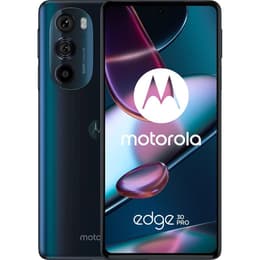

iPhone 16 Plus vs Motorola Edge 30 Pro

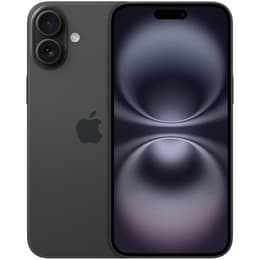
iPhone 16 Plus
iPhone 16 Plus
Starting at

Refurbished price:A$942.00

Versus A$1,599.00 new

See options
Motorola Edge 30 Pro
Starting at

Refurbished price:A$291.72

Versus A$2,709.00 new

See options

The iPhone 16 Plus, released in September 2024, and the Motorola Edge 30 Pro, launched in March 2022, represent distinct approaches to smartphone design and functionality. While both are large-screen devices, the iPhone 16 Plus offers a more recent hardware platform and Apple's iOS ecosystem, whereas the Motorola Edge 30 Pro provides a high refresh rate display and a near-stock Android experience. These differences influence their performance, camera capabilities, and overall user experience.

Scores

Durability

The practical lifespan of a smartphone is heavily influenced by its release timeline and the duration of software support it receives. These factors determine how long a device remains secure, compatible with new applications, and performs optimally.

  • Release Timeline: The iPhone 16 Plus, released in September 2024, benefits from a newer hardware generation and a more recent entry into the market. The Motorola Edge 30 Pro, launched in March 2022, is an older device.
  • Software Longevity: Apple typically provides iOS updates for approximately 5-6 years from a device's release, meaning the iPhone 16 Plus is expected to receive software support well into the future, potentially until 2029 or 2030. The Motorola Edge 30 Pro was promised two major Android OS upgrades (up to Android 14) and three years of security updates from its 2022 launch. This means its official software support period has largely concluded or is nearing its end.
  • Durability Features: The iPhone 16 Plus features a Ceramic Shield front, a color-infused glass back, and an aerospace-grade aluminum frame, along with an IP68 rating for dust and water resistance, allowing submersion up to 6 meters for 30 minutes. The Motorola Edge 30 Pro has a Corning Gorilla Glass 3 front, a Gorilla Glass 5 back, and a plastic frame, with an IP52 rating for splash resistance.

Release year

2024

2022

Compatible with latest Update

Yes

Yes

Foldable

No

No

Performance

Performance in a smartphone translates to how smoothly applications run, the speed of multitasking, and the device's responsiveness during demanding tasks like gaming or video editing. The underlying hardware and software optimization play crucial roles in this experience.

  • Processing Capabilities: The iPhone 16 Plus is equipped with the Apple A18 chip, which delivers a significant improvement in performance and efficiency, allowing for demanding applications and games to run smoothly. The Motorola Edge 30 Pro is powered by a high-end processor for its release period, providing fast and snappy performance for everyday use and mobile gaming.
  • System Responsiveness: Users of the iPhone 16 Plus can expect a highly responsive experience across the operating system and applications, with efficient handling of complex tasks. The Motorola Edge 30 Pro also offers a very fluid user experience, with apps launching quickly and smooth transitions between tasks.
  • Storage and Multitasking: The iPhone 16 Plus comes with 8GB of RAM and storage options up to 512GB, supporting efficient multitasking and ample space for applications and media. The Motorola Edge 30 Pro offers 8GB or 12GB of RAM and storage up to 512GB, ensuring capable multitasking and sufficient storage for most users.

Memory (GB)

8 GB

8 GB

Screen quality

The display is a primary interface for smartphone interaction, and its quality significantly impacts the viewing experience for everything from browsing to streaming and gaming. Key aspects include the display technology, resolution, brightness, and refresh rate.

  • Display Technology and Clarity: The iPhone 16 Plus features a 6.7-inch Super Retina XDR OLED display, offering deep blacks, vibrant colors, and a resolution of 2796x1290 pixels, resulting in sharp visuals. The Motorola Edge 30 Pro also has a 6.7-inch OLED display with a resolution of 2400 x 1080 pixels, providing clear and colorful visuals.
  • Brightness and Outdoor Visibility: The iPhone 16 Plus can reach up to 1000 nits typical brightness, 1600 nits peak for HDR content, and an impressive 3000 nits peak for outdoor visibility, ensuring content remains clear even in bright sunlight. The Motorola Edge 30 Pro's display is generally easy to read indoors and outdoors, though its auto-brightness may sometimes require manual adjustment in direct daylight.
  • Refresh Rate and Smoothness: The iPhone 16 Plus features a 60Hz refresh rate, which provides a consistent visual experience. In contrast, the Motorola Edge 30 Pro offers a higher 144Hz refresh rate, contributing to noticeably smoother scrolling and more fluid animations, particularly beneficial in fast-paced content and gaming.

Resolution

1290 x 2796

1080 x 2400

Screen type

Super Retina XDR OLED

OLED

Audiovisual

Camera systems are a critical component for many smartphone users, influencing how they capture memories, communicate visually, and create content. Evaluating camera performance involves looking at sensor capabilities, image processing, and video features.

  • Rear Camera System: The iPhone 16 Plus is equipped with a dual-camera setup, featuring a 48MP wide-angle main lens and a 12MP ultrawide lens, designed for capturing detailed photos and videos with consistent quality. The Motorola Edge 30 Pro features a triple camera system with a 50MP wide-angle main camera with optical image stabilization, a 50MP ultrawide camera that also handles macro shots, and a 2MP depth sensor.
  • Photography Performance: The iPhone 16 Plus is noted for its good dual camera, offering reliable performance in various lighting conditions and features like Spatial Capture. The Motorola Edge 30 Pro's main camera produces accurate colors and good dynamic range in daylight, though its low-light performance and ultrawide camera quality are considered less consistent compared to top-tier devices.
  • Video Recording and Front Camera: Both devices offer capable video recording. The iPhone 16 Plus provides strong video quality and consistency. The Motorola Edge 30 Pro can record up to 8K at 30fps with its main camera and 4K at 60fps, though ultrawide video is limited to 1080p. For selfies, the iPhone 16 Plus has a 12MP front camera, while the Motorola Edge 30 Pro features a high-resolution 60MP front camera, which generally produces detailed selfies.

Main camera

48 megapixels

50 megapixels

Front camera

12 megapixels

60 megapixels

Miscellaneous

Beyond core performance and camera, several practical elements contribute to a smartphone's daily usability, including connectivity, physical design, and additional features that enhance convenience and security.

  • Connectivity and Ports: The iPhone 16 Plus supports Wi-Fi 7, Bluetooth 5.3, and features a USB-C port for charging and data transfer. The Motorola Edge 30 Pro supports Wi-Fi 6E, Bluetooth 5.2, and also includes a USB-C port. Both devices offer 5G connectivity.
  • Physical Design and Handling: The iPhone 16 Plus measures 160.9 x 77.8 x 7.8 mm and weighs 199g, featuring an aluminum frame and glass construction. The Motorola Edge 30 Pro measures 163.1 x 76.0 x 8.8 mm and weighs 196g, with a plastic frame and glass back. The iPhone 16 Plus also includes an Action button and a dedicated Camera Control button.
  • Security and Other Features: The iPhone 16 Plus relies on Face ID for secure authentication. The Motorola Edge 30 Pro features a side-mounted fingerprint sensor. The Motorola device also includes stereo speakers with Dolby Atmos tuning.

Weight

199 oz

196 oz

Screen size (in)

6.7

6,7

Network

5G

5G

SIM card

Physical SIM + eSIM

Dual Physical SIM

Carrier compatibility

Unlocked

Unlocked

The iPhone 16 Plus and Motorola Edge 30 Pro cater to different user priorities, largely due to their release timelines and ecosystem differences. The iPhone 16 Plus is frequently praised for its exceptional battery life, often lasting two to three days on a single charge, and its robust software support, ensuring longevity and access to the latest features. Users also appreciate its consistent camera performance and the overall smooth experience provided by its advanced processor. However, some users note its 60Hz display as a limitation compared to competitors offering higher refresh rates.

The Motorola Edge 30 Pro, while an older model, is recognized for its high-performance processor and its 144Hz OLED display, which delivers a very fluid visual experience. Its fast wired and wireless charging capabilities are also frequently highlighted as a convenience. Criticisms often point to its camera performance, particularly in low-light conditions and for ultrawide video, which may not meet the expectations of users prioritizing photography. Its software update policy is also less extensive compared to the iPhone.

Users prioritizing extended software support, a highly durable build, and industry-leading battery life may find the iPhone 16 Plus well-suited to their needs. Conversely, users who value a very high refresh rate display, rapid charging, and a near-stock Android experience might lean towards the Motorola Edge 30 Pro. Both devices offer compelling features, and considering a quality-assured refurbished option for either model can be an eco-friendly alternative for making an informed choice.

See all articles

Our recent comparisons