
iPhone 13 Pro vs Motorola Moto G53

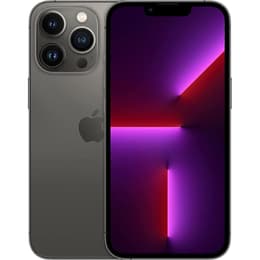
iPhone 13 Pro
iPhone 13 Pro
Starting at

Refurbished price:A$549.00

Versus A$1,539.00 new

See options
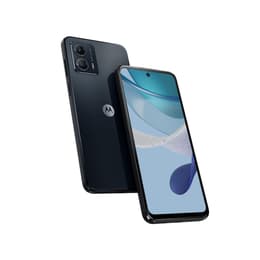
Motorola Moto G53
Motorola Moto G53
Starting at

Refurbished price:A$203.77

Versus A$975.00 new

See options

The iPhone 13 Pro, released in September 2021, and the Motorola Moto G53, launched in December 2022, represent distinct approaches to smartphone design and functionality. While the iPhone 13 Pro was positioned as a high-end device running on iOS, the Moto G53 entered the market as a more accessible option powered by Android. Key differentiators lie in their display technology, camera capabilities, and overall processing power, catering to different user priorities.

Scores

Durability

The expected lifespan and software support differ between these two devices, reflecting their original market segments and release timelines.

  • Release Timeline: The iPhone 13 Pro was released in September 2021, making it an older model compared to the Motorola Moto G53, which launched in December 2022.
  • Software Longevity: The iPhone 13 Pro, running iOS, typically receives major operating system updates for approximately five to six years from its release, with current compatibility extending to iOS 18 and future support for iOS 26. The Moto G53, operating on Android 13 with MYUI 5.0, generally receives fewer major OS updates, often around two to three years, alongside security updates.
  • Repairability and Durability: The iPhone 13 Pro features a Ceramic Shield front and IP68 water resistance, offering robust protection against dust and water immersion. Its repairability score from iFixit is 5 out of 10, indicating that while display and battery replacements are feasible, other repairs, particularly involving the rear glass, are more challenging. The Moto G53 has a plastic back and frame with an IP52 water-repellent design, providing splash resistance.

Release year

2021

2022

Compatible with latest Update

Yes

Yes

Operating system

iOS

Android

Foldable

No

No

Performance

Performance aspects, including processing power, multitasking efficiency, and storage, vary significantly between these two smartphones.

  • Processing Capabilities: The iPhone 13 Pro is equipped with a powerful processor that includes a 5-core graphics processing unit, enabling it to handle demanding applications, complex games, and intensive tasks with notable speed and responsiveness. The Moto G53 features a processor designed for everyday tasks and casual gaming, providing adequate performance for general use, though some users may experience occasional delays when switching between applications.
  • Multitasking and Responsiveness: With 6GB of RAM, the iPhone 13 Pro offers smooth multitasking and efficient app switching, maintaining responsiveness even with multiple applications running simultaneously. The Moto G53 is available with 4GB, 6GB, or 8GB of RAM, which supports typical daily usage, but its overall system responsiveness may not match the fluidity of the iPhone 13 Pro during heavy multitasking.
  • Storage Options: The iPhone 13 Pro provides internal storage options ranging from 128GB up to 1TB, without expandable storage. The Moto G53 typically comes with 64GB or 128GB of internal storage, with the added flexibility of expandable storage via a microSD card.
  • Battery Behavior: The iPhone 13 Pro's battery is designed to last a full day of normal usage, with some reports indicating it can extend to two days under lighter use. The Moto G53 features a larger battery capacity, often providing up to two days of use with regular activity. However, the Moto G53's charging speed is slower compared to the iPhone 13 Pro.

Memory (GB)

6 GB

8 GB

Screen quality

The visual experience offered by each device's display technology presents distinct characteristics for users.

  • Display Technology and Resolution: The iPhone 13 Pro features a 6.1-inch Super Retina XDR OLED display, offering a high resolution of 2532x1170 pixels, resulting in sharp images and vibrant colors with deep blacks. The Moto G53 comes with a larger 6.5-inch IPS LCD panel, but with a lower resolution of 720x1600 pixels (HD+), which provides a less detailed visual experience.
  • Refresh Rate and Smoothness: The iPhone 13 Pro incorporates ProMotion technology, providing an adaptive refresh rate that can go up to 120Hz, which contributes to exceptionally smooth scrolling and responsive interactions. The Moto G53 also offers a 120Hz refresh rate, enhancing the fluidity of its display for a smoother user experience, despite its lower resolution.
  • Brightness and Outdoor Visibility: The iPhone 13 Pro's display can reach a typical brightness of 1000 nits and a peak HDR brightness of 1200 nits, ensuring excellent visibility even in bright outdoor conditions. The Moto G53's display has a typical brightness of around 400 nits, with a peak of approximately 461 nits, which is adequate for indoor use but may be less visible under direct sunlight.

Resolution

1170 x 2532

720x1600

Screen type

Super Retina XDR OLED

IPS LCD

Audiovisual

The camera systems on both devices are designed for different photography and videography needs, offering varied capabilities.

  • Camera System Configuration: The iPhone 13 Pro boasts a versatile triple 12MP camera system, including Wide, Ultra Wide, and Telephoto lenses, providing a comprehensive range for different shooting scenarios. The Moto G53 features a dual-camera setup with a 50MP main sensor and a 2MP macro lens, focusing on essential photography.
  • Photography Performance: The iPhone 13 Pro excels in various lighting conditions, offering strong low-light performance, sensor-shift optical image stabilization on the wide lens, and a 3x optical zoom telephoto lens. Its Ultra Wide camera also features autofocus and macro capabilities. The Moto G53's 50MP main camera can capture good snapshots in favorable lighting, but its performance in low-light conditions is less robust due to the sensor size and lack of optical image stabilization. It lacks an ultrawide camera.
  • Video Recording and Audio: The iPhone 13 Pro supports advanced video features like Cinematic mode for shallow depth of field effects and ProRes video recording up to 4K at 30 frames per second (on models with 256GB storage or more). It also offers HDR video recording with Dolby Vision up to 4K at 60 frames per second. The Moto G53 records video up to 1080p at 30 frames per second. Both devices offer stereo sound recording, and the Moto G53 includes dual speakers with Dolby Atmos for an enhanced audio experience.

Main camera

12 megapixels

50 megapixels

Front camera

12 megapixels

8 megapixels

Miscellaneous

Beyond core features, several practical elements contribute to the overall user experience and daily utility of these smartphones.

  • Connectivity and Ports: The iPhone 13 Pro supports 5G connectivity, Wi-Fi 6, and Bluetooth 5.0, utilizing a Lightning port for charging and data transfer. The Moto G53 also offers 5G connectivity, Wi-Fi 5, and Bluetooth 5.1, featuring a USB-C port and retaining a 3.5mm headphone jack.
  • Biometric Security: The iPhone 13 Pro relies on Face ID for secure facial recognition. The Moto G53 incorporates a side-mounted fingerprint sensor for biometric authentication.
  • Physical Characteristics: The iPhone 13 Pro has dimensions of 146.7 x 71.5 x 7.65 mm and weighs 204 grams, featuring a stainless steel frame and a matte glass back. The Moto G53 measures 162.7 x 74.7 x 8.2 mm and weighs 183 grams, constructed with a plastic back and frame.

Weight

203 oz

183 oz

Screen size (in)

6,1

6.5

Network

5G

5G

SIM card

Physical SIM + eSIM

Dual Physical SIM

Carrier compatibility

Unlocked

Unlocked

User feedback for the iPhone 13 Pro frequently highlights its exceptional camera system, particularly its low-light capabilities and advanced video features like Cinematic mode and ProRes. Users also praise its powerful performance for demanding applications and its vibrant, smooth ProMotion display. Common criticisms sometimes point to its weight and the proprietary Lightning port. For the Motorola Moto G53, users often commend its long battery life, clean Android interface, and the inclusion of a 120Hz refresh rate display at its segment. However, frequent concerns include the lower display resolution, slower charging speeds, and the camera's performance in challenging lighting conditions.

Users prioritizing a premium build, advanced camera features, and top-tier processing power for intensive tasks will find the iPhone 13 Pro well-suited to their needs. Its extended software support also appeals to those seeking long-term device longevity. Conversely, users who value extended battery life, a larger screen, expandable storage, and a more accessible Android experience for everyday use may lean towards the Motorola Moto G53. Both devices offer compelling features for their respective audiences, and considering a quality-assured refurbished option for either model can be an eco-friendly alternative to purchasing new.


See all articles

Our recent comparisons