
iPhone 14 vs Motorola Moto G53

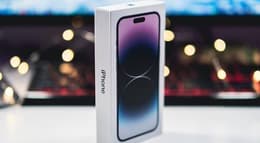
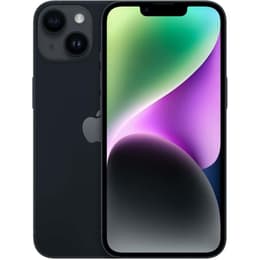
iPhone 14
iPhone 14
Starting at

Refurbished price:A$467.00

Versus A$1,049.00 new

See options
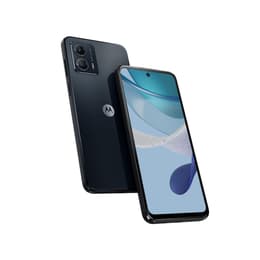
Motorola Moto G53
Motorola Moto G53
Starting at

Refurbished price:A$203.77

Versus A$975.00 new

See options

The iPhone 14, released in September 2022, and the Motorola Moto G53, launched in late 2022 to early 2023, represent distinct approaches to smartphone design and functionality. While the iPhone 14 operates within Apple's iOS ecosystem, offering a refined user experience, the Moto G53 runs on Android, providing a more open platform. The primary differentiators lie in their performance capabilities, display technologies, and camera systems, catering to different user priorities.

Scores

Durability

The longevity of a smartphone is influenced by its release timeline, software support, and physical durability.

  • Release and Software Support: The iPhone 14, launched in September 2022, typically receives major iOS updates for approximately five to seven years from its release, ensuring extended access to new features and security enhancements. The Motorola Moto G53, released in late 2022 or early 2023, generally receives one to two major Android OS updates and around two to three years of security patches.
  • Repairability and Build: The iPhone 14 features a Ceramic Shield front cover and an aluminum frame, contributing to its overall resilience, and boasts an IP68 rating for dust and water resistance. Its internal design was also updated to facilitate easier repairs, particularly for the back glass. The Moto G53 is constructed primarily from plastic and has an IP52 water-repellent design, offering protection against splashes and light rain.
  • Expected Lifespan: Users can anticipate a longer period of software feature updates and security support with the iPhone 14, potentially extending its practical lifespan for those who prioritize the latest software. The Moto G53 offers a solid build for its category, with its software support aligning with typical Android device lifecycles in its segment.

Release year

2022

2022

Compatible with latest Update

Yes

Yes

Operating system

iOS

Android

Foldable

No

No

Performance

Evaluating smartphone performance involves looking at how smoothly devices handle daily tasks, demanding applications, and battery endurance.

  • Processing Power: The iPhone 14 is equipped with a powerful processor that enables seamless multitasking, rapid app loading, and fluid performance in graphically intensive games. This hardware configuration provides substantial headroom for future software advancements and demanding user activities. The Moto G53 features a processor designed for efficient everyday use, capably handling web browsing, social media, and standard applications. While it delivers a responsive experience for general tasks, it may exhibit limitations when running very demanding games or managing numerous complex applications simultaneously.
  • Storage and Memory: The iPhone 14 is available with internal storage options of 128GB, 256GB, and 512GB, paired with 6GB of RAM, supporting efficient multitasking. The Moto G53 offers 64GB or 128GB of internal storage, with configurations including 4GB, 6GB, or 8GB of RAM, and includes a microSD card slot for expandable storage.
  • Battery Performance: The iPhone 14's battery is rated for up to 20 hours of video playback. The Moto G53 is equipped with a larger battery capacity, often providing over a full day of use, and for some users, up to two days with moderate usage.

Memory (GB)

6 GB

8 GB

Screen quality

The visual experience on a smartphone is largely defined by its display technology, resolution, and refresh rate.

  • Display Technology and Resolution: The iPhone 14 features a 6.1-inch Super Retina XDR OLED display, offering a resolution of 2532 x 1170 pixels, resulting in sharp images and text with deep blacks and vibrant colors. The Motorola Moto G53 comes with a 6.5-inch IPS LCD panel, providing a resolution of 1600 x 720 pixels, which is suitable for general viewing.
  • Brightness and Clarity: The iPhone 14's display achieves a typical brightness of 800 nits and a peak HDR brightness of 1200 nits, ensuring good visibility in various lighting conditions and an impactful HDR viewing experience. The Moto G53's LCD panel offers adequate brightness for indoor and outdoor use, though it may not match the peak brightness levels of an OLED display.
  • Refresh Rate: The iPhone 14 has a standard 60Hz refresh rate. In contrast, the Moto G53 features a 120Hz refresh rate, which contributes to smoother scrolling and a more fluid visual experience during navigation and gaming.

Resolution

1170 x 2532

720x1600

Screen type

Super Retina XDR OLED

IPS LCD

Audiovisual

Camera capabilities are a key consideration for many users, encompassing photo and video quality across different scenarios.

  • Rear Camera System: The iPhone 14 features a dual-camera system with a 12MP main sensor (f/1.5 aperture, sensor-shift optical image stabilization) and a 12MP ultrawide sensor (f/2.4 aperture). It benefits from the Photonic Engine, which enhances low-light performance, and offers features like Cinematic mode for video (up to 4K at 30fps) and Action mode for stabilized video. The Motorola Moto G53 includes a dual rear camera setup with a 50MP main sensor (f/1.8 aperture) and a 2MP macro lens. The main camera performs well in good lighting conditions, capturing detailed images.
  • Low-Light and Video: The iPhone 14 delivers good exposure, accurate color reproduction, and effective video stabilization, even in challenging lighting. Its low-light performance is generally strong, though the ultrawide camera may show more noise in very dark conditions. The Moto G53's camera is capable in well-lit environments, but its low-light performance and the utility of its macro lens are less pronounced. Video recording on the Moto G53 is available up to 1080p at 30 frames per second.
  • Front Camera and Audio: The iPhone 14 has a 12MP front camera with autofocus, providing clear selfies and video calls. Both devices offer stereo speakers, contributing to a more immersive media consumption experience.

Main camera

12 megapixels

50 megapixels

Front camera

12 megapixels

8 megapixels

Miscellaneous

Beyond core features, several practical elements contribute to the overall user experience and device utility.

  • Connectivity and Ports: The iPhone 14 supports 5G, Wi-Fi 6, and Bluetooth 5.3, and utilizes a Lightning port for charging and data transfer. The Motorola Moto G53 also offers 5G connectivity, Wi-Fi 5, and Bluetooth 5.1, and features a USB-C port, which is a widely adopted standard.
  • Security and Biometrics: For secure unlocking and authentication, the iPhone 14 relies on Face ID, its facial recognition system. The Moto G53 incorporates a side-mounted fingerprint sensor for convenient and quick access.
  • Design and Handling: The iPhone 14 features an aluminum design with a Ceramic Shield front, weighing approximately 172 grams. The Moto G53 has a plastic build and weighs around 183 grams, offering a comfortable feel in hand. Both devices are designed with modern aesthetics, though their material choices contribute to different tactile experiences.

Weight

172 oz

183 oz

Screen size (in)

6,1

6.5

Network

5G

5G

SIM card

Physical SIM + eSIM

Dual Physical SIM

Carrier compatibility

Unlocked

Unlocked

User feedback often highlights specific strengths and areas for improvement for both the iPhone 14 and the Motorola Moto G53. The iPhone 14 is frequently praised for its robust camera system, consistent performance, and the seamless integration within the Apple ecosystem. Users appreciate its long-term software support and the quality of its display. However, some users note the 60Hz refresh rate as a point of comparison with other devices in its category.

The Motorola Moto G53 garners positive remarks for its extended battery life, the smooth scrolling experience provided by its 120Hz display, and its clean Android software interface. Common criticisms often point to the display's lower resolution and the camera's performance in less-than-ideal lighting conditions.

For users prioritizing a premium camera experience, long-term software updates, and a powerful processor for demanding applications, the iPhone 14 may be a more suitable choice. Its ecosystem integration and display quality are also significant factors. Conversely, users seeking an accessible 5G smartphone with excellent battery life, a high refresh rate for everyday navigation, and a clean Android experience for general tasks may find the Motorola Moto G53 aligns better with their needs. Both devices offer reliable performance for their intended audiences, and considering a quality-assured refurbished option can provide an eco-friendly alternative for either model.

See all articles

Our recent comparisons