Motorola Moto E13 vs Motorola Razr 40 Ultra

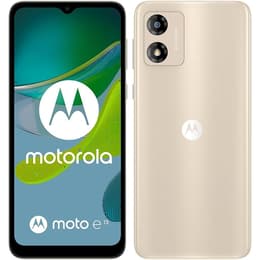
Motorola Moto E13
Motorola Moto E13
Starting at

Refurbished price:A$121.29

Versus A$244.00 new

See options
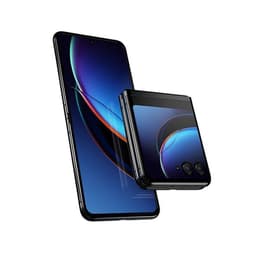
Motorola Razr 40 Ultra
See options

The Motorola Moto E13, released in early 2023, is a traditional smartphone designed for essential functions, while the Motorola Razr 40 Ultra, launched in mid-2023, offers a distinct foldable design with advanced features. These devices cater to different user needs, with the Moto E13 focusing on core smartphone capabilities and the Razr 40 Ultra emphasizing a premium, compact, and interactive experience. Both run on the Android operating system, though the Moto E13 utilizes the Android 13 Go Edition, optimized for devices with more modest specifications.

Scores

Durability

When considering the practical lifespan of these devices, several factors come into play, including their release timelines, software support, and physical construction.

  • Release Timeline and Software Support: Both devices were released in 2023. The Moto E13 launched with Android 13 Go Edition, a streamlined version of the operating system. The Razr 40 Ultra also launched with Android 13 and is expected to receive three major Android version updates and four years of security updates, suggesting a longer period of official software support and access to newer features.
  • Physical Durability: The Moto E13 features a plastic body, offering a lightweight and straightforward construction. The Razr 40 Ultra, as a foldable, incorporates more complex materials including vegan leather or Gorilla Glass Victus for its exterior and a 7000 Series aluminum frame, designed to protect its advanced folding display.
  • Water and Dust Resistance: Both smartphones carry an IP52 rating, indicating resistance to dust and splashing water. This level of protection guards against light exposure to moisture but does not signify full waterproofing.

Release year

2023

2023

Compatible with latest Update

No

Yes

Operating system

Android

Android

Foldable

No

Yes

Performance

The performance capabilities of the Moto E13 and Razr 40 Ultra differ significantly, reflecting their intended uses and hardware configurations.

  • Processing Power: The Moto E13 is equipped with an entry-level processor, suitable for everyday tasks such as browsing, messaging, and light app usage. Users may experience slower app loading times and potential lag when running multiple applications simultaneously or engaging in graphically intensive games. In contrast, the Razr 40 Ultra features a high-end processor from the previous year, providing robust performance for demanding applications, smooth multitasking, and a responsive gaming experience.
  • Memory and Storage: The Moto E13 typically comes with 2GB or 4GB of RAM and 64GB of internal storage, which can be expanded via a microSD card. The Razr 40 Ultra offers more substantial memory configurations, with 8GB or 12GB of RAM and 256GB or 512GB of internal storage, without expandable storage. This difference in RAM directly impacts the ability to switch between numerous applications without slowdowns.
  • Battery Performance: The Moto E13 houses a large 5000mAh battery, often providing up to two days of power with moderate use, thanks to its efficient processor and lower-resolution display. The Razr 40 Ultra has a 3800mAh battery, which, for a foldable device with two high-refresh-rate displays, delivers a respectable full day of usage for many users.

Memory (GB)

4 GB

8 GB

Screen quality

The display technologies and user experiences offered by these two Motorola smartphones present a clear distinction.

  • Display Technology and Resolution: The Moto E13 features a 6.5-inch IPS LCD display with an HD+ resolution (1600 x 720 pixels). This provides adequate clarity for general content consumption. The Razr 40 Ultra, on the other hand, boasts a 6.9-inch foldable pOLED main display with a significantly higher FHD+ resolution (2640 x 1080 pixels). It also includes a highly functional 3.6-inch pOLED cover screen with a resolution of 1066 x 1056 pixels.
  • Brightness and Refresh Rate: The Moto E13's display has a standard 60Hz refresh rate and can struggle with visibility in direct sunlight. The Razr 40 Ultra's main display offers an exceptionally smooth 165Hz refresh rate, while its cover screen operates at 144Hz, providing a fluid visual experience. Its pOLED panels also achieve high peak brightness levels, ensuring better outdoor readability and vibrant color reproduction.
  • Viewing Experience: The Moto E13 offers a straightforward viewing experience suitable for everyday tasks. The Razr 40 Ultra's foldable design and large, interactive cover screen allow for unique usage scenarios, such as checking notifications, taking selfies, or even running full applications without opening the main display.

Resolution

720 x 1600

1080 x 2640

Screen type

IPS LCD

Foldable LTPO AMOLED

Audiovisual

The camera systems on the Moto E13 and Razr 40 Ultra are designed for different photographic expectations and capabilities.

  • Rear Camera System: The Moto E13 is equipped with a single 13-megapixel rear camera. It performs adequately in well-lit conditions, capturing decent details and color balance, but its performance diminishes in low-light environments. The Razr 40 Ultra features a dual-camera setup on the rear, including a 12-megapixel main sensor with optical image stabilization (OIS) and a wider aperture, alongside a 13-megapixel ultrawide lens that also functions for macro photography. This configuration allows for more versatile shooting, including improved low-light performance and wider perspectives.
  • Front Camera and Video: For selfies, the Moto E13 has a 5-megapixel front camera. Both front and rear cameras on the E13 can record video at 1080p resolution at 30 frames per second. The Razr 40 Ultra includes a 32-megapixel front camera located within the main display. Its cameras are capable of recording 4K video, offering higher detail and flexibility for video content creation.
  • Camera Speed and Features: Users have noted that the Moto E13's camera can be slow to launch and process images, which might lead to missed shots. The Razr 40 Ultra benefits from its powerful processor, resulting in faster camera operation and features like portrait mode and the ability to use the main cameras for high-quality selfies via the cover screen.

Main camera

13 megapixels

12 megapixels

Front camera

5 megapixels

32 megapixels

Miscellaneous

Beyond core performance and display, several practical elements differentiate the Moto E13 and Razr 40 Ultra in daily use.

  • Connectivity and Ports: The Moto E13 supports 4G LTE networks, Wi-Fi 5 (802.11ac), and Bluetooth 5.0. It includes a USB-C port for charging and data transfer, along with a 3.5mm headphone jack. The Razr 40 Ultra offers more advanced connectivity, including 5G capabilities, Wi-Fi 6E, and Bluetooth 5.3, along with NFC for contactless payments. It features a USB-C port but omits the traditional headphone jack.
  • Biometric Security and Sensors: The Moto E13 relies on traditional PIN/pattern/password security and a basic face unlock feature, lacking a fingerprint sensor. The Razr 40 Ultra provides a side-mounted fingerprint sensor integrated into the power button, as well as face recognition for secure unlocking. It also includes a more comprehensive suite of sensors, such as an accelerometer, gyroscope, proximity sensor, compass, and barometer.
  • Design and Handling: The Moto E13 has a conventional slab design, weighing approximately 179.5 grams and measuring 8.47mm thick. Its plastic build contributes to its light feel. The Razr 40 Ultra, with its foldable form factor, weighs around 184.5 grams. When unfolded, it is notably thin at 6.99mm, offering a sleek profile. When folded, it becomes compact, making it highly portable and easy to carry in smaller pockets or bags.

Weight

179 oz

1 oz

Screen size (in)

6.5

6.9

Network

4G

5G

SIM card

Dual Physical SIM

Dual Physical SIM

Carrier compatibility

Unlocked

Unlocked

The Motorola Moto E13 and Motorola Razr 40 Ultra cater to distinct user preferences, each excelling in different areas based on their design and feature sets.

The Moto E13 is often praised for its extended battery life, which can comfortably last a full day or more for many users. Its clean Android Go Edition software provides a straightforward and uncluttered experience, making it accessible for those who prefer simplicity. Users appreciate its inclusion of a 3.5mm headphone jack and USB-C charging. However, common criticisms include its camera's slow performance and average quality, particularly in challenging lighting, as well as its lower-resolution display and the absence of 5G connectivity or a fingerprint sensor.

Conversely, the Motorola Razr 40 Ultra receives acclaim for its innovative foldable design and the highly functional, large cover screen, which allows for significant interaction without opening the device. Its main pOLED display is noted for its vibrant colors and exceptionally high refresh rate, contributing to a fluid user experience. The device's strong performance handles demanding applications and multitasking with ease. While its cameras are generally good, some users note they may not match the absolute best in traditional flagship smartphones. The battery life is considered impressive for a foldable, often lasting a full day.

Users prioritizing long battery life, a simple and efficient Android experience, and essential smartphone functions may find the Moto E13 well-suited to their needs. It is a practical choice for light users, students, or as a reliable secondary device. For those seeking a compact, stylish device with a unique form factor, a highly interactive external display, and robust performance for more demanding tasks, the Motorola Razr 40 Ultra is a compelling option. It appeals to users who value design innovation and a premium visual experience. Both devices, whether a traditional smartphone or a foldable, are available as quality-assured refurbished options, providing an eco-friendly alternative for consumers.


See all articles

Our recent comparisons