
iPhone 13 vs Motorola Moto E13

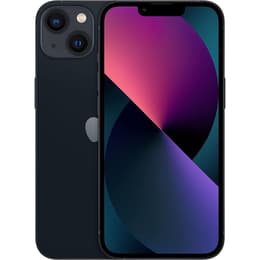
iPhone 13
iPhone 13
Starting at

Refurbished price:A$415.00

Versus A$1,099.00 new

See options
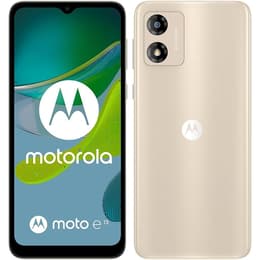
Motorola Moto E13
Motorola Moto E13
Starting at

Refurbished price:A$121.29

Versus A$244.00 new

See options

Ratings

The iPhone 13, released in September 2021, and the Motorola Moto E13, launched in January 2023, offer distinct smartphone experiences. The iPhone 13 operates on Apple's iOS, providing advanced features and performance, while the Moto E13 runs on Android Go Edition, focusing on core functionalities. Key differences lie in their operating systems, processing power, and overall user experience, catering to varied user priorities.

Scores

Durability

The practical lifespan of a smartphone is significantly influenced by its software support and physical durability.

  • Software Longevity: The iPhone 13, released in 2021, benefits from Apple's extended software support, typically receiving major iOS updates for five to seven years, with security updates often continuing beyond. The Moto E13, launched in 2023, runs on Android 13 Go Edition, which generally receives fewer major OS updates and security patches, potentially limiting its long-term software viability.
  • Physical Durability: The iPhone 13 features a Ceramic Shield front cover and an IP68 rating for water and dust resistance, indicating robust protection. The Moto E13 has a plastic build with an IP52 water-repellent design, offering splash resistance but less comprehensive protection.
  • Repairability: Both devices are designed with components that can be replaced by skilled technicians, contributing to their potential for extended use as quality-assured refurbished options.

Release year

2021

2023

Compatible with latest Update

Yes

No

Operating system

iOS

Android

Foldable

No

No

Performance

The performance of these devices caters to different user expectations, primarily driven by their internal components.

  • Processing Power: The iPhone 13 is equipped with a powerful processor, enabling smooth operation for demanding applications, complex multitasking, and graphics-intensive gaming. The Moto E13 features a processor designed for essential smartphone functions, handling basic apps and light usage adequately, though it may exhibit slower responsiveness with intensive tasks.
  • Multitasking and Storage: The iPhone 13 offers various internal storage configurations, supporting numerous applications and media files. Its architecture allows for efficient multitasking. The Moto E13 typically comes with less internal storage, though it offers expandable storage via a microSD card, beneficial for extensive media libraries. Its multitasking is suited for lighter usage.
  • Overall Responsiveness: Users of the iPhone 13 generally experience a highly fluid and responsive interface, with quick app loading times. The Moto E13 provides a functional experience for everyday communication, but users might notice longer loading times and less immediate responses.

Memory (GB)

4 GB

4 GB

Screen quality

The visual experience offered by these smartphones differs significantly due to their display technologies and specifications.

  • Display Technology and Clarity: The iPhone 13 features a 6.1-inch Super Retina XDR OLED display, known for deep blacks, high contrast, and vibrant color reproduction, providing an immersive viewing experience. The Moto E13 comes with a larger 6.5-inch IPS LCD screen, offering a decent viewing area and adequate colors for general use, though it does not match OLED contrast or black levels.
  • Resolution and Brightness: The iPhone 13's display has a higher resolution of 2532 x 1170 pixels (460 PPI), resulting in a sharper image with finer details. It also achieves higher peak brightness, making it more visible outdoors. The Moto E13 has a resolution of 1600 x 720 pixels (HD+), suitable for casual viewing but showing less detail (269 PPI). Its brightness levels are standard.
  • Refresh Rate: Both devices feature a standard 60Hz refresh rate, providing a smooth enough experience for typical scrolling and video playback.

Resolution

1170 x 2532

720 x 1600

Screen type

Super Retina XDR OLED

IPS LCD

Audiovisual

The camera systems on these devices are designed for different levels of photographic capability and user needs.

  • Rear Camera System: The iPhone 13 is equipped with a dual 12MP camera system (wide and ultra-wide), featuring sensor-shift optical image stabilization on the main sensor for sharper photos and improved low-light performance. It offers advanced computational photography. The Moto E13 features a single 13MP main camera, capable of capturing everyday photos in good lighting. Its low-light performance and detail retention are more limited.
  • Video Recording: The iPhone 13 supports high-quality video recording, including 4K Dolby Vision HDR at up to 60 frames per second, offering excellent detail and dynamic range. The Moto E13 records video at 1080p resolution at 30 frames per second, suitable for casual video capture.
  • Front Camera and Audio: The iPhone 13 has a 12MP front camera supporting advanced features. Its audio output is clear and balanced. The Moto E13 includes a 5MP front camera for video calls and selfies. The Moto E13 also features Dolby Atmos support for enhanced audio experience.

Main camera

12 megapixels

13 megapixels

Front camera

12 megapixels

5 megapixels

Miscellaneous

Beyond core features, several practical elements differentiate these two smartphones in daily use.

  • Connectivity and Ports: The iPhone 13 supports 5G connectivity and Wi-Fi 6, offering faster wireless data speeds. It uses a Lightning port for charging and data transfer. The Moto E13 supports 4G LTE and Wi-Fi 5, providing reliable but generally slower wireless connectivity. It features a USB-C port for charging and data, alongside a traditional 3.5mm headphone jack, which is absent on the iPhone 13.
  • Biometric Security and Design: The iPhone 13 relies on Face ID for secure facial recognition. Its design incorporates premium materials and a compact form factor, weighing 174g. The Moto E13 offers software-based face unlock but lacks a dedicated fingerprint sensor. It has a slightly larger build and weighs 179.5g, with a plastic construction.
  • User Interface: The iPhone 13 runs on iOS, known for its intuitive interface and ecosystem integration. The Moto E13 runs on Android Go Edition, a streamlined version of Android optimized for less powerful hardware, offering a simpler user experience.

Weight

173 oz

179 oz

Screen size (in)

6,1

6.5

Network

5G

4G

SIM card

Physical SIM + eSIM

Dual Physical SIM

Carrier compatibility

Unlocked

Unlocked

Connector

Lightning

USB-C

User feedback often highlights the iPhone 13's consistent performance, high-quality camera, and long-term software support as significant advantages. Users appreciate its fluid user experience and robust build. Some common criticisms might include its 60Hz display and the proprietary Lightning port. For the Motorola Moto E13, users frequently praise its extended battery life and the inclusion of a headphone jack, making it a practical choice for essential communication and media consumption. Criticisms often point to its more modest camera performance and slower processing speed for demanding applications.

Users prioritizing a premium and highly responsive experience with advanced camera capabilities and extended software longevity will find the iPhone 13 well-suited. Its robust ecosystem and strong durability features also appeal to those seeking a device for several years. Conversely, users who primarily need a device for basic communication, web browsing, and media consumption, and who value a large battery and the convenience of a headphone jack, may lean toward the Motorola Moto E13. Both devices, when considered as quality-assured refurbished options, offer an eco-friendly alternative for consumers looking to make informed and sustainable choices.


See all articles

Our recent comparisons