
Motorola Moto E13 vs Motorola Razr 40

Motorola Moto E13
Motorola Moto E13
Starting at

Refurbished price:A$121.29

Versus A$244.00 new

See options
Motorola Razr 40
Motorola Razr 40
See options

Ratings

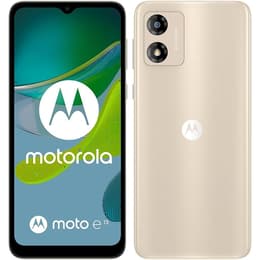
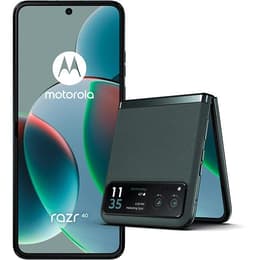
The Motorola Moto E13, released in January 2023, is a traditional slab-style smartphone designed for essential functionality. In contrast, the Motorola Razr 40, launched in June 2023, presents a distinct foldable clamshell design, offering a compact form factor when closed. Both devices operate on the Android platform, though they cater to different user experiences and performance expectations.

Scores

Durability

The longevity of a smartphone is influenced by its software support and physical resilience. These two Motorola devices offer differing prospects in terms of their practical lifespan and ease of repair.

  • Release Timeline and Software Support: The Moto E13 was released in January 2023 and runs on Android 13 (Go edition). It has not received major Android OS updates since its launch, suggesting a shorter software support window. The Razr 40, released in June 2023, also launched with Android 13 but is expected to receive three major Android OS upgrades, with support ending around Android 16, alongside four years of bi-monthly security updates. This indicates a longer period of software relevance for the Razr 40.
  • Repairability: The Moto E13 generally offers a more straightforward repair experience, with a repairability score of 6.5 out of 10. Its battery and cable are noted as being easily accessible, and it includes pull tabs for battery removal. The Razr 40, due to its complex foldable design, presents a more challenging repair process, scoring around 4 out of 10. Disassembly often requires dissolving strong adhesives, and accessing internal components like the battery or screen involves removing several other parts, making repairs more intricate.
  • Expected Practical Lifespan: Users prioritizing extended software updates and potentially easier component replacement might find the Razr 40 to offer a longer practical lifespan, especially considering its more robust update policy. However, the Moto E13's simpler construction might make certain repairs less costly, potentially extending its life for users comfortable with basic maintenance.

Release year

2023

2023

Compatible with latest Update

No

Yes

Operating system

Android

Android

Foldable

No

Yes

Performance

Performance varies significantly between these two devices, reflecting their different design philosophies and target user groups. These differences impact everything from app responsiveness to multitasking capabilities.

  • Storage and Memory: The Moto E13 is available with 32GB, 64GB, or 128GB of internal storage and 2GB, 4GB, or 8GB of RAM. The Razr 40 offers more generous configurations, starting at 128GB and going up to 512GB of storage, paired with 8GB or 12GB of RAM. This provides the Razr 40 with greater capacity for applications and media, and more headroom for demanding tasks.
  • Everyday Task Handling: The Moto E13 is equipped with an entry-level processor, which means it handles basic tasks like messaging, web browsing, and light social media usage adequately. However, users may experience noticeable slowdowns and lags when running multiple applications simultaneously or engaging with more demanding apps. The Razr 40, featuring a more capable mid-range processor, delivers a smoother and more responsive experience for daily use, including multitasking and running moderately intensive applications.
  • Battery Behavior: The Moto E13 houses a larger 5000 mAh battery, which, combined with its lower-resolution display and less powerful processor, generally provides good endurance for a full day of moderate use. The Razr 40 has a 4200 mAh battery. Despite its smaller capacity, it is generally reported to last through a full day of typical usage, which is a commendable performance for a foldable device.

Memory (GB)

4 GB

8 GB

Screen quality

The display experience is a primary differentiator between the Moto E13 and the Razr 40, largely due to their distinct form factors and underlying technologies.

  • Display Technology and Resolution: The Moto E13 features a 6.5-inch IPS LCD display with an HD+ resolution (1600 x 720 pixels). This provides clear visuals for everyday content. The Razr 40 boasts a 6.9-inch foldable LTPO AMOLED main display with a Full HD+ resolution (2640 x 1080 pixels), offering deeper blacks, higher contrast, and more vibrant colors. Additionally, the Razr 40 includes a 1.5-inch AMOLED cover display for quick notifications and interactions when folded.
  • Brightness and Refresh Rate: The Moto E13's display offers sufficient brightness for indoor use, though it may require maximum settings for comfortable viewing in bright outdoor conditions. It operates at a standard 60Hz refresh rate. The Razr 40's main display can reach a peak brightness of 1400 nits, ensuring excellent visibility even in direct sunlight. Its 144Hz refresh rate provides a noticeably smoother scrolling and animation experience.
  • Viewing Experience: The Moto E13 offers a traditional smartphone viewing experience on a flat panel. The Razr 40's foldable design allows for a large, immersive screen when unfolded, while the external display provides convenience for checking information without opening the device. Users note a visible crease on the Razr 40's main display, which is typical for foldable technology, but it generally does not distract during use.

Resolution

720 x 1600

1080 x 2640

Screen type

IPS LCD

Foldable LTPO AMOLED

Audiovisual

The camera systems on the Moto E13 and Razr 40 are tailored to their respective segments, offering different levels of detail, versatility, and performance.

  • Rear Camera Capabilities: The Moto E13 is equipped with a single 13 MP wide-angle rear camera. It performs adequately in well-lit conditions, producing decent images, but can show noise in shadows and struggles with dynamic range. The Razr 40 features a more advanced dual-camera setup, including a 64 MP main sensor with optical image stabilization (OIS) and a 13 MP ultrawide lens that also functions for macro shots. The OIS on the main sensor assists in capturing clearer images, especially in less ideal lighting.
  • Front Camera and Video Recording: For selfies and video calls, the Moto E13 has a 5 MP front camera. Both its front and rear cameras can record video at 1080p resolution at 30 frames per second (fps). The Razr 40 offers a higher-resolution 32 MP front camera. Its main camera can record videos in 4K at 30fps, and 1080p at 60fps, providing more detail and smoother motion capture. The Razr 40's external display can also be used as a viewfinder for high-quality selfies with the main cameras.
  • Photography Experience: Users of the Moto E13 have noted that the camera application can be slow to launch and process images, potentially leading to missed moments. While the Razr 40's camera performance is not considered top-tier compared to flagship devices, it generally delivers good results in favorable lighting and offers more versatility with its ultrawide lens and OIS.

Main camera

13 megapixels

64 megapixels

Front camera

5 megapixels

32 megapixels

Miscellaneous

Beyond core performance and display, several practical features and design elements distinguish the Moto E13 and Razr 40, impacting daily usability and connectivity.

  • Connectivity and Ports: The Moto E13 supports 4G LTE networks, Wi-Fi 5 (802.11ac), and Bluetooth 5.0. It includes a USB-C port for charging and data transfer, and notably, a 3.5mm headphone jack. The Razr 40 offers more advanced connectivity with 5G support, Wi-Fi 6E, and Bluetooth 5.3. It features a USB-C port but omits the traditional headphone jack.
  • Biometric Security and Sensors: The Moto E13 relies on traditional PIN/pattern/password security, featuring basic sensors like an accelerometer and proximity sensor. The Razr 40 provides enhanced security with a side-mounted fingerprint sensor and face unlock capabilities. It also includes a more comprehensive suite of sensors, such as an accelerometer, gyroscope, and compass.
  • Design and Durability: The Moto E13 has a conventional smartphone design with a plastic body, weighing approximately 179.5 grams and measuring 8.5mm thick. It carries an IP52 rating for splash and dust resistance. The Razr 40 features a unique foldable design with a plastic front (when unfolded), a glass back protected by Gorilla Glass Victus, and an aluminum frame, often finished with vegan leather. It weighs around 188.6 grams and is thinner when unfolded (7.4mm) but thicker when folded (15.8mm). It also has an IP52 splash-resistant rating.

Weight

179 oz

189 oz

Screen size (in)

6.5

6,9

Network

4G

5G

SIM card

Dual Physical SIM

Dual Physical SIM + eSIM

Carrier compatibility

Unlocked

Unlocked

The Motorola Moto E13 and Motorola Razr 40 cater to distinct user needs, with their respective strengths and trade-offs. User feedback for the Moto E13 often praises its accessible nature and long-lasting battery for light use. However, common criticisms point to its slower performance, particularly with the camera, and its lower-resolution display, which can impact the overall user experience for those accustomed to more responsive devices.

The Razr 40, on the other hand, is frequently lauded for its innovative foldable design, offering a compact form factor without compromising on a large main display. Users appreciate its vibrant screen and generally smooth performance for everyday tasks. Criticisms often revolve around the visible crease on the main display, the camera's performance not matching top-tier flagships, and the limited functionality of its external screen compared to some other foldable models.

Users prioritizing a straightforward, budget-conscious device for essential communication, basic media consumption, and long battery life will find the Moto E13 well-suited to their needs. It serves as a practical choice for students or individuals seeking a reliable secondary phone. Conversely, users who value a unique, stylish design, a high-quality main display, and a more compact form factor when not in use may prefer the Razr 40. It is ideal for those who appreciate modern features and a distinct aesthetic, and who are comfortable with the nuances of foldable technology.

For those considering either device, exploring quality-assured refurbished options can provide an eco-friendly alternative, offering a sustainable choice without compromising on functionality.

See all articles

Our recent comparisons