

Smartphones
Compare models
Differences at a glance
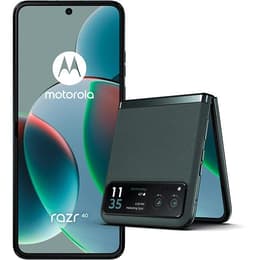
The Google Pixel 7 Pro, released in October 2022, is a traditional slab-style smartphone known for its advanced camera system and Google's software experience. In contrast, the Motorola Razr 40, launched in June 2023, offers a distinct foldable clamshell design, prioritizing portability and a unique user interaction with its dual-screen setup. Both devices operate on the Android platform, but they cater to different user preferences through their form factors and feature sets.
Colour
Storage
When considering the longevity of these devices, their release timelines and software support policies are key factors. The Pixel 7 Pro, being a Google device, benefits from a robust update commitment, while the Razr 40, as a foldable, presents a different set of considerations for its physical durability.
Release year
The performance of a smartphone is influenced by its internal components, affecting how smoothly applications run, how quickly tasks are completed, and how efficiently power is managed. Both the Pixel 7 Pro and Razr 40 offer capable performance for daily use, but they approach it with different hardware configurations.
The display is a primary interface for smartphone interaction, and both devices offer high-quality viewing experiences, albeit with distinct form factors and technologies. The Pixel 7 Pro provides a large, uninterrupted screen, while the Razr 40 features a unique foldable main display and a functional external screen.
Camera capabilities are a significant consideration for many users, and both the Pixel 7 Pro and Razr 40 offer distinct approaches to photography and videography, catering to different preferences and use cases.
Beyond core performance and display, several practical elements contribute to the overall user experience, including connectivity, physical design, and additional features that enhance daily usability.
Screen size (in)
SIM card
Carrier compatibility
Connector
The Google Pixel 7 Pro and Motorola Razr 40 offer distinct smartphone experiences, each with its own strengths and target audience. Users frequently praise the Pixel 7 Pro for its exceptional camera capabilities, particularly its computational photography features that enhance image quality and versatility. Its consistent software updates and a clean Android experience are also commonly highlighted as significant advantages. Some users, however, have noted that while battery life is generally good, it can be inconsistent with heavy use, especially when utilizing the camera extensively.
The Motorola Razr 40 is often lauded for its unique foldable design, which provides excellent portability and a nostalgic yet modern aesthetic. Its main display is generally well-regarded for its smoothness and color accuracy, and the external screen offers convenient access to notifications and quick tasks. Criticisms sometimes point to its processor, which, while capable for daily tasks, may not match the raw power of some non-foldable counterparts in its price range, and its water resistance is less robust than the Pixel 7 Pro.
Users prioritizing a top-tier camera system, long-term software support, and a traditional, high-performance smartphone experience will find the Google Pixel 7 Pro well-suited to their needs. Its robust build and powerful processing make it ideal for those who demand consistent performance and advanced features. Conversely, individuals who value a compact, stylish device with a unique form factor and a focus on portability will likely prefer the Motorola Razr 40. It caters to those who appreciate the novelty and practicality of a foldable phone for everyday communication and media consumption.
For those considering either device, exploring quality-assured refurbished options can provide an eco-friendly alternative, offering access to these technologies while supporting sustainable consumption practices.