Motorola Edge 50 vs Oppo Reno 8

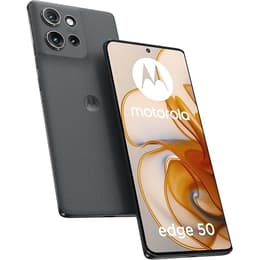
Motorola Edge 50
Motorola Edge 50
See options
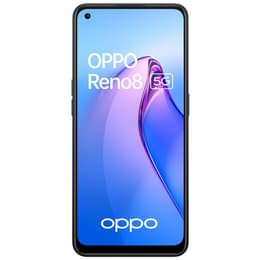
Oppo Reno 8
Oppo Reno 8
Starting at

Refurbished price:A$246.00

Versus A$1,159.00 new

See options

The Motorola Edge 50, released in April 2024, and the Oppo Reno 8 5G, launched in July 2022, represent different generations in the smartphone market. While both devices offer a smooth Android experience, the Motorola Edge 50 introduces more recent hardware advancements, particularly in display technology and camera versatility, reflecting its newer release. Both operate on the Android platform, with their respective custom user interfaces.

Scores

Durability

The expected practical lifespan of a smartphone is significantly influenced by its release date and the manufacturer's software support policy.

  • Release Timeline: The Motorola Edge 50, being a 2024 release, benefits from a more current starting point for software updates and hardware longevity. The Oppo Reno 8 5G, released in 2022, has already completed a portion of its software support cycle.
  • OS Support: Motorola typically commits to 3 major Android OS updates and 4 years of security updates for its Edge series, meaning the Edge 50 is expected to receive updates up to Android 17. [40, 46] The Oppo Reno 8 5G, under Oppo's older policy, received 2 major OS updates, reaching Android 14, and is expected to continue receiving security patches for a total of 4 years from its release. [13, 16, 36, 39]
  • Durability Features: The Motorola Edge 50 comes with an IP68 rating for dust and water resistance, offering a high level of protection against environmental elements. [1, 4, 28] The Oppo Reno 8 5G features Corning Gorilla Glass 5 for screen protection and undergoes rigorous internal testing for durability, though it does not carry an official IP rating. [5, 10, 19, 26, 27]

Release year

2024

2022

Operating system

Android

Android

Foldable

No

No

Performance

Performance is a key aspect for daily usage, influencing how smoothly applications run and how efficiently tasks are handled.

  • Processing Power: The Motorola Edge 50 features a more recent generation processor, which translates to more responsive app loading, smoother multitasking, and enhanced performance in demanding applications and mobile gaming. [1, 2, 6, 9, 15, 17] Users report a smooth and lag-free software experience. [21] The Oppo Reno 8 5G, powered by its processor, delivers a fluid experience for everyday tasks and can handle gaming at moderate settings, with users noting smooth multitasking. [5, 18, 19, 27]
  • Battery Behavior: Both devices are equipped with a 4500 mAh battery capacity. [3, 8, 15] The Motorola Edge 50 is reported to offer good battery life, capable of lasting through a full day of average use. [17, 40] The Oppo Reno 8 5G also provides reliable battery performance, with its battery health engine designed to retain 80% of its original capacity for an extended period. [26, 34]
  • Charging Speed: The Motorola Edge 50 supports significantly faster wired charging at 125W and also includes 50W wireless charging capabilities. [1, 9, 30] The Oppo Reno 8 5G offers 80W wired fast charging, allowing for quick recharges. [3, 5, 19, 27]

Memory (GB)

12 GB

8 GB

Screen quality

The display is the primary interface for user interaction, and differences in technology and specifications can greatly impact the visual experience.

  • Display Technology and Clarity: Both phones feature OLED displays, known for deep blacks and vibrant colors. The Motorola Edge 50 boasts a 6.7-inch pOLED display with a 1.5K resolution, offering a sharp and immersive viewing experience. [1, 2, 6, 8, 17] The Oppo Reno 8 5G has a 6.4-inch AMOLED display with FHD+ resolution, providing clear visuals for media consumption and daily use. [5, 10, 14, 19, 27]
  • Refresh Rate and Brightness: The Motorola Edge 50 offers a higher 144Hz refresh rate, contributing to smoother scrolling and more fluid animations, alongside a peak brightness of 2000 nits for excellent outdoor visibility. [1, 9, 17] The Oppo Reno 8 5G features a 90Hz refresh rate, which provides a smooth experience, and a peak brightness of 800 nits. [5, 18, 19, 27]
  • Design: The Motorola Edge 50 features a curved display, which some users find aesthetically pleasing and immersive, though it can occasionally lead to accidental touches. [1, 17, 23, 28] The Oppo Reno 8 5G has a flat display protected by Corning Gorilla Glass 5. [5, 10, 19, 27]

Resolution

1220x2712

1080x2400

Audiovisual

Camera capabilities are a significant factor for many users, with both devices offering distinct photographic strengths.

  • Rear Camera Systems: The Motorola Edge 50 features a versatile triple-camera setup, including a 50MP main sensor with optical image stabilization (OIS), a 13MP ultrawide lens that doubles as a macro camera, and a 10MP telephoto lens with 3x optical zoom and OIS. [1, 8, 17] The Oppo Reno 8 5G also has a triple-camera system, highlighted by a 50MP main sensor (Sony IMX766) with OIS, an 8MP ultrawide, and a 2MP macro lens. [3, 5, 14, 27]
  • Photography Performance: The Motorola Edge 50 is noted for capturing images with impressive detail, sharpness, and accurate skin tones, with good low-light performance from the main sensor. [1, 21] The Oppo Reno 8 5G is praised for its low-light photography and video capabilities, particularly its night mode features. [5, 19, 22, 27]
  • Front Camera and Video: The Motorola Edge 50 is equipped with a high-resolution 50MP autofocus front camera, capable of detailed selfies and 4K video recording. [1, 30] The Oppo Reno 8 5G features a 32MP front camera (Sony IMX709). [5, 14, 27] Both devices support 4K video recording at 30 frames per second from their main rear cameras. [1, 8, 27, 28]

Miscellaneous

Beyond core features, several practical elements contribute to the overall user experience and device utility.

  • Connectivity and Ports: Both smartphones support 5G connectivity, Wi-Fi 6, and Bluetooth 5.3. [5, 8, 19, 27] The Motorola Edge 50 also supports Wi-Fi 6E and Bluetooth 5.4. [8] Both utilize a USB-C port for charging and data transfer, with the Edge 50 featuring USB 3.1. [8] Neither device includes a traditional 3.5mm headphone jack. [19]
  • Biometrics and Sensors: Both phones incorporate an in-display fingerprint sensor for secure unlocking. [3, 5, 19] The Motorola Edge 50 also offers face recognition. [5]
  • Design and Handling: The Motorola Edge 50 weighs 186g and has dimensions of 161.23 x 72.4 x 8.19 mm, featuring a vegan leather back on some models and an aluminum frame. [6, 17, 23] The Oppo Reno 8 5G is slightly lighter at 179g and measures 160.0 x 73.4 x 7.67 mm, with a design that users find comfortable for single-hand use. [19, 24, 27]

Weight

180 oz

200 oz

Screen size (in)

6.7

6,43

Network

5G

5G

SIM card

Physical SIM

Dual Physical SIM

Carrier compatibility

Unlocked

Unlocked

Connector

USB-C

USB-C + Jack 3.5mm

User feedback for the Motorola Edge 50 often highlights its appealing design, vibrant display, and capable camera system, particularly praising its main sensor and fast charging. [17, 21, 23, 28, 30] Some users have noted occasional focusing issues with the telephoto camera in low light after updates and concerns about the timeliness of software updates. [21, 31] The Oppo Reno 8 5G receives praise for its stylish design, comfortable handling, and strong low-light camera performance, along with its very fast wired charging. [5, 18, 19, 22, 27] Criticisms sometimes point to the lack of an official IP rating and its more limited software update policy compared to newer devices. [26, 39]

Users prioritizing a device with the latest hardware, a superior display for media consumption, and a more versatile camera setup with a telephoto lens may find the Motorola Edge 50 well-suited to their needs. Its IP68 rating also offers enhanced durability. Conversely, users who value a compact design, excellent low-light photography, and very fast wired charging, and are comfortable with a device that has completed its major OS update cycle, might lean towards the Oppo Reno 8 5G. Both devices offer a solid Android experience, and choosing between them often comes down to whether the benefits of a newer model's advancements outweigh the established performance of a slightly older, yet still capable, device. For those considering either model, exploring quality-assured refurbished options can provide an eco-friendly alternative.

See all articles

Our recent comparisons