
Galaxy S25 vs Oppo Find X5 Pro

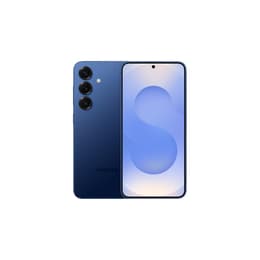
Galaxy S25
Galaxy S25
Starting at

Refurbished price:A$852.00

Versus A$1,399.00 new

See options
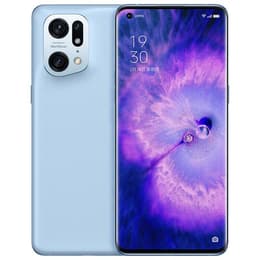
Oppo Find X5 Pro
Oppo Find X5 Pro
Starting at

Refurbished price:A$641.00

Versus A$1,769.00 new

See options

Ratings

The Samsung Galaxy S25, released in early 2025, and the Oppo Find X5 Pro, launched in early 2022, represent different generations of Android flagship smartphones. While both devices offer premium experiences, the three-year gap in their release timelines introduces notable differences in their core specifications, software longevity, and overall capabilities. Both operate on the Android platform, but the Galaxy S25 benefits from more recent advancements in hardware and software integration.

Scores

Durability

The practical lifespan of a smartphone is significantly influenced by its release date and the manufacturer's commitment to software updates.

  • Release Timeline: The Galaxy S25, having been released in February 2025, is a much newer device compared to the Oppo Find X5 Pro, which launched in March 2022. This difference in age directly impacts their remaining support windows.
  • Software Support: Samsung has committed to providing seven years of OS upgrades and seven years of security updates for the Galaxy S25 series, meaning it will receive updates until approximately 2032. In contrast, the Oppo Find X5 Pro, having launched with Android 12, typically receives around three major OS updates and four years of security patches. By April 2026, the Find X5 Pro would have received its expected major OS updates and its security update window would be nearing its conclusion. This means the Galaxy S25 offers a substantially longer period of official software support and security.
  • Repairability and Durability: Both devices feature robust builds. The Galaxy S25 utilizes Gorilla Glass Victus 2 for its display and back, while the Find X5 Pro is protected by Gorilla Glass Victus. The Find X5 Pro also features a ceramic body, contributing to its premium feel and durability. The newer Galaxy S25 models, particularly the Ultra variant, incorporate advanced glass protection like Gorilla Armor 2, offering enhanced scratch and drop resistance.

Release year

2025

2022

Operating system

Android

Android

Foldable

No

No

Performance

Performance is a key area where the generational gap between these two devices becomes apparent, influencing how smoothly they handle demanding applications and multitasking.

  • Processing Power: The Galaxy S25 is powered by a current-generation processor, specifically optimized for the S25 series, which translates to enhanced speed and efficiency for all tasks. The Oppo Find X5 Pro features a processor that was top-tier at its 2022 release, capable of handling most applications and games effectively. However, the S25's newer architecture provides a noticeable advantage in raw computational power and graphical rendering, particularly for future applications and intensive gaming.
  • System Responsiveness and Multitasking: Users of the Galaxy S25 report a very seamless and quick experience, with no lag or freezing even with heavy use. The Find X5 Pro also offers snappy performance, but some users noted that prolonged gaming sessions could lead to the device heating up. Both devices offer ample RAM, with the Galaxy S25 typically featuring 12GB and the Find X5 Pro available in 8GB or 12GB configurations, ensuring smooth multitasking.
  • Storage Options: The Galaxy S25 offers storage options up to 512GB, while the Find X5 Pro also provides up to 512GB of storage, utilizing fast UFS 3.1 technology. Neither device supports user-expandable storage.

Memory (GB)

12 GB

12 GB

Screen quality

Both smartphones offer high-quality displays, but there are distinctions in their technology and capabilities that affect the viewing experience.

  • Display Technology and Resolution: The Galaxy S25 features a 6.2-inch Dynamic LTPO AMOLED 2X display with a Full HD+ resolution (2340 x 1080 pixels). The Oppo Find X5 Pro boasts a larger 6.7-inch AMOLED curved screen with a higher Quad HD+ resolution (3216 x 1440 pixels). Both displays offer vibrant colors and deep blacks characteristic of AMOLED technology.
  • Brightness and Refresh Rate: The Galaxy S25's display can reach a peak brightness of up to 2600 nits, providing excellent visibility even in bright outdoor conditions. The Find X5 Pro has a peak brightness of 1300 nits, which is also bright enough for most conditions but less intense than the S25. Both devices feature a 120Hz adaptive refresh rate, ensuring smooth scrolling and fluid animations. The Find X5 Pro's LTPO technology allows its refresh rate to scale down to 1Hz for static content, which can contribute to battery efficiency.
  • Viewing Experience: The Find X5 Pro's larger, higher-resolution display offers a more expansive and detailed viewing area, which can be particularly appealing for media consumption and productivity. The Galaxy S25, while having a slightly smaller screen and lower resolution on its base model, still provides a clear and vibrant visual experience with its high peak brightness.

Resolution

1080x2340

1440 x 3216

Audiovisual

Both devices offer capable camera systems, but their approaches and strengths differ, reflecting their respective release eras and manufacturer philosophies.

  • Rear Camera System: The Galaxy S25 features a versatile triple-camera setup, including a 50MP main sensor with optical image stabilization (OIS), a 12MP ultrawide lens, and a 10MP telephoto lens offering 3x optical zoom with OIS. The Oppo Find X5 Pro also has a triple rear camera system, highlighted by two 50MP sensors for its main and ultrawide cameras (both Sony IMX 766 sensors), and a 13MP telephoto lens with 2x optical zoom. The Find X5 Pro benefited from a partnership with Hasselblad and included a MariSilicon X NPU for image processing.
  • Photography Performance: The Galaxy S25 is praised for its exceptional sharpness and detail in outdoor environments, accurate color rendering, and improved low-light performance, especially with its main camera. The Find X5 Pro's main and ultrawide cameras were highly regarded for their quality, with users noting vivid colors and fast capture speeds. However, its telephoto lens was considered a weaker point due to its more limited 2x optical zoom compared to some rivals at its release.
  • Video Recording and Front Camera: The Galaxy S25 supports 8K video recording at 30fps from its main camera and 4K from all other cameras, including the 12MP autofocus front camera. It also offers advanced features like Log Video mode for professional editing. The Find X5 Pro records up to 4K video and features a 32MP front camera. Both offer good stabilization for video.

Miscellaneous

Beyond the core performance and display, several practical elements contribute to the overall user experience of these smartphones.

  • Connectivity: The Galaxy S25 supports the latest connectivity standards, including 5G and advanced Wi-Fi. The Oppo Find X5 Pro also offers 5G, Wi-Fi 6 (802.11ax), and Bluetooth 5.2. The newer Galaxy S25 may incorporate more recent iterations of these standards, potentially offering faster and more stable connections.
  • Ports and Biometrics: Both devices feature a USB-C port for charging and data transfer. The Galaxy S25 includes an ultrasonic in-screen fingerprint sensor. The Find X5 Pro also has an in-display fingerprint sensor.
  • Design and Build Materials: The Galaxy S25 features an aluminum body and a glass back, with Gorilla Glass Victus 2 on both sides for durability. It is often praised for its comfortable, compact size and light weight. The Oppo Find X5 Pro stands out with its ceramic body and Gorilla Glass Victus protection, offering a distinct premium feel. It also has an IP68 rating for dust and water resistance.

Weight

162 oz

218 oz

Screen size (in)

6.2

6.7

Network

5G

5G

SIM card

Physical SIM + eSIM

Physical SIM + eSIM

Carrier compatibility

Unlocked

Unlocked

The Samsung Galaxy S25 and Oppo Find X5 Pro cater to users with different priorities, largely due to their respective release dates and the technological advancements that have occurred in the interim. Users frequently praise the Galaxy S25 for its compact and comfortable design, smooth user interface, and the integration of advanced AI features. Its day-to-day camera performance is generally well-received, and the extended software support is a significant advantage for long-term ownership. However, some users have noted that the battery life, while manageable for most, might not be sufficient for very heavy users, and the charging speeds are not as rapid as some competitors.

The Oppo Find X5 Pro, despite being an older model, is still recognized for its excellent display quality, particularly its higher resolution and adaptive refresh rate. Its camera system, especially the main and ultrawide lenses, received positive feedback for image quality and color reproduction at the time of its release. A standout feature for the Find X5 Pro is its exceptionally fast wired and wireless charging capabilities, which can quickly replenish its battery. Criticisms often centered on its more limited telephoto zoom and the fact that its software support window is shorter compared to newer flagships.

Users prioritizing the latest technology, a longer software support lifespan, and cutting-edge performance will find the Galaxy S25 well-suited to their needs. Its advanced processor and AI capabilities offer a more future-proof experience. Conversely, users who value a high-resolution display, very fast charging, and a still-capable camera system, and are comfortable with a device nearing the end of its software support cycle, may find the Oppo Find X5 Pro to be a compelling option. Both devices, when considered as quality-assured refurbished options, provide an eco-friendly alternative for consumers seeking premium smartphone features.


See all articles

Our recent comparisons