
Motorola Edge 50 Fusion vs Motorola Moto E13

Motorola Edge 50 Fusion
See options
Motorola Moto E13
Motorola Moto E13
Starting at

Refurbished price:A$121.29

Versus A$244.00 new

See options

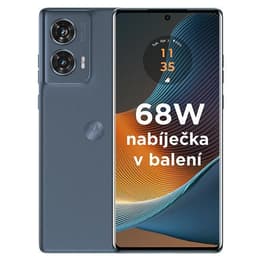
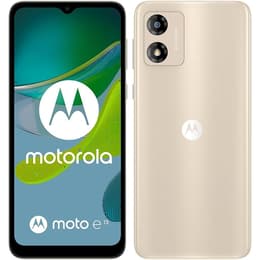
The Motorola Edge 50 Fusion, released in April 2024, and the Motorola Moto E13, launched in January 2023, represent distinct offerings within Motorola's smartphone lineup. While both operate on the Android platform, they cater to different user expectations, primarily differentiated by their performance capabilities, display quality, and camera systems. The Edge 50 Fusion is positioned as a more capable device with enhanced features, whereas the Moto E13 focuses on delivering essential smartphone functionality.

Scores

Durability

The longevity of a smartphone is influenced by its release timeline, software support, and physical durability. These two Motorola devices offer different expectations in these areas.

  • Release Timeline and Software Support: The Motorola Edge 50 Fusion, released in April 2024, shipped with Android 14 and is expected to receive three major Android OS upgrades, up to Android 17, along with four years of security updates until April 2028. In contrast, the Motorola Moto E13, launched in January 2023, came with Android 13 (Go edition for some variants) and has not received major Android updates as of early 2026, meaning its software longevity is more limited.
  • Durability Features: The Edge 50 Fusion features IP68 dust and water resistance, indicating a high level of protection against environmental elements, and its display is protected by Corning Gorilla Glass 5. The Moto E13, on the other hand, offers an IP52 rating, providing basic splash and dust resistance.
  • Expected Practical Lifespan: Users prioritizing extended software support and robust physical protection will find the Edge 50 Fusion better suited for a longer practical lifespan. The Moto E13 is designed for users with more basic needs and a shorter expected upgrade cycle.

Release year

2024

2023

Compatible with latest Update

Yes

No

Operating system

Android

Android

Foldable

No

No

Performance

The performance of these two devices varies significantly, impacting how smoothly they handle daily tasks and more demanding applications.

  • Processor Capabilities: The Motorola Edge 50 Fusion is equipped with a more advanced processor, enabling it to handle demanding applications, multitasking, and moderate gaming with greater fluidity. The Moto E13 features a processor designed for essential smartphone functions, which means it performs well for basic tasks like messaging, browsing, and light app usage, but may experience slower performance with more intensive applications or multitasking.
  • RAM and Storage: The Edge 50 Fusion typically comes with higher RAM configurations (8GB or 12GB) and larger internal storage options (up to 512GB), contributing to smoother multitasking and ample space for apps and media. The Moto E13 offers lower RAM options (2GB, 4GB, 8GB) and smaller storage capacities (32GB, 64GB, 128GB), which can limit the number of applications that can run simultaneously and the amount of data stored directly on the device.
  • Overall System Responsiveness: Users of the Edge 50 Fusion can expect a more responsive and snappier overall user experience, with faster app loading times and smoother transitions. The Moto E13 provides a functional experience for its intended use, though users may notice occasional delays or stutters, particularly when switching between multiple applications or running resource-intensive tasks.

Memory (GB)

12 GB

4 GB

Screen quality

The visual experience on these smartphones differs considerably due to their display technologies and specifications.

  • Display Technology and Resolution: The Motorola Edge 50 Fusion features a 6.7-inch pOLED display with Full HD+ resolution (1080 x 2400 pixels), offering vibrant colors, deep blacks, and sharp image clarity. The Motorola Moto E13 has a 6.5-inch IPS LCD with HD+ resolution (720 x 1600 pixels), which provides a clear viewing experience for everyday use, though with less contrast and detail compared to an OLED panel.
  • Refresh Rate and Brightness: The Edge 50 Fusion boasts a high 144Hz refresh rate, resulting in very smooth scrolling and animations, and a peak brightness of 1600 nits, making it highly visible even in bright outdoor conditions. The Moto E13 has a standard 60Hz refresh rate, which is suitable for general use, and its brightness levels are adequate for indoor viewing but may be less optimal under direct sunlight.
  • Viewing Experience: For users who prioritize a premium visual experience for media consumption, gaming, and general interaction, the Edge 50 Fusion's display offers a more immersive and detailed picture. The Moto E13's screen is functional for basic tasks and casual content viewing.

Resolution

1080 x 2400

720 x 1600

Screen type

P-OLED

IPS LCD

Audiovisual

The camera systems on the Motorola Edge 50 Fusion and Motorola Moto E13 are designed for different levels of photographic capability.

  • Rear Camera System: The Motorola Edge 50 Fusion features a versatile dual-camera setup, including a 50MP main sensor with optical image stabilization (OIS) and a 13MP ultrawide lens that also functions for macro photography. This configuration allows for detailed photos, improved low-light performance, and wider landscape shots. The Moto E13 is equipped with a single 13MP main camera, suitable for capturing everyday moments in good lighting conditions.
  • Front Camera and Video Quality: For selfies and video calls, the Edge 50 Fusion includes a 32MP front camera, capable of capturing high-resolution self-portraits and supporting UHD video recording. The Moto E13 has a 5MP front camera, which is adequate for basic video calls and casual selfies. Both devices can record video at 1080p resolution, though the Edge 50 Fusion offers more advanced video features and stabilization.
  • Photography Performance: Users seeking more advanced photography features, better low-light performance, and higher detail in their images and videos will find the Edge 50 Fusion's camera system more capable. The Moto E13's camera is best suited for users with basic photography needs.

Main camera

50 megapixels

13 megapixels

Front camera

32 megapixels

5 megapixels

Miscellaneous

Beyond core features, several practical elements contribute to the overall user experience of these smartphones.

  • Connectivity and Ports: The Motorola Edge 50 Fusion supports 5G connectivity, newer Wi-Fi standards (802.11 a/b/g/n/ac), and Bluetooth 5.2, offering faster data speeds and more reliable wireless connections. It features a USB-C port for charging and data transfer, but lacks a 3.5mm headphone jack. The Moto E13 supports 4G LTE, Wi-Fi 802.11 a/b/g/n/ac, and Bluetooth 5.0. It also uses a USB-C port for charging and data, and notably retains a 3.5mm headphone jack.
  • Biometric Security and Sensors: The Edge 50 Fusion includes an in-display fingerprint reader and face unlock for secure and convenient access. The Moto E13 primarily relies on face unlock for biometric security, without a physical fingerprint sensor.
  • Design and Handling: The Edge 50 Fusion features a slim profile and lightweight design, with build materials that include glass and vegan leather or suede options, contributing to a premium feel and comfortable handling. The Moto E13 has a plastic construction, offering a durable and lightweight build that is comfortable to hold, though it has a slightly thicker profile.

Weight

175 oz

179 oz

Screen size (in)

6.7

6.5

Network

5G

4G

SIM card

Dual Physical SIM

Dual Physical SIM

Carrier compatibility

Unlocked

Unlocked

Connector

USB-C

USB-C

The Motorola Edge 50 Fusion and Motorola Moto E13 cater to distinct segments of the smartphone market, each offering a tailored experience. User feedback for the Edge 50 Fusion often highlights its impressive display, capable camera system, and robust build quality with IP68 water resistance. Some users, however, note that while its performance is strong for a mid-range device, it may not satisfy those seeking top-tier gaming capabilities. The software update policy, offering three major Android upgrades, is generally seen as adequate, though some competitors provide longer support.

Conversely, the Moto E13 is frequently praised for its affordability, large battery capacity, and functional design, making it a suitable option for basic smartphone needs. Common criticisms revolve around its slower performance, particularly with more demanding apps, and its more limited camera capabilities. The lack of guaranteed major Android updates beyond its launch version is also a consideration for users prioritizing long-term software support.

Users prioritizing a vibrant, high-refresh-rate display, a more versatile camera for photography and video, and a device with stronger performance for multitasking and moderate gaming will likely find the Motorola Edge 50 Fusion to be a more suitable choice. Its enhanced durability features also contribute to a more resilient device. On the other hand, users who require a smartphone primarily for essential communication, basic browsing, and media consumption, and who value a long-lasting battery for everyday use, may find the Motorola Moto E13 to be a practical option. When considering either device, exploring quality-assured refurbished options can provide an eco-friendly alternative for making an informed and sustainable choice.


See all articles

Our recent comparisons