
Motorola Edge 30 Pro vs Motorola Razr 40 Ultra

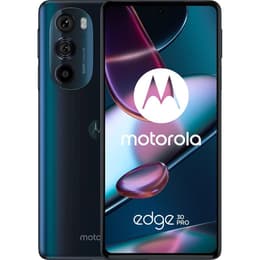
Motorola Edge 30 Pro
Starting at

Refurbished price:A$291.72

Versus A$2,709.00 new

See options
Motorola Razr 40 Ultra
See options

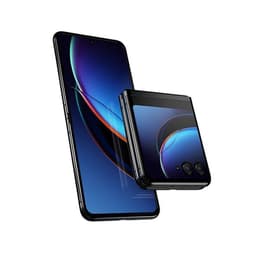
The Motorola Edge 30 Pro, released in early 2022, and the Motorola Razr 40 Ultra, launched in mid-2023, represent distinct approaches within Motorola's smartphone lineup. The Edge 30 Pro offers a traditional slab design focused on high-end specifications, while the Razr 40 Ultra introduces a foldable clamshell form factor with a prominent external display. Both devices operate on the Android platform, providing a largely clean software experience with Motorola's enhancements.

Scores

Durability

When considering the practical lifespan of these devices, several factors come into play, including their release timelines, software support, and physical durability.

  • Release Timeline: The Motorola Edge 30 Pro was released in February/March 2022, making it an older device compared to the Motorola Razr 40 Ultra, which launched in June 2023. This difference in release date directly impacts their remaining software support window.
  • Software Longevity: The Edge 30 Pro was guaranteed two major Android OS upgrades, extending its support up to Android 14, along with three years of security updates. The Razr 40 Ultra, being newer, launched with Android 13 and is expected to receive updates up to Android 15, potentially offering a longer period of official software support.
  • Physical Durability: The Edge 30 Pro features a glass back and a plastic frame, with Gorilla Glass 3 on the front and an IP52 splash-resistant rating. The Razr 40 Ultra, as a foldable, has a more complex design with an aluminum frame and glass back, also carrying an IP52 splash-resistant rating. Its external display is protected by Corning Gorilla Glass Victus. User experiences with the Razr 40 Ultra's foldable screen indicate that while many units hold up well, some users have reported screen protector peeling or hairline cracks over time, particularly in the crease area.

Release year

2022

2023

Compatible with latest Update

Yes

Yes

Operating system

Android

Android

Foldable

No

Yes

Performance

Both smartphones are equipped with powerful processors designed to handle demanding applications and multitasking, though there are differences in their underlying hardware and real-world performance characteristics.

  • Processing Power: The Motorola Edge 30 Pro is powered by a processor from early 2022, while the Motorola Razr 40 Ultra features a slightly newer and more efficient generation of that same processor, released in mid-2022. This generally translates to the Razr 40 Ultra offering improved performance and better power efficiency.
  • Everyday Responsiveness: Users of the Edge 30 Pro generally report a fast and smooth experience with everyday tasks and app usage, attributing this to its powerful internal components and a near-stock Android interface. The Razr 40 Ultra also delivers a snappy and responsive experience, handling graphic-intensive games and demanding applications effectively.
  • Thermal Management and Battery Impact: The processor in the Edge 30 Pro has been noted by some users to generate heat under heavy load, which can impact sustained performance and battery life. The Razr 40 Ultra's processor, despite being powerful, is generally more power-efficient, contributing to a more consistent performance profile and better battery management for a foldable device.

Memory (GB)

8 GB

8 GB

Screen quality

The display experience is a key differentiator between these two Motorola devices, primarily due to the Razr 40 Ultra's unique foldable design and dual-screen setup.

  • Display Technology and Size: The Motorola Edge 30 Pro features a large 6.7-inch pOLED/AMOLED display. The Motorola Razr 40 Ultra, on the other hand, boasts a 6.9-inch foldable pOLED LTPO main display and a substantial 3.6-inch pOLED external cover display. The Razr's external screen is highly functional, allowing users to perform many tasks without opening the phone.
  • Resolution and Clarity: Both devices offer Full HD+ resolutions, with the Edge 30 Pro at 1080x2400 pixels and the Razr 40 Ultra's main screen at 2640x1080 pixels. This results in sharp and clear visuals on both. The Razr 40 Ultra's cover display also has a high resolution of 1056x1066 pixels, providing a crisp viewing experience for its size.
  • Refresh Rate and Brightness: Both phones feature high refresh rates for smooth scrolling and animations. The Edge 30 Pro offers a 144Hz refresh rate. The Razr 40 Ultra's main display can dynamically adjust from 1Hz to 165Hz, while its cover display also supports a 144Hz refresh rate. The Razr 40 Ultra's main display can reach a peak brightness of 1400 nits, and its cover display up to 1100 nits, ensuring good visibility even in bright outdoor conditions. The Edge 30 Pro typically offers around 700 nits of brightness.

Resolution

1080 x 2400

1080 x 2640

Screen type

OLED

Foldable LTPO AMOLED

Audiovisual

The camera systems on the Motorola Edge 30 Pro and Motorola Razr 40 Ultra cater to different priorities, with distinct sensor configurations and performance characteristics.

  • Rear Camera Setup: The Edge 30 Pro features a triple rear camera system, including a 50MP main sensor with optical image stabilization (OIS), a 50MP ultrawide sensor, and a 2MP depth sensor. The Razr 40 Ultra has a dual rear camera setup, comprising a 12MP main sensor with OIS and a 13MP ultrawide lens that also functions for macro photography.
  • Photography Performance: User feedback for the Edge 30 Pro's camera is mixed; while it can take decent photos in good lighting, its low-light performance and overall image processing have received criticism, with some users finding it underwhelming for a device in its category. The Razr 40 Ultra's camera is generally considered competent for everyday use, with some users finding it satisfactory, though it may not compete with devices specifically known for their advanced camera capabilities.
  • Front Camera and Video: A notable feature of the Edge 30 Pro is its high-resolution 60MP front-facing camera, designed for detailed selfies. The Razr 40 Ultra comes with a 32MP front camera. Both devices support 4K video recording, with the Edge 30 Pro capable of 4K at 30/60fps and 8K at 24/30fps, and the Razr 40 Ultra supporting 4K at 60fps.
  • Audio Experience: Both smartphones are equipped with stereo speakers and support Dolby Atmos, aiming to provide an immersive audio experience for media consumption.

Main camera

50 megapixels

12 megapixels

Front camera

60 megapixels

32 megapixels

Miscellaneous

Beyond core performance and display, several practical features and design elements differentiate these two Motorola smartphones, impacting daily usability and connectivity.

  • Connectivity Standards: Both devices support 5G connectivity and Wi-Fi 6E, offering fast mobile and wireless internet speeds. The Razr 40 Ultra features Bluetooth 5.3, a slightly newer standard than the Edge 30 Pro's Bluetooth 5.2.
  • Ports and Biometrics: Both phones utilize a USB Type-C port for charging and data transfer, though the Edge 30 Pro supports USB 3.1, while the Razr 40 Ultra uses USB 2.0. Neither device includes a traditional 3.5mm headphone jack. For security, both integrate a side-mounted fingerprint sensor.
  • Design and Handling: The Motorola Edge 30 Pro has a conventional smartphone form factor, measuring 163.1 x 75.9 x 8.8 mm and weighing 196g. Its design includes a glass back and a plastic frame. The Motorola Razr 40 Ultra's defining characteristic is its foldable clamshell design. When unfolded, it measures 170.83 x 73.95 x 6.99 mm, and when folded, it is 88.42 x 73.95 x 15.1 mm, weighing 188.5g. This compact folded size enhances portability, making it easier to fit into smaller pockets.

Weight

196 oz

1 oz

Screen size (in)

6,7

6.9

Network

5G

5G

SIM card

Dual Physical SIM

Dual Physical SIM

Carrier compatibility

Unlocked

Unlocked

The Motorola Edge 30 Pro and Motorola Razr 40 Ultra cater to different user preferences, each offering a distinct set of advantages. The Edge 30 Pro, a traditional slab smartphone, is often praised for its consistently fast performance and smooth display, providing a reliable experience for everyday tasks and demanding applications. However, some users have noted concerns regarding its camera performance, particularly in challenging lighting conditions, and its battery life under heavy usage.

The Motorola Razr 40 Ultra stands out with its innovative foldable design and highly functional external display, which many users find incredibly useful for quick interactions without opening the device. Its compact form factor when folded is a significant draw for those prioritizing portability. While its performance is robust, some user discussions highlight average camera capabilities compared to other flagships and occasional concerns about the long-term durability of the foldable screen, though many owners report no issues.

Users prioritizing a large, consistent display and a powerful, traditional smartphone experience may find the Motorola Edge 30 Pro well-suited to their needs. Conversely, those who value a unique, compact form factor, a highly interactive external screen, and the convenience of a foldable device will likely lean towards the Motorola Razr 40 Ultra. Both devices offer a clean Android experience, and choosing between them often comes down to whether a conventional high-performance phone or a cutting-edge foldable design with enhanced portability is the higher priority. For those considering a more sustainable choice, both models are available as quality-assured refurbished options.


See all articles

Our recent comparisons