
iPhone 13 Pro Max vs iPhone XS

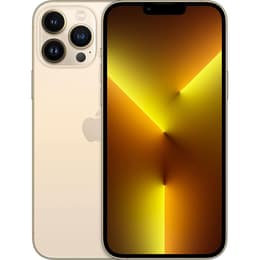
iPhone 13 Pro Max
iPhone 13 Pro Max
Starting at

Refurbished price:A$592.00

Versus A$1,849.00 new

See options
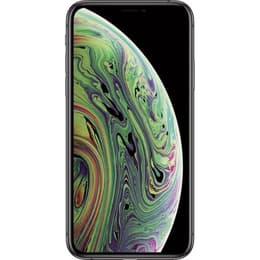
iPhone XS
iPhone XS
Starting at

Refurbished price:A$227.00

Versus A$1,199.00 new

See options

Ratings

The iPhone 13 Pro Max, released in 2021, and the iPhone Xs, launched in 2018, represent different generations of Apple's smartphone lineup. While both devices run on Apple's iOS operating system, the 13 Pro Max offers significant advancements in display technology, camera capabilities, and overall performance compared to the Xs. This comparison will explore the practical differences between these two models to help users understand which device best suits their needs.

Scores

Durability

The practical lifespan of a smartphone is often tied to its release date and subsequent software support.

  • Release Timeline and OS Support: The iPhone 13 Pro Max, released in September 2021, benefits from a more recent launch, ensuring it will receive major iOS updates for several more years. The iPhone Xs, from September 2018, has likely received its final major iOS update with iOS 17, though it may continue to get security patches for a period.
  • Software Longevity: Users of the 13 Pro Max can expect a longer period of access to the latest iOS features and app compatibility. The Xs, while still functional, will gradually see fewer new software features and potentially reduced compatibility with future applications.
  • Build and Water Resistance: Both models feature a stainless steel frame and glass construction, offering a premium feel. The iPhone 13 Pro Max includes Ceramic Shield on the front for enhanced drop protection and an improved IP68 rating for water and dust resistance (maximum depth of 6 meters for up to 30 minutes) compared to the iPhone Xs's IP68 rating (maximum depth of 2 meters for up to 30 minutes).

Release year

2021

2018

Compatible with latest Update

Yes

Yes

Operating system

iOS

iOS

Foldable

No

No

Performance

The internal components of these devices dictate their responsiveness and ability to handle demanding tasks.

  • Storage Options: The iPhone 13 Pro Max offers a wider range of storage capacities, starting from 128GB and going up to 1TB, providing ample space for extensive media libraries and applications. The iPhone Xs offers capacities up to 512GB, which may be sufficient for many users but less flexible for those requiring maximum storage.
  • Battery Behavior: The iPhone 13 Pro Max is known for its significantly larger battery capacity of 4352 mAh, often allowing heavy users to go through a full day or more on a single charge. The iPhone Xs, with its smaller 2658 mAh battery, typically requires more frequent charging, especially with moderate to heavy use.
  • System Responsiveness: The 13 Pro Max features a more advanced processor, resulting in noticeably faster app loading times, smoother multitasking, and superior performance in graphically intensive games and demanding applications. The Xs still handles everyday tasks competently, but users may observe slower performance in newer, more resource-intensive apps.

Memory

6 GB

4 GB

Screen quality

The display is a primary interface, and its quality significantly impacts the user experience.

  • Display Technology and Size: Both devices feature OLED displays, offering deep blacks and vibrant colors. However, the iPhone 13 Pro Max boasts a larger 6.7-inch Super Retina XDR display, providing a more expansive viewing area compared to the iPhone Xs's 5.8-inch Super Retina display.
  • Refresh Rate and Brightness: A key differentiator is the 13 Pro Max's ProMotion technology, which enables an adaptive refresh rate up to 120Hz, resulting in smoother scrolling and more fluid animations. The Xs has a standard 60Hz refresh rate. The 13 Pro Max also achieves significantly higher peak brightness of 1200 nits (HDR), improving visibility in bright outdoor conditions, compared to the Xs's 625 nits typical brightness.
  • Resolution and Clarity: Both displays offer high pixel densities, ensuring sharp text and clear images. The 13 Pro Max has a resolution of 2778 x 1284 pixels at 458 ppi, while the Xs has a resolution of 2436 x 1125 pixels at 458 ppi.

Resolution

1284 x 2778

1125 x 2436

Screen type

Super Retina XDR OLED

Super Retina OLED

Audiovisual

Camera systems and audio output are crucial for capturing memories and consuming media.

  • Camera System Capabilities: The iPhone 13 Pro Max features a more advanced triple-camera system, including a 12MP Wide, 12MP Ultra Wide, and 12MP Telephoto lens, along with a LiDAR scanner for improved low-light focusing and augmented reality. The iPhone Xs has a dual-camera setup with 12MP Wide and 12MP Telephoto lenses.
  • Photography Performance: The 13 Pro Max excels in low-light photography, capturing more detail and less noise, and offers features like Cinematic mode for video and Photographic Styles for personalized image processing. The Xs provides good everyday photos but lacks the advanced computational photography features and low-light prowess of the newer model.
  • Video Recording and Audio: The 13 Pro Max supports ProRes video recording up to 4K at 30 fps and offers enhanced video stabilization. Both devices record high-quality video, with the Xs capable of 4K video recording at 24, 30, or 60 fps. For audio, the 13 Pro Max generally offers a richer and louder stereo speaker experience, while both provide clear microphone quality for calls.

Main camera

12 megapixels

12 megapixels

Front camera

12 megapixels

7 megapixels

Miscellaneous

Beyond core features, practical elements contribute to the overall usability of a device.

  • Connectivity Options: The iPhone 13 Pro Max supports 5G cellular networks, offering faster download and upload speeds in supported areas, alongside Wi-Fi 6 for improved wireless performance. The iPhone Xs is limited to 4G LTE and Wi-Fi 5. Both models utilize Bluetooth 5.0 for accessories.
  • Port Type and Biometrics: Both devices feature Apple's proprietary Lightning port for charging and data transfer. For security and convenience, both the 13 Pro Max and the Xs rely on Face ID for biometric authentication, allowing for secure unlocking and payments.
  • Physical Characteristics: The iPhone 13 Pro Max is a larger and heavier device, weighing 240g, with dimensions of 160.8 x 78.1 x 7.65 mm, which provides a substantial feel but may be less comfortable for one-handed use for some. The iPhone Xs is more compact and lighter at 177g, with dimensions of 143.6 x 70.9 x 7.7 mm, making it easier to handle and pocket.

Weight

238 oz

177 oz

Screen size (in)

6.7

5.8

SIM card

Physical SIM + eSIM

Physical SIM + eSIM

Carrier compatibility

Unlocked

Unlocked

Connector

Lightning

Lightning

Users often praise the iPhone 13 Pro Max for its exceptional battery life, vibrant 120Hz ProMotion display, and versatile camera system, particularly its low-light performance and video capabilities. Some common feedback points include its substantial size and weight, which can be a consideration for those preferring a more compact device. The iPhone Xs is frequently lauded for its still-capable performance for everyday tasks and its more manageable form factor. However, users sometimes note its battery life requires more frequent charging and its camera system, while good, is less advanced than newer models.

Users prioritizing extended battery life, a large and fluid display, and professional-grade camera features will find the iPhone 13 Pro Max well-suited to their needs. This device is ideal for content creators, heavy media consumers, and those who demand the latest in mobile technology. Conversely, users who prefer a more compact and lighter device, primarily use their phone for everyday communication and social media, and do not require the absolute latest camera or display technology, may lean toward the iPhone Xs. Both models, when chosen as a quality-assured refurbished option, offer a sustainable choice for consumers looking to extend the life cycle of electronic products.

See all articles

Our recent comparisons