Compare models
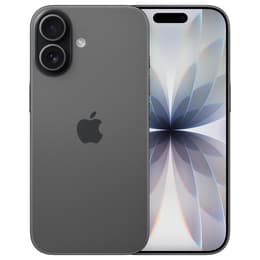
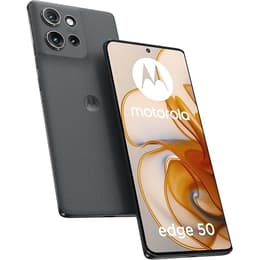
iPhone 17 vs Motorola Edge 50
- 1-year warranty
- Free standard shipping
- Free 30-day returns
Differences at a glance
The Apple iPhone 17 (2025) and the Motorola Edge 50 (2024) are contemporary smartphones designed for users seeking capable daily communication, reliable media consumption, and polished mobile software. While both devices occupy prominent positions in the modern mobile market, they differ significantly in their operating systems, hardware philosophy, and launch schedules.
The iPhone 17 runs on Apple's proprietary iOS platform and emphasizes tight ecosystem integration, whereas the Motorola Edge 50 operates on Android and highlights a distinctive curved aesthetic and swift charging capabilities. Understanding how these structural differences influence everyday utility helps users determine which device aligns more closely with their specific workflow and lifestyle habits.
Available Models
Colour
Storage (GB)
Scores
Durability
When examining hardware longevity and software support, both devices approach lifecycle durability through different update schedules and build resilience.
- Software Support Duration: The iPhone 17 benefits from Apple's extended update cadence, providing approximately five to six years of operating system upgrades and security patches. The Motorola Edge 50 offers a shorter, yet dependable, Android update window typical of its tier.
- Build Resilience: The iPhone 17 utilizes advanced front-shield glass and high-grade aluminum framing designed to withstand accidental drops. The Motorola Edge 50 features a silicone polymer vegan leather back option paired with robust dust and water resistance, catering to users who prefer textured ergonomics.
- Expected Practical Lifespan: Both models are built to remain functional for years of heavy daily use, though the iPhone's long-term software backing gives it an advantage for users who keep devices for extended periods.
Release year
2025
2024
Compatible with latest Update
Yes
Yes
Operating system
iOS
Android
Foldable
No
No
Performance
Evaluating processing capability reveals how each smartphone handles everyday tasks, multitasking, and battery endurance under typical user routines.
- App Loading and Multitasking: The iPhone 17 handles demanding applications, high-end mobile gaming, and rapid background task-switching smoothly due to its advanced processing architecture and optimized memory management. The Motorola Edge 50 manages daily productivity tasks, web browsing, and casual gaming efficiently with its balanced mid-range processor and ample memory configuration.
- Battery Behavior: The iPhone 17 offers optimized power management that easily sustains a full day of mixed usage. The Motorola Edge 50 features a large internal battery capacity paired with rapid charging technology, allowing users to replenish power quickly during busy days.
- Storage Availability: The iPhone 17 starts at a higher baseline storage tier with no expandable slot, while the Motorola Edge 50 provides a fixed generous internal capacity suited for large media libraries.
Screen quality
Display characteristics shape how comfortably users read text, view media, and interact with visual content outdoors and indoors.
- Display Technology: Both devices employ advanced organic light-emitting diode panels that deliver deep contrast levels, rich colors, and wide viewing angles.
- Brightness and Outdoor Legibility: The iPhone 17 achieves exceptionally high peak luminance levels to ensure clear visibility under bright sunlight. The Motorola Edge 50 also reaches comfortable outdoor brightness thresholds, making outdoor messaging and navigation straightforward.
- Refresh Rate and Smoothness: Both models support high refresh rate technology, resulting in fluid scrolling through web pages, smooth interface animations, and responsive touch feedback during daily navigation.
Audiovisual
Optics and audio reproduction dictate each device's suitability for capturing personal memories and enjoying multimedia content.
- Camera System Capabilities: The iPhone 17 utilizes dual high-resolution rear sensors equipped with advanced computational photography to capture detailed everyday and low-light scenes. The Motorola Edge 50 deploys a triple-camera layout featuring a dedicated main sensor, ultra-wide option, and telephoto capability for flexible framing.
- Video Recording and Audio: The iPhone 17 excels in stable video recording and spatial audio capture, supported by clear stereo speakers. The Motorola Edge 50 provides reliable microphone clarity for voice calls and balanced media playback through its stereo speaker setup.
- Selfie Performance: Both devices feature high-resolution front-facing cameras optimized for clear video conferencing and self-portraits.
Front camera
18 megapixels
32 megapixels
Miscellaneous
Practical daily elements such as connectivity, physical dimensions, and sensor layout influence overall device ergonomics.
- Connectivity Standards: Both smartphones support modern fifth-generation cellular networks, tri-band Wi-Fi standards, and Bluetooth technology for reliable accessory pairing.
- Physical Ports and Biometrics: The iPhone 17 uses a reversible universal USB connector and secure facial recognition. The Motorola Edge 50 also utilizes a standard USB port alongside an under-display fingerprint sensor for quick unlocking.
- Handling and Dimensions: The iPhone 17 presents a flat-edge profile with balanced weight distribution, whereas the Motorola Edge 50 offers a slim, curved silhouette that feels narrow and comfortable in one hand.
Weight
177 oz
180 oz
Screen size (in)
6.3
6.7
Network
5G
5G
SIM card
Physical SIM + eSIM
Physical SIM
Carrier compatibility
Unlocked
Unlocked
Connector
USB-C
USB-C
What the community thinks
Choosing between the Apple iPhone 17 and the Motorola Edge 50 ultimately depends on personal preference for operating systems and hardware design. Users prioritizing a closed software ecosystem, extended update longevity, and advanced computational photography will find the iPhone 17 well-suited to their daily routines. Conversely, users who prefer the customizability of Android, a slim curved aesthetic, and rapid wired power replenishment often lean toward the Motorola Edge 50. Community discussions frequently highlight the iPhone's long-term processing strength alongside Motorola's sleek ergonomics and high-refresh display value.
For consumers seeking a sustainable choice, exploring a quality-assured refurbished option provides an eco-friendly alternative that reduces electronic waste without compromising performance or reliability. Reviewing these practical trade-offs ensures an informed decision tailored to individual communication needs.