
Compare models
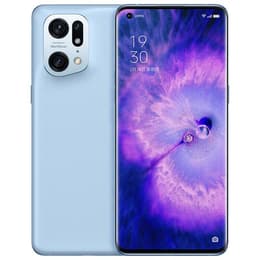
iPhone 17 Pro Max vs Oppo Find X5 Pro
- 1-year warranty
- Free standard shipping
- Free 30-day returns
Differences at a glance
The Apple iPhone 17 Pro Max (2025) and the Oppo Find X5 Pro (2022) represent advanced smartphone engineering from different years and ecosystems. While the iPhone runs on Apple's proprietary mobile operating system, the Oppo operates on Android with a customized interface. Both devices target users looking for expansive screens and robust capability, differing primarily in their release timelines, operating environments, and design philosophies.
Available Models
Colour
Storage (GB)
Scores
Durability
When evaluating longevity and physical endurance, these two devices reflect different generations of mobile technology and support commitments.
- Release Timeline and Software Support: The iPhone 17 Pro Max launched several years after the Oppo Find X5 Pro, meaning it benefits from an extended software support window and receives operating system updates further into the future.
- Repairability and Build Structure: Both models utilize rigid frame construction designed to withstand daily wear, though newer manufacturing methods in the iPhone incorporate advanced thermal cooling solutions to preserve internal health over time.
- Expected Practical Lifespan: Because of its recent launch date, the iPhone retains software compatibility milestones for a longer duration, whereas the Oppo relies on mature, stable long-term software performance within the Android ecosystem.
Release year
2025
2022
Compatible with latest Update
Yes
Yes
Operating system
iOS
Android
Foldable
No
No
Performance
Handling daily tasks, demanding applications, and background multitasking varies between these two choices based on internal processing architecture and memory allocation.
- Multitasking and System Memory: The iPhone 17 Pro Max pairs its custom silicon with ample system memory to keep complex applications active in the background, while the Oppo Find X5 Pro utilizes generous random access memory configurations to switch smoothly between demanding tasks.
- Battery Behavior and Endurance: Both phones house large internal batteries designed to support a full day of mixed usage, with power management features adapting to user routines to conserve energy during idle periods.
- Application Responsiveness: Daily navigation, heavy gaming, and fast-paced web browsing run fluidly on both devices, translating complex computational tasks into seamless real-world interactions.
Screen quality
Visual immersion is a primary focus for both models, utilizing large, high-resolution panels designed for media consumption and sharp text clarity.
- Display Technology: Both devices feature advanced OLED screens that deliver deep black levels, high contrast ratios, and vivid color reproduction for everyday viewing.
- Brightness and Outdoor Legibility: Peak brightness outputs allow both displays to remain legible under direct sunlight, ensuring comfortable outdoor use for navigation and photography.
- Refresh Rate and Fluidity: High refresh rate capabilities on both screens ensure that scrolling through documents and moving through system menus appears smooth and responsive.
Resolution
2868x1320
1440 x 3216
Screen type
Super Retina XDR
LTPO2 AMOLED
Audiovisual
Photography and media recording capabilities utilize distinct multi-lens hardware arrays paired with proprietary image processing software.
- Rear Camera Versatility: The iPhone 17 Pro Max employs a triple high-megapixel camera system across all rear lenses for consistent detail, while the Oppo Find X5 Pro integrates dual primary sensors alongside specialized color-processing hardware developed in partnership with Hasselblad.
- Low-Light and Video Capture: Both smartphones capture detailed low-light imagery and stable high-definition video, utilizing advanced exposure balancing to minimize grain in dimly lit environments.
- Audio and Media Output: Stereo speaker setups on both devices deliver balanced sound output for hands-free calls and casual media streaming without requiring external speakers.
Main camera
48 megapixels
50 megapixels
Front camera
18 megapixels
32 megapixels
Miscellaneous
Practical physical characteristics and connectivity standards define how each device integrates into daily routines and accessory ecosystems.
- Connectivity and Ports: Both models support widespread 5G network bands and modern Wi-Fi standards, utilizing reversible USB-C ports for charging and wired data transfers.
- Security and Biometrics: The iPhone relies on secure facial recognition sensors housed within its upper screen cutout, while the Oppo integrates an optical fingerprint reader directly beneath the display panel.
- Handling and Weight: Generous screen sizes make both devices physically substantial, with weight distributions and frame materials chosen to balance durability with hand-held comfort.
Weight
233 oz
218 oz
Screen size (in)
6.9
6.7
Network
5G
5G
SIM card
eSIM
Physical SIM + eSIM
Carrier compatibility
Unlocked
Unlocked
Connector
USB-C
USB-C
What the community thinks
User discussions across community forums highlight distinct preferences for each device based on software ecosystem and release generation. Owners of the iPhone 17 Pro Max frequently praise its sustained processing longevity, seamless integration with companion hardware, and consistent multi-lens camera results. Conversely, users of the Oppo Find X5 Pro often emphasize the appeal of its flexible Android customization options, rapid charging speeds, and distinct ceramic back texture. Common criticisms for the iPhone center on its substantial physical footprint and weight, while Oppo users occasionally note that major operating system updates arrive less frequently than on competing platforms.
Users prioritizing long-term software support and deep ecosystem integration may find the iPhone 17 Pro Max well-suited to their needs. Meanwhile, users who prefer open file management, extensive interface customization, and fast replenishment of battery power will likely lean toward the Oppo Find X5 Pro. Opting for a quality-assured refurbished option provides an eco-friendly alternative for acquiring either device, supporting more sustainable consumer choices without compromising on capability.