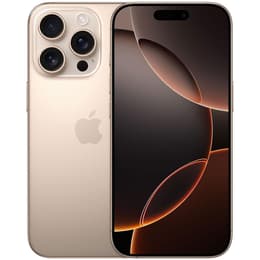
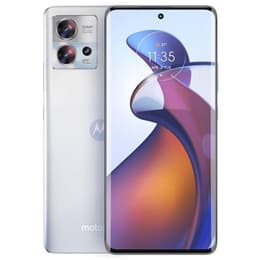

iPhone 16 Pro vs Motorola Edge 30 Fusion

iPhone 16 Pro
iPhone 16 Pro
Starting at

Refurbished price:A$1,148.00

Versus A$1,999.00 new

See options
Motorola Edge 30 Fusion
Starting at

Refurbished price:A$257.46

Versus A$1,352.00 new

See options

The iPhone 16 Pro, released in September 2024, and the Motorola Edge 30 Fusion, launched in September 2022, represent distinct approaches to smartphone design and functionality. While both are designed to offer a premium mobile experience, they cater to different user ecosystems with Apple's iOS and Google's Android operating systems, respectively. The iPhone 16 Pro introduces a more advanced camera system and a newer processor, whereas the Motorola Edge 30 Fusion emphasizes a high refresh rate display and rapid charging capabilities.

Scores

Durability

When considering the long-term usability of these devices, their release timelines and software support are key factors. The iPhone 16 Pro, being a more recent release, generally benefits from a longer period of software updates and security patches compared to the Motorola Edge 30 Fusion.

  • Software Longevity: The iPhone 16 Pro launched with iOS 18 and has received updates, with iOS 26.4.1 available as of April 2026, indicating a sustained commitment to software support. Apple typically provides iOS updates for approximately 5-6 years from a device's release. The Motorola Edge 30 Fusion, released with Android 12, will likely receive fewer major Android version updates due to its earlier launch date.
  • Physical Durability: The iPhone 16 Pro features a titanium frame and a Ceramic Shield front, which Apple states is 50% tougher than previous generations, along with an IP68 rating for water and dust resistance, allowing submersion up to 6 meters for 30 minutes. User reports suggest that while the Ceramic Shield offers improved overall strength, the thinner bezels might make the display more susceptible to damage from side impacts. The Motorola Edge 30 Fusion incorporates an aluminum frame and a glass back, with Corning Gorilla Glass 5 protecting its display. It carries an IP52 rating, providing splash and dust resistance.
  • Repairability: While specific repairability scores can vary, both devices are complex modern smartphones. The availability of parts and authorized service centers can influence the practical lifespan, with Apple generally having a widespread service network.

Release year

2024

2022

Compatible with latest Update

Yes

Yes

Foldable

No

No

Performance

Performance is a critical aspect for any smartphone, influencing everything from app responsiveness to gaming experiences. These two devices offer different levels of processing power and memory configurations.

  • Processing Power: The iPhone 16 Pro is equipped with a current-generation processor, which significantly enhances performance, particularly for demanding applications and AI-related tasks. This allows for seamless multitasking and smooth operation even with intensive workloads. The Motorola Edge 30 Fusion utilizes a processor that was a flagship in 2021, providing robust performance for everyday tasks and many modern applications.
  • Multitasking and Storage: The iPhone 16 Pro comes with 8 GB of memory, supporting efficient multitasking and app management. It offers storage options ranging from 128 GB up to 1 TB. The Motorola Edge 30 Fusion is available with 8 GB or 12 GB of memory, also facilitating smooth transitions between applications. Its storage configurations include 128 GB, 256 GB, and 512 GB.
  • Battery Behavior: The iPhone 16 Pro is reported to offer up to 27 hours of video playback and 85 hours of audio playback, benefiting from a larger battery and efficient processing. Users have noted a substantial increase in battery life compared to its predecessors. The Motorola Edge 30 Fusion features a 4400 mAh battery and supports 68W fast charging, allowing for quick power replenishment.

Memory (GB)

8 GB

8 GB

Screen quality

The display is the primary interface for user interaction, and both devices offer vibrant viewing experiences with distinct characteristics.

  • Display Technology and Resolution: The iPhone 16 Pro features a 6.3-inch Super Retina XDR OLED display with a resolution of 2622 x 1206 pixels, resulting in a pixel density of 460 ppi. This provides sharp images and deep blacks. The Motorola Edge 30 Fusion has a slightly larger 6.55-inch pOLED display with a 1080 x 2400 pixel resolution, offering a pixel density of 402 ppi. Both displays support HDR content.
  • Brightness and Refresh Rate: The iPhone 16 Pro's display can reach a typical brightness of 1000 nits and a peak outdoor brightness of 2000 nits, ensuring good visibility in various lighting conditions. It also features an adaptive refresh rate up to 120Hz with ProMotion technology for smooth scrolling and responsiveness. The Motorola Edge 30 Fusion offers a peak brightness of up to 1100 nits and boasts a higher 144Hz refresh rate, which can provide an even smoother visual experience, particularly in supported content and navigation.
  • Design and Features: The iPhone 16 Pro features thinner display borders and the Dynamic Island, which integrates notifications and activities into a dynamic area at the top of the screen. The Motorola Edge 30 Fusion's display is curved on the sides, contributing to a sleek design and offering edge lighting for notifications.

Resolution

1206 x 2622

1080 x 2400

Screen type

LTPO Super Retina XDR OLED

P-OLED

Audiovisual

For many users, camera capabilities are a primary consideration, and both smartphones offer versatile camera systems for capturing photos and videos.

  • Rear Camera Systems: The iPhone 16 Pro features a triple camera setup, including a 48 MP wide camera, a 48 MP ultra-wide camera, and a 12 MP 5x telephoto lens with optical image stabilization (OIS). This system is designed for high-resolution photos and offers advanced zoom capabilities. The Motorola Edge 30 Fusion also has a triple rear camera system, comprising a 50 MP wide lens with OIS, a 13 MP ultra-wide lens that doubles as a macro camera, and a 2 MP depth sensor.
  • Photography Performance: The iPhone 16 Pro's 48 MP main and ultra-wide cameras are noted for producing impressive detail and quality, especially in good lighting conditions, with support for super-high-resolution photos. Its telephoto lens provides significant optical zoom. The Motorola Edge 30 Fusion's 50 MP main camera is capable of capturing good images, though some users have noted that its software processing can sometimes lead to less naturalistic results, particularly with skin tones. Its ultra-wide camera is considered above average for its class.
  • Video Recording and Front Camera: The iPhone 16 Pro supports 4K video recording at up to 120 frames per second (fps), ProRes video, and spatial video recording, offering extensive options for videographers. Its front camera is a 12 MP sensor with autofocus. The Motorola Edge 30 Fusion can record 4K video at 30 fps with both its rear and front cameras, and also supports 8K video recording with its main camera. It features a 32 MP front-facing camera.

Main camera

48 megapixels

50 megapixels

Front camera

12 megapixels

32 megapixels

Miscellaneous

Beyond core performance and camera, several practical features contribute to the overall user experience and daily utility of a smartphone.

  • Connectivity and Ports: The iPhone 16 Pro supports 5G cellular networks, Wi-Fi 7, and Bluetooth 5.3, offering advanced wireless connectivity. It features a USB-C port with USB 3 transfer speeds, enabling fast data transfer and versatile charging options. The Motorola Edge 30 Fusion also supports 5G, Wi-Fi 6 (ax), and Bluetooth 5.2. It includes a USB-C port with USB 3.1 capabilities.
  • Biometrics and Audio: For security, the iPhone 16 Pro relies on Face ID for facial recognition and includes a LiDAR Scanner for enhanced depth sensing. It features stereo speakers. The Motorola Edge 30 Fusion incorporates an in-display fingerprint sensor for secure unlocking. It also offers stereo speakers with Dolby Atmos support for an immersive audio experience.
  • Design and Handling: The iPhone 16 Pro has dimensions of 149.6 x 71.5 x 8.25 mm and weighs 199 grams, featuring a titanium design. It includes a new Camera Control button for quick access to camera functions. The Motorola Edge 30 Fusion measures 158.48 x 71.99 x 7.45 mm and weighs 175 grams (some variants 168g), offering a slim and lightweight form factor.

Weight

199 oz

168 oz

Screen size (in)

6.3

6,55

Network

5G

5G

SIM card

Physical SIM + eSIM

Dual Physical SIM

Carrier compatibility

Unlocked

Unlocked

User sentiment for the iPhone 16 Pro often highlights its advanced camera capabilities, particularly the improved low-light performance and versatile zoom options, as well as its robust processing power for demanding tasks. Many appreciate the extended battery life and the vibrant, high-refresh-rate display. However, some users have expressed concerns regarding the potential durability implications of its thinner bezels in certain drop scenarios.

For the Motorola Edge 30 Fusion, common praise points include its sleek design, the smooth 144Hz pOLED display, and its fast charging capabilities. Users generally find its performance to be strong for its class, and the near-stock Android experience is often well-received. Criticisms sometimes point to the camera's image processing, which some find less natural, and the absence of a dedicated telephoto lens.

Users prioritizing a cutting-edge camera system with advanced video features, a longer software support timeline, and the iOS ecosystem will find the iPhone 16 Pro well-suited to their needs. Its powerful processor and enhanced display make it ideal for content creation and intensive applications. Conversely, users who value a very high refresh rate display, rapid wired charging, and the flexibility of the Android operating system may lean toward the Motorola Edge 30 Fusion. It offers a balanced set of features for everyday use in a lightweight design.

Both devices offer compelling features, and considering a quality-assured refurbished option can be a sustainable choice for acquiring either model.
See all articles

Our recent comparisons