iPhone 15 vs iPhone 16

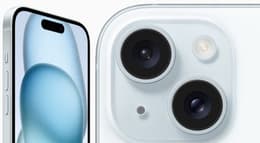
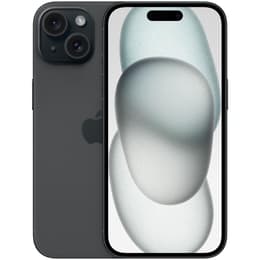
iPhone 15
iPhone 15
Starting at

Refurbished price:A$680.00

Versus A$1,249.00 new

See options
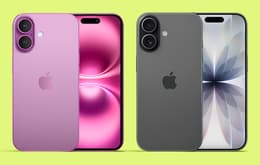
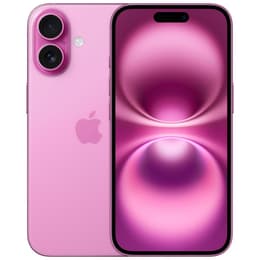
iPhone 16
iPhone 16
Starting at

Refurbished price:A$946.00

Versus A$1,399.00 new

See options

Ratings

The iPhone 15, released in September 2023, and the iPhone 16, launched in September 2024, represent consecutive generations of Apple's standard smartphone line. While both devices operate on the iOS ecosystem and share a familiar design language, the iPhone 16 introduces notable advancements in internal performance, camera capabilities, and repairability that differentiate it from its predecessor.

Scores

Durability

When considering the practical lifespan of these devices, several factors come into play, including software support and physical durability.

  • Software Longevity: Apple typically provides extensive software support for its iPhones. The iPhone 15, released in 2023, is guaranteed a minimum of five years of major iOS updates from its launch date [44, 47]. As the iPhone 16 was released a year later in 2024, it is expected to receive software updates for at least one year longer than the iPhone 15, extending its functional lifespan in terms of new features and security patches [20].
  • Repairability: The iPhone 16 marks a significant improvement in repairability compared to the iPhone 15. iFixit awarded the iPhone 16 a repairability score of 7 out of 10, a substantial increase from the iPhone 15's score of 4 out of 10 [2, 3, 5, 8, 9]. This enhancement is attributed to design changes that make components, such as the battery, more accessible and easier to replace, potentially leading to a longer practical lifespan through easier maintenance [2, 5, 8].
  • Expected Practical Lifespan: Both models are built with durable materials, including Ceramic Shield front covers and water resistance ratings [19, 38, 42]. However, the iPhone 16's improved internal design for repair could mean it remains a viable device for a longer period, as repairs might be more straightforward and less costly over time.

Release year

2023

2024

Compatible with latest Update

Yes

Yes

Foldable

No

No

Performance

The core performance of a smartphone is largely determined by its internal processing power and memory, impacting daily usage from app responsiveness to demanding tasks.

  • Processing Power: The iPhone 15 is powered by the A16 Bionic chip [7, 13, 14]. The iPhone 16 features the newer A18 chip [4, 11, 32]. This newer processor in the iPhone 16 offers improved efficiency and speed, translating to a more responsive user experience. Apple states the A18 in the iPhone 16 provides a 30% faster CPU compared to the iPhone 15's processor [32].
  • Multitasking and Responsiveness: The iPhone 15 comes with 6GB of RAM [13, 14], while the iPhone 16 is equipped with 8GB of RAM [4, 11]. This increase in memory allows the iPhone 16 to handle more applications simultaneously and switch between them more smoothly, benefiting users who frequently multitask or run memory-intensive applications.
  • Real-World Usage: For everyday tasks like browsing, social media, and light gaming, both devices offer a fluid experience. However, users engaging in more demanding activities such as advanced mobile gaming, video editing, or heavy multitasking may notice the performance gains and increased headroom provided by the iPhone 16's more powerful processor and additional RAM. Some iPhone 15 users have reported occasional heating during intensive use [22, 33].

Memory (GB)

6 GB

8 GB

Screen quality

The display is a primary interface for any smartphone, and both the iPhone 15 and iPhone 16 offer high-quality viewing experiences with some shared characteristics.

  • Display Technology and Clarity: Both the iPhone 15 and iPhone 16 feature 6.1-inch Super Retina XDR OLED displays, delivering vibrant colors, deep blacks, and excellent contrast [1, 6, 19, 38, 42]. They share an identical resolution of 2556x1179 pixels at 460 pixels per inch (ppi), ensuring sharp and clear visuals for text, images, and videos [1, 6, 19, 38, 42].
  • Brightness Levels: Both models offer consistent brightness specifications, with a typical maximum brightness of 1000 nits, a peak HDR brightness of 1600 nits, and an impressive peak outdoor brightness of 2000 nits [1, 6, 19, 26, 38, 42]. This ensures good visibility even in bright outdoor conditions.
  • Refresh Rate: A key similarity between the standard models of both generations is their 60Hz refresh rate [1, 13, 22, 45]. While this is sufficient for most daily interactions, some users coming from devices with higher refresh rates or those sensitive to motion smoothness might find the 60Hz experience less fluid, a common point of feedback for the iPhone 15 [22, 33].

Resolution

1179 x 2556

1179 x 2556

Screen type

Super Retina XDR OLED

Super Retina XDR OLED

Audiovisual

The camera systems on both the iPhone 15 and iPhone 16 are designed to capture high-quality photos and videos, with the newer model introducing refinements and additional capabilities.

  • Main Camera System: Both devices are equipped with an advanced dual-camera system featuring a 48-megapixel main camera and a 12-megapixel ultra-wide camera [4, 11, 13, 16, 19, 42]. The 48MP main sensor on both models is capable of capturing highly detailed images, often outputting 24MP photos by default for improved clarity [21, 39]. The iPhone 15's main camera was noted for its significant upgrade in detail and low-light performance compared to its predecessors [10, 16, 21].
  • Photography Features: The iPhone 16 builds upon its predecessor's capabilities by adding a dedicated macro mode, allowing for detailed close-up photography [29, 31]. It also features enhanced low-light performance for the ultra-wide camera and the ability to capture spatial photos and videos, which can be viewed on compatible devices [29]. The iPhone 15 offers a 2x sensor crop that simulates a telephoto lens, providing optical-quality zoom at that focal length [10, 43].
  • Video Recording and Audio: Both models support 4K video recording at various frame rates, offering high-quality video capture [19, 42]. Microphone quality for calls and recording is generally clear on both devices. The iPhone 16 also features improved audio recording capabilities [23].

Main camera

48 megapixels

48 megapixels

Front camera

12 megapixels

12 megapixels

Miscellaneous

Beyond the core features, several practical elements contribute to the overall user experience and connectivity of these smartphones.

  • Connectivity Standards: The iPhone 15 supports Wi-Fi 6E and Bluetooth 5.3, providing fast and reliable wireless connections [13]. The iPhone 16 upgrades to Wi-Fi 7, offering potentially faster speeds and improved efficiency in compatible network environments, while retaining Bluetooth 5.3 [4]. Both models support 5G cellular connectivity.
  • Charging Port and Physical Design: Both the iPhone 15 and iPhone 16 have transitioned to a USB-C port for charging and data transfer, aligning with modern standards [1, 4, 7, 10]. However, both standard models utilize USB 2.0 speeds for data transfer. Physically, the dimensions and weight are nearly identical, with the iPhone 15 measuring 147.6 x 71.6 x 7.8 mm and weighing 171g [13, 19, 42], and the iPhone 16 at 147.6 x 71.6 x 7.8 mm and 170g [4, 38]. Both feature an aluminum design with a Ceramic Shield front and color-infused glass back [19, 38, 42].
  • Additional Features: Both devices include essential sensors such as Face ID for secure authentication, a barometer, gyroscope, accelerometer, proximity sensor, and ambient light sensor [1, 4]. The iPhone 16 introduces a new Camera Control button, offering a dedicated physical input for camera functions [23, 29, 32]. The iPhone 16 also features a slightly larger battery capacity at 3561 mAh compared to the iPhone 15's 3349 mAh, which could translate to marginally longer battery life [4, 11, 14].

Weight

171 oz

170 oz

Screen size (in)

6.1

6.1

Network

5G

5G

SIM card

Physical SIM + eSIM

Physical SIM + eSIM

Carrier compatibility

Unlocked

Unlocked

Connector

USB-C (USB 2)

USB-C (USB 2)

User feedback for the iPhone 15 often highlights its capable main camera, which delivers sharp and vibrant photos, and generally satisfactory battery life for a full day of use for many individuals [22, 24, 33, 37]. Users also appreciate its comfortable in-hand feel and the overall smooth iOS experience [22, 37]. However, common criticisms include the 60Hz display, which some find less fluid than higher refresh rate screens, and occasional reports of the device warming up under certain conditions [22, 24, 33, 36]. The ultra-wide camera has also been noted as a weaker point by some users [22].

The iPhone 16, being the newer model, builds on these foundations with several key enhancements. Its significantly improved repairability score is a notable advantage, suggesting easier and potentially more affordable maintenance over its lifespan [2, 3, 5, 8, 9]. The upgraded processor and increased RAM offer a performance boost, making it better suited for future demanding applications and smoother multitasking [4, 11, 32]. Camera improvements, such as macro mode and enhanced low-light performance for the ultrawide lens, provide greater versatility for photography enthusiasts [29]. While the 60Hz display remains, the overall package represents a refinement of the iPhone experience.

Users prioritizing a solid, reliable smartphone with a strong camera for everyday moments and consistent software support may find the iPhone 15 well-suited to their needs. Conversely, users who value the latest performance for intensive tasks, enhanced camera versatility including macro photography, and a device designed for easier long-term repairability may lean towards the iPhone 16. Both models offer a quality experience within the Apple ecosystem, and considering a quality-assured refurbished option for either device can be an eco-friendly alternative to purchasing new.

See all articles

Our recent comparisons