
iPhone 16 Pro vs Motorola Edge 50

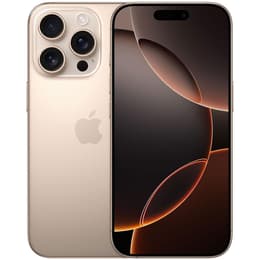
iPhone 16 Pro
iPhone 16 Pro
Starting at

Refurbished price:A$1,148.00

Versus A$1,999.00 new

See options
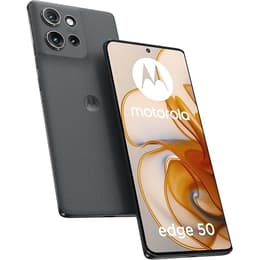
Motorola Edge 50
Motorola Edge 50
See options

The iPhone 16 Pro, released in September 2024, and the Motorola Edge 50 Pro, launched in April 2024, represent distinct approaches to modern smartphone design and functionality. While both devices offer advanced features, they cater to different user priorities. The iPhone 16 Pro operates on Apple's iOS ecosystem, emphasizing a powerful integrated experience, whereas the Motorola Edge 50 Pro runs on Android, offering a more customizable interface. Key differentiators lie in their processing capabilities, camera systems, and software support timelines, influencing their overall user experience.

Scores

Durability

When considering the long-term usability of a smartphone, factors like release timeline, software support, and physical resilience are important. Both the iPhone 16 Pro and the Motorola Edge 50 Pro offer robust designs, but their software longevity and repairability aspects present different outlooks.

  • Release Timeline and Software Support: The iPhone 16 Pro, launched in September 2024, benefits from Apple's consistent and extended software update policy, typically receiving iOS updates for five to six years from its release date. This provides a longer period of access to new features and security enhancements. The Motorola Edge 50 Pro, released in April 2024, is promised three generations of Android OS updates, extending to Android 17, and four years of security patches. This means the iPhone generally offers a longer period of official software support.
  • Physical Durability: The iPhone 16 Pro features a titanium design and Ceramic Shield front cover, contributing to its overall resilience. It also boasts an IP68 rating for dust and water resistance, allowing submersion up to 6 meters for 30 minutes. Some durability tests, however, suggest that its thinner bezels might make the display more susceptible to damage from side impacts. The Motorola Edge 50 Pro also comes with an IP68 rating for dust and water resistance and features Gorilla Glass for screen protection.
  • Expected Practical Lifespan: Users often report that iPhones maintain strong performance and receive critical updates for many years, making them a suitable choice for those seeking maximum longevity. The Motorola Edge 50 Pro offers a solid build and a respectable software commitment for an Android device, though its update cycle is shorter than Apple's. For users considering a quality-assured refurbished option, both devices can offer extended practical lifespans beyond their initial purchase, especially with continued security updates.

Release year

2024

2024

Compatible with latest Update

Yes

Yes

Foldable

No

No

Performance

The performance of a smartphone is central to its daily operation, affecting everything from app responsiveness to demanding tasks like gaming and video editing. The iPhone 16 Pro and Motorola Edge 50 Pro approach performance with different hardware philosophies, resulting in distinct user experiences.

  • Processing Power: The iPhone 16 Pro is equipped with Apple's A18 Pro chip, which includes a 6-core CPU, a 6-core GPU, and a 16-core Neural Engine. This hardware configuration delivers exceptional speed and efficiency, allowing for smooth multitasking, rapid app loading, and fluid performance in graphically intensive games and professional applications. Benchmarks indicate a significant lead in single-core CPU performance and strong multi-core and GPU capabilities compared to many rivals. The Motorola Edge 50 Pro is powered by the Qualcomm Snapdragon 7 Gen 3 processor. This chipset is designed to provide a responsive experience for everyday use, social media, and light gaming. Users generally find it capable for typical smartphone activities without noticeable lag.
  • Multitasking and Responsiveness: With 8GB of RAM, the iPhone 16 Pro handles numerous open applications and complex workflows efficiently, maintaining smooth transitions and quick access to background tasks. The Motorola Edge 50 Pro offers configurations with 8GB or 12GB of RAM. While sufficient for most users, those who frequently switch between many demanding applications might notice a difference in sustained multitasking fluidity compared to the iPhone.
  • Battery Behavior: The iPhone 16 Pro's battery capacity is 3582 mAh, and users often report that it provides good all-day battery life, even with heavy usage. The Motorola Edge 50 Pro features a 4500 mAh battery, which, combined with its efficient processor, also delivers good battery life for typical daily use. The Motorola device supports very fast 125W wired charging and 50W wireless charging, allowing for quick power-ups.

Memory (GB)

8 GB

12 GB

Screen quality

The display is a primary interface for smartphone interaction, and both the iPhone 16 Pro and Motorola Edge 50 Pro offer high-quality viewing experiences with distinct characteristics.

  • Display Technology and Clarity: The iPhone 16 Pro features a 6.3-inch Super Retina XDR OLED display with a resolution of 2622x1206 pixels, resulting in a sharp 460 pixels per inch (ppi). This OLED technology provides deep blacks and vibrant colors, enhancing media consumption and general viewing. The Motorola Edge 50 Pro sports a slightly larger 6.7-inch pOLED display with a 1.5K resolution (2712x1220 pixels). Its pOLED panel also delivers rich colors and strong contrast.
  • Brightness and Refresh Rate: Both devices offer impressive brightness levels. The iPhone 16 Pro achieves 1000 nits of typical brightness and can reach up to 2000 nits for peak outdoor visibility and HDR content. It incorporates ProMotion technology, providing an adaptive refresh rate up to 120Hz for smooth scrolling and responsive visuals. The Motorola Edge 50 Pro matches the iPhone's peak brightness with up to 2000 nits, ensuring good visibility in bright conditions. It also features a high refresh rate of 144Hz, which contributes to a very fluid visual experience, particularly noticeable in supported games and animations.
  • Viewing Experience: The iPhone 16 Pro's display is praised for its color accuracy and overall visual fidelity, making it suitable for tasks requiring precise color representation. The Motorola Edge 50 Pro's larger screen and 144Hz refresh rate offer an immersive experience for media consumption and gaming, with its curved edges contributing to a more expansive feel.

Resolution

1206 x 2622

1220x2712

Audiovisual

The camera systems on both the iPhone 16 Pro and the Motorola Edge 50 Pro are designed to capture high-quality images and videos, though they offer different strengths and features.

  • Rear Camera System: The iPhone 16 Pro features a versatile triple-camera setup on the rear, including a 48-megapixel wide-angle lens with sensor-shift optical image stabilization (OIS), a 48-megapixel ultrawide lens with a 120-degree field of view, and a 12-megapixel telephoto lens capable of 5x optical zoom. This system is known for its computational photography capabilities, delivering detailed images with accurate colors and strong low-light performance. The Motorola Edge 50 Pro also comes with a triple rear camera system, comprising a 50-megapixel main sensor, a 13-megapixel ultrawide lens that doubles as a macro camera, and a 10-megapixel telephoto lens with 3x optical zoom. Motorola highlights its Pantone Validated camera, aiming for accurate color reproduction.
  • Photography and Video Quality: The iPhone 16 Pro excels in capturing high-quality photos across various lighting conditions, with particular strengths in low-light scenarios and detailed video recording, including 4K at up to 120 frames per second. Its advanced image processing contributes to consistent results. The Motorola Edge 50 Pro delivers good image quality with sharp details and balanced colors in everyday photography. Its video recording capabilities include 4K at 30 frames per second, with users noting good stabilization. Some users have reported occasional focusing issues with the telephoto camera in low-light conditions after software updates.
  • Front Camera and Audio: For selfies and video calls, the iPhone 16 Pro has a 12-megapixel front camera. The Motorola Edge 50 Pro features a high-resolution 50-megapixel front camera. Both devices offer stereo speakers, with the Motorola Edge 50 Pro featuring Dolby Atmos tuning for clear and loud audio, enhancing the media consumption experience.

Front camera

12 megapixels

32 megapixels

Miscellaneous

Beyond core performance and display, several practical elements contribute to the overall user experience of a smartphone. The iPhone 16 Pro and Motorola Edge 50 Pro offer different features in terms of connectivity, physical design, and user interaction.

  • Connectivity and Ports: The iPhone 16 Pro supports Wi-Fi 7, Bluetooth 5.3, and features a USB-C port with 10Gbps data transfer speeds. It also includes 5G connectivity and Ultra Wideband technology. The Motorola Edge 50 Pro supports Wi-Fi 6E, Bluetooth 5.4, and also uses a USB-C 3.1 port. Both devices offer 5G capabilities for fast mobile data.
  • Security and Sensors: The iPhone 16 Pro relies on Face ID for secure facial recognition and authentication. It also includes a barometer, gyroscope, accelerometer, and dual ambient light sensors. The Motorola Edge 50 Pro incorporates an in-display fingerprint sensor for biometric security, which users find responsive.
  • Design and Handling: The iPhone 16 Pro has dimensions of 149.6 x 71.5 x 8.3 mm and weighs 199 grams, featuring a titanium design that is both durable and relatively lightweight. The Motorola Edge 50 Pro measures 161.2 x 72.4 x 8.2 mm and weighs 186 grams, making it slightly taller and wider but lighter than the iPhone. Its curved screen design contributes to a comfortable in-hand feel, though some users note that curved displays can lead to accidental touches. Some variants of the Motorola Edge 50 Pro feature a vegan leather back, offering a distinct tactile experience.

Weight

199 oz

180 oz

Screen size (in)

6.3

6.7

Network

5G

5G

SIM card

Physical SIM + eSIM

Physical SIM

Carrier compatibility

Unlocked

Unlocked

Connector

USB-C (USB 3)

USB-C

Choosing between the iPhone 16 Pro and the Motorola Edge 50 Pro involves weighing priorities across performance, camera capabilities, and software ecosystem. Users frequently praise the iPhone 16 Pro for its consistently powerful performance, advanced camera system, and the long-term software support provided by Apple. Its display is also a common highlight, noted for its clarity and brightness. Criticisms sometimes revolve around its design evolution, which some perceive as incremental, and potential fragility of the thinner bezels in drop scenarios.

The Motorola Edge 50 Pro is often commended for its vibrant pOLED display with a high refresh rate, its fast charging capabilities, and a clean Android software experience. Its camera system is also generally well-regarded for everyday photography. However, some users express concerns about the speed and consistency of software updates, and occasional camera focusing issues in specific conditions.

Users prioritizing a device with industry-leading processing power, a highly refined camera for both photos and videos, and a longer commitment to software updates may find the iPhone 16 Pro well-suited to their needs. Conversely, individuals who value a larger, high-refresh-rate display, very fast charging, and a more customizable Android experience might lean towards the Motorola Edge 50 Pro. Both devices offer compelling features, and considering a quality-assured refurbished option for either model can be an eco-friendly alternative for making an informed choice.

See all articles

Our recent comparisons