iPhone 16 vs iPhone SE (2022)

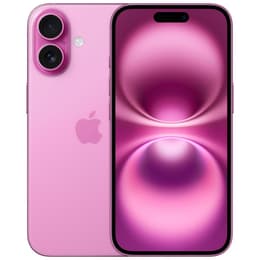
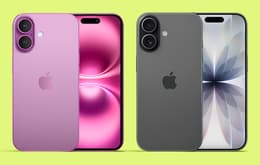
iPhone 16
iPhone 16
Starting at

Refurbished price:A$952.00

Versus A$1,399.00 new

See options
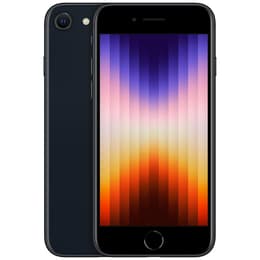
iPhone SE (2022)
iPhone SE (2022)
Starting at

Refurbished price:A$206.00

Versus A$719.00 new

See options

Ratings

The iPhone 16, released in September 2024, and the iPhone SE 2022, launched in March 2022, represent distinct approaches within Apple's smartphone lineup. While both devices operate on Apple's iOS platform, they cater to different user preferences through their design, internal components, and feature sets. The iPhone 16 offers a more contemporary design with advanced capabilities, whereas the iPhone SE 2022 maintains a classic form factor with a focus on core performance.

Scores

Durability

When considering the practical lifespan of these devices, several factors come into play, including their release dates and expected software support.

  • Release Timeline: The iPhone 16, being a more recent release from September 2024, benefits from a newer starting point for software updates and hardware longevity. The iPhone SE 2022, released in March 2022, has already accumulated two years on the market.
  • Software Longevity: Apple typically provides iOS updates for its devices for five to seven years. The iPhone 16, running on iOS 26, is expected to receive software support for a longer duration, likely extending several years beyond the iPhone SE 2022, which is anticipated to receive updates until around 2027 or 2028.
  • Physical Durability: The iPhone 16 features a Ceramic Shield front cover, which is designed to be more resistant to drops and scratches, and boasts an IP68 rating for water and dust resistance, allowing submersion up to 6 meters for 30 minutes. The iPhone SE 2022 has an IP67 rating, protecting against submersion up to 1 meter for 30 minutes, and uses glass on the front and back. The iPhone 16 also incorporates design changes that make battery replacements easier.

Release year

2024

2022

Compatible with latest Update

Yes

Yes

Foldable

No

No

Performance

The performance capabilities of these two iPhones are primarily driven by their respective processors and memory configurations, impacting how smoothly they handle daily tasks and demanding applications.

  • Processing Power: The iPhone 16 is equipped with the A18 chip, featuring a 6-core CPU, a 5-core GPU, and a 16-core Neural Engine. This processor offers a notable increase in speed and efficiency compared to its predecessors, with the CPU being approximately 30% faster and the GPU 40% faster than the A16 chip. The iPhone SE 2022 utilizes the A15 Bionic chip, which includes a Hexa-core CPU and a 4-core GPU. While still capable of handling most applications and games smoothly, it represents an earlier generation of Apple's silicon.
  • Multitasking and Responsiveness: The iPhone 16 includes 8GB of RAM, contributing to smoother multitasking and more efficient handling of multiple applications simultaneously. The iPhone SE 2022 comes with 4GB of RAM. Both devices offer responsive performance for general use, but the iPhone 16 provides more headroom for intensive tasks and future software advancements, particularly those leveraging Apple Intelligence features.
  • Storage Options: The iPhone 16 is available with storage capacities of 128GB, 256GB, and 512GB. The iPhone SE 2022 offers 64GB, 128GB, and 256GB storage options.

Memory (GB)

8 GB

4 GB

Screen quality

The visual experience on these devices differs significantly due to their display technologies and physical dimensions.

  • Display Technology and Size: The iPhone 16 features a 6.1-inch Super Retina XDR OLED display, providing deep blacks, vibrant colors, and a high contrast ratio. It also incorporates the Dynamic Island for interactive alerts and activities. The iPhone SE 2022 has a smaller 4.7-inch Retina HD LCD display, which offers good color accuracy but does not achieve the same level of contrast or black levels as an OLED panel.
  • Resolution and Brightness: The iPhone 16 boasts a resolution of 2556 by 1179 pixels at 460 pixels per inch (ppi), offering sharp and detailed visuals. It can reach a typical maximum brightness of 1000 nits, with peak HDR brightness of 1600 nits and peak outdoor brightness of 2000 nits. The iPhone SE 2022 has a resolution of 1334 by 750 pixels at 326 ppi and a maximum brightness of 625 nits.
  • Refresh Rate: Both the iPhone 16 and iPhone SE 2022 feature a standard 60Hz refresh rate, which provides a smooth experience for most everyday interactions.

Resolution

1179 x 2556

750 x 1334

Screen type

Super Retina XDR OLED

Retina IPS LCD

Audiovisual

The camera systems on the iPhone 16 and iPhone SE 2022 offer different capabilities, reflecting their respective generations and design philosophies.

  • Rear Camera System: The iPhone 16 is equipped with an advanced dual-camera system, featuring a 48MP Fusion Main camera with an f/1.6 aperture and sensor-shift optical image stabilization, which also enables a 12MP 2x optical-quality Telephoto option. It also includes a 12MP Ultra Wide camera with an f/2.2 aperture, a 120-degree field of view, autofocus, and macro photography capabilities. The iPhone SE 2022 features a single 12MP wide camera with an f/1.8 aperture. While it produces good images in well-lit conditions, it lacks the versatility of multiple lenses and advanced features like Night Mode.
  • Computational Photography and Video: The A18 chip in the iPhone 16 enhances computational photography, offering features like Photonic Engine, Deep Fusion, and Smart HDR 5, contributing to improved image quality across various lighting conditions. It supports 4K video recording up to 60 frames per second, with features like Cinematic mode and Action mode. The iPhone SE 2022 also benefits from the A15 Bionic's image processing, including Smart HDR 4 and Deep Fusion, but does not offer Night Mode. It records 4K video up to 60 frames per second.
  • Front Camera: The iPhone 16 has a 12MP front camera with an f/1.9 aperture and autofocus. The iPhone SE 2022 features a 7MP front camera with an f/2.2 aperture.

Main camera

48 megapixels

12 megapixels

Front camera

12 megapixels

7 megapixels

Miscellaneous

Beyond the core specifications, several practical elements differentiate the user experience between the iPhone 16 and iPhone SE 2022.

  • Connectivity and Ports: The iPhone 16 supports Wi-Fi 7 and Bluetooth 5.3, offering faster and more reliable wireless connections. It features a USB-C port for charging and data transfer, though at USB 2.0 speeds. The iPhone SE 2022 supports Wi-Fi 6 and Bluetooth 5.0, and uses the Lightning port for charging and data. Both devices support 5G connectivity.
  • Biometric Authentication and Design: The iPhone 16 utilizes Face ID for secure facial recognition and features the Dynamic Island, which integrates alerts and background activities into a dynamic area at the top of the display. It also includes a customizable Action Button and a dedicated Camera Control button. The iPhone SE 2022 retains the classic iPhone design with a Home button that integrates Touch ID for fingerprint authentication.
  • Size and Handling: The iPhone 16 measures 147.6 x 71.6 x 7.8 mm and weighs 170 grams. The iPhone SE 2022 is more compact at 138.4 x 67.3 x 7.3 mm and weighs 144 grams, making it a lighter and smaller device for one-handed use.

Weight

170 oz

144 oz

Screen size (in)

6.1

4.7

SIM card

Physical SIM + eSIM

Physical SIM + eSIM

Carrier compatibility

Unlocked

Unlocked

Connector

USB-C (USB 2)

Lightning

The iPhone 16 and iPhone SE 2022 cater to different user priorities, with each device offering distinct advantages. The iPhone 16 is frequently praised for its advanced camera system, powerful A18 chip, and modern design with features like the Dynamic Island and Action Button. Users appreciate its enhanced performance for demanding applications and its longer expected software support. Some common observations include its 60Hz display, which some users might find less fluid compared to higher refresh rate screens on other devices, and its USB 2.0 data transfer speeds via the USB-C port.

Conversely, the iPhone SE 2022 is often lauded for its compact size, the continued presence of Touch ID, and its capable A15 Bionic chip, which delivers strong performance for everyday tasks. Users who prefer a smaller phone or the familiarity of the Home button often find the SE 2022 appealing. Criticisms sometimes point to its older design, the LCD display technology, and the absence of features like Night Mode in its camera system. Its battery life, while improved over its predecessor, is generally shorter than other current iPhone models.

Users prioritizing the latest technology, advanced camera capabilities, and a larger, more immersive display will find the iPhone 16 well-suited to their needs. Its newer processor and longer software support also make it a choice for those seeking a device with extended longevity. For individuals who value a compact form factor, the familiarity of Touch ID, and solid performance for essential smartphone functions, the iPhone SE 2022 remains a practical option. Both models are available as quality-assured refurbished options, providing an eco-friendly alternative for consumers.

See all articles

Our recent comparisons