
Galaxy A55 vs Motorola Razr 40

Galaxy A55
Galaxy A55
Starting at

Refurbished price:A$339.00

Versus A$699.00 new

See options
Motorola Razr 40
Motorola Razr 40
See options

Ratings

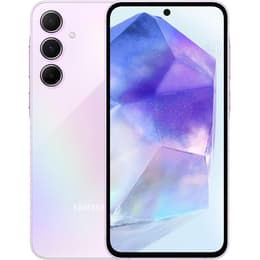
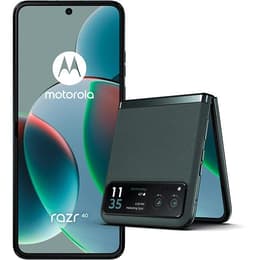
The Samsung Galaxy A55, released in March 2024, is a traditional mid-range Android smartphone, offering a familiar slab design. The Motorola Razr 40, launched in June 2023, presents a distinct foldable form factor, allowing it to compact into a smaller size. These devices cater to different user preferences, primarily differing in their physical design and some core specifications, while both run on the Android operating system.

Scores

Durability

When considering the long-term usability of these smartphones, their release timelines and software support policies are key factors.

  • Release Timeline: The Samsung Galaxy A55 is a newer device, having been released in March 2024. The Motorola Razr 40 was released earlier, in June 2023.
  • Software Support: Samsung typically provides a robust update schedule for its A-series phones. The Galaxy A55 is expected to receive four major Android operating system upgrades and five years of security updates. In contrast, the Motorola Razr 40 is promised three major Android OS updates and four years of bi-monthly security updates. This means the Galaxy A55 offers a longer period of guaranteed software longevity.
  • Physical Durability: The Galaxy A55 features an IP67 rating for dust and water resistance, along with a Gorilla Glass Victus+ front and an aluminum frame, contributing to its overall resilience. The Motorola Razr 40 has an IP52 rating, indicating protection against dust and splashes, but it is not as water-resistant as the A55. Its foldable design, while innovative, introduces a hinge mechanism and a flexible internal screen, which can be perceived as having different durability characteristics compared to a rigid display.

Release year

2024

2023

Operating system

Android

Android

Foldable

No

Yes

Performance

The performance of a smartphone is crucial for daily tasks, from app usage to multitasking and gaming.

  • Processing Power: The Galaxy A55 is equipped with a processor that handles demanding applications and multitasking smoothly, providing a responsive user experience. The Motorola Razr 40 features a processor that delivers adequate performance for everyday use, though some users have noted occasional slower performance with intensive tasks.
  • Memory and Storage: Both devices offer configurations with 8GB or 12GB of RAM, which supports efficient multitasking. The Galaxy A55 comes with 128GB or 256GB of internal storage and includes a microSD card slot for expandable storage, offering flexibility for users who need more space. The Motorola Razr 40 is available with 128GB, 256GB, or 512GB of storage, but it does not support expandable storage via a microSD card.
  • Battery Life: The Galaxy A55 houses a larger 5000 mAh battery, with users frequently reporting that it can last through a full day of heavy use, and sometimes even two days with moderate usage. The Motorola Razr 40 has a 4200 mAh battery, which generally provides enough power to get through a typical day for most users. The Galaxy A55 supports 25W wired charging, while the Razr 40 supports 30W wired charging and 5W wireless charging.

Memory (GB)

8 GB

8 GB

Screen quality

The display is a primary interaction point, and both devices offer distinct visual experiences.

  • Display Technology and Size: The Samsung Galaxy A55 features a 6.6-inch Super AMOLED display, known for its vibrant colors and deep blacks. The Motorola Razr 40 boasts a larger 6.9-inch foldable AMOLED main display, which is its signature feature, allowing the phone to fold in half.
  • Resolution and Clarity: The Galaxy A55 offers a resolution of 1080 x 2340 pixels, providing clear and sharp visuals for its size. The Razr 40's main display has a resolution of 1080 x 2640 pixels, resulting in a slightly higher pixel density due to its taller aspect ratio.
  • Refresh Rate and Brightness: The Galaxy A55 has a 120Hz refresh rate, contributing to smooth scrolling and animations. Its display can reach a peak brightness of 1000 nits, ensuring good visibility in various lighting conditions. The Motorola Razr 40's main display offers an even higher 144Hz refresh rate for exceptionally fluid visuals and can achieve a peak brightness of 1400 nits, making it very bright for outdoor use.
  • Secondary Display: A unique aspect of the Razr 40 is its 1.5-inch AMOLED cover display, which can show notifications, time, and other quick information without needing to open the phone. The Galaxy A55 does not have a secondary external display.

Resolution

1080x2340

1080 x 2640

Audiovisual

Camera capabilities are a significant consideration for many users, and these devices approach photography differently.

  • Rear Camera Systems: The Samsung Galaxy A55 features a versatile triple-camera setup on the rear, including a 50 MP main sensor with optical image stabilization (OIS), a 12 MP ultrawide lens, and a 5 MP macro lens. Users generally find its main camera performs well in good lighting, with improved low-light performance, though the macro lens has specific use cases. The Motorola Razr 40 comes with a dual-camera system, featuring a 64 MP main sensor with OIS and a 13 MP ultrawide lens that also supports autofocus. User feedback suggests decent image quality in well-lit environments, but some inconsistency and a lack of optical zoom are noted.
  • Front Camera: Both smartphones are equipped with a 32 MP front-facing camera, capable of capturing detailed selfies and supporting video calls.
  • Video Recording: Both devices are capable of recording video at 4K resolution at 30 frames per second, offering good quality for general video capture. The Galaxy A55 also benefits from optical and digital image stabilization for smoother video.
  • Audio Experience: Both the Galaxy A55 and the Motorola Razr 40 include stereo speakers, providing a more immersive audio experience for media consumption.

Miscellaneous

Beyond core features, several practical elements contribute to the overall user experience.

  • Connectivity: Both devices support 5G networks for fast mobile data. The Galaxy A55 includes Wi-Fi 6, while the Motorola Razr 40 offers Wi-Fi 6E, providing access to a less congested band for potentially faster wireless speeds. Both support Bluetooth 5.3 for connecting to accessories.
  • Ports and Biometrics: Both smartphones utilize a USB-C 2.0 port for charging and data transfer, and neither includes a traditional 3.5mm headphone jack. For security, the Galaxy A55 features an optical fingerprint sensor integrated under the display, while the Motorola Razr 40 has a side-mounted fingerprint sensor. Both also offer face recognition for unlocking the device.
  • Design and Materials: The Galaxy A55 has a premium feel with an aluminum frame and Gorilla Glass Victus+ on the front, along with a glass back. The Motorola Razr 40, as a foldable, features an aluminum frame, a plastic front when unfolded, and a plastic back, often with vegan leather finishes, which can offer a unique tactile experience and improved grip.
  • Dimensions and Weight: The Galaxy A55 measures 161.1 x 77.4 x 8.2 mm and weighs 213g. The Motorola Razr 40, when unfolded, is 170.8 x 74 x 7.4 mm and weighs 188.6g, making it lighter and thinner than the A55 in its open state. When folded, its dimensions are 88.2 x 74 x 15.8 mm, offering a compact form factor.

Weight

213 oz

189 oz

Screen size (in)

6.6

6,9

Network

5G

5G

SIM card

Physical SIM

Dual Physical SIM + eSIM

Carrier compatibility

Unlocked

Unlocked

User feedback for the Samsung Galaxy A55 often highlights its strong battery life, vibrant display, and consistent performance for everyday tasks. Many appreciate its premium build quality, which includes an aluminum frame and enhanced glass protection. Some users, however, express a desire for faster charging speeds and a more advanced camera setup, particularly a dedicated telephoto lens.

The Motorola Razr 40 is frequently praised for its unique foldable design, which offers a compact form factor when closed and a large display when opened. Users also value its smooth main display with a high refresh rate and the convenience of its external screen for quick interactions. Criticisms sometimes point to its battery life, which, while generally sufficient for a day, is smaller than some traditional smartphones, and its camera performance, which can be inconsistent in certain conditions.

Users prioritizing a long-lasting battery, a robust build, and a consistent software update policy may find the Samsung Galaxy A55 to be a well-suited option. Its traditional smartphone design offers a straightforward and reliable experience. Conversely, individuals who value a compact and innovative form factor, along with a high refresh rate display, might lean towards the Motorola Razr 40. Its foldable nature provides a distinct user experience for those seeking something different. Both devices are available as quality-assured refurbished options, offering a sustainable choice for consumers.


See all articles

Our recent comparisons