
Galaxy S10 vs Galaxy S20 FE

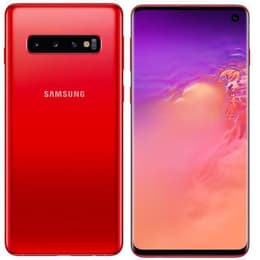
Galaxy S10
Galaxy S10
Starting at

Refurbished price:A$359.00

Versus A$849.00 new

See options
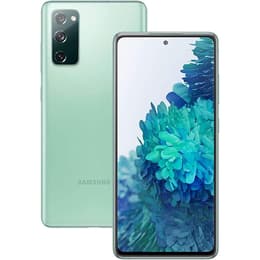
Galaxy S20 FE
Galaxy S20 FE
Starting at

Refurbished price:A$268.29

Versus A$578.00 new

See options

Ratings

The Samsung Galaxy S10, released in March 2019, and the Samsung Galaxy S20 FE (Fan Edition), launched in October 2020, are both Android smartphones from Samsung's popular Galaxy S series. While the S10 represented a premium flagship experience at its release, the S20 FE aimed to deliver key flagship features with a focus on user-requested elements. The primary distinctions between these two models lie in their display technology, internal processing power, and expected software longevity, offering different advantages for various user preferences.

Scores

Durability

When evaluating the long-term usability of these devices, their release timelines and software support are key considerations.

  • Release Timeline and Software Support: The Galaxy S10, launched in March 2019, received its last major Android operating system update with Android 12 (One UI 4.1) in early 2022. Security updates for most S10 models concluded around April 2023. In contrast, the Galaxy S20 FE, released in October 2020, shipped with Android 10 and has received updates up to Android 13 (One UI 5.1). Its security updates are anticipated to continue until approximately October 2025, offering a longer period of current software and security patches.
  • Repairability and Build Materials: The Galaxy S10 features a glass front (Gorilla Glass 6) and back (Gorilla Glass 5) with an aluminum frame, providing a premium feel. However, it received a low repairability score of 3 out of 10 from iFixit, citing difficulties with glued-in batteries and a soldered charging port. The Galaxy S20 FE, while also IP68 rated for dust and water resistance, uses a glass front (Gorilla Glass 3) and a plastic back within an aluminum frame. This construction may offer slightly more resilience against drops compared to a full glass design. The S20 FE generally has a more favorable repairability assessment, with some sources indicating it is moderately repairable with a score of 7.5 out of 10, noting easier access to components like the battery and screen.
  • Expected Practical Lifespan: For users who prioritize the latest software features and ongoing security updates, the Galaxy S20 FE offers a longer practical lifespan due to its more recent launch and extended software commitment. Users who are comfortable with an older Android version and rely less on the newest features might find the S10 still capable for everyday tasks, though without the latest security protections.

Release year

2019

2020

Compatible with latest Update

No

No

Operating system

Android

Android

Foldable

No

No

Performance

The performance of these devices is influenced by their internal components, impacting daily responsiveness and handling of demanding applications.

  • Processor Capabilities: The Galaxy S10 is equipped with a processor that handles everyday tasks smoothly, providing a responsive experience for general use and moderate multitasking. The Galaxy S20 FE features a newer generation processor, which generally offers improved efficiency and greater power for more demanding applications, complex multitasking, and graphically intensive games. This difference can result in quicker app loading times and a more fluid experience during heavy usage on the S20 FE.
  • System Responsiveness and Multitasking: Both phones offer capable performance for typical smartphone activities. However, the S20 FE's newer processor and often faster storage technology (UFS 3.1 compared to S10's UFS 2.1) contribute to a snappier overall system responsiveness, particularly noticeable when switching between multiple applications or loading large files. While the S10 typically comes with 8GB of RAM, the S20 FE is available in 6GB or 8GB RAM configurations. For most users, both configurations provide sufficient memory for effective multitasking.
  • Battery Behavior: The Galaxy S20 FE includes a larger 4500 mAh battery, which generally translates to longer usage times between charges, especially for heavy users. The Galaxy S10 has a 3400 mAh battery, which, while adequate for many, may require more frequent charging for users with intensive daily routines.

Memory (GB)

8 GB

6 GB

Screen quality

The visual experience on both devices is delivered through high-quality displays, though with distinct characteristics.

  • Display Technology and Resolution: The Galaxy S10 features a 6.1-inch Dynamic AMOLED display with a higher resolution of 1440 x 3040 pixels (QHD+), resulting in a very sharp and detailed image. The Galaxy S20 FE has a larger 6.5-inch Super AMOLED display with a resolution of 1080 x 2400 pixels (FHD+). While the S10 offers a higher pixel density, the S20 FE's display is still clear and vibrant for most content.
  • Refresh Rate and Smoothness: A significant difference is the refresh rate. The Galaxy S10 operates at a standard 60Hz, providing a smooth but conventional scrolling experience. The Galaxy S20 FE boasts a 120Hz refresh rate, which makes scrolling, animations, and gaming appear noticeably smoother and more fluid.
  • Brightness and Viewing Experience: Both displays offer excellent brightness levels, making them suitable for outdoor use. The S10's Dynamic AMOLED technology is known for its vibrant colors and deep blacks. The S20 FE's Super AMOLED also delivers strong color reproduction and contrast. The larger screen size of the S20 FE provides a more expansive viewing area, which can be beneficial for media consumption and productivity.

Resolution

1440 x 3040

1080 x 2400

Screen type

Dynamic AMOLED

Super AMOLED

Audiovisual

Both smartphones offer versatile camera systems designed to capture a variety of moments, each with its own strengths.

  • Rear Camera System: The Galaxy S10 features a triple-camera setup with a 12-megapixel wide lens, a 12-megapixel telephoto lens offering 2x optical zoom, and a 16-megapixel ultrawide lens. The Galaxy S20 FE also has a triple-camera system, comprising a 12-megapixel wide lens, an 8-megapixel telephoto lens with 3x optical zoom, and a 12-megapixel ultrawide lens. The S20 FE's telephoto lens provides greater optical zoom capabilities.
  • Photography Performance: Both devices are capable of capturing high-quality images in good lighting conditions. User feedback suggests that the S20 FE often delivers slightly improved low-light performance and better HDR processing, contributing to more balanced exposures. The S10's ultrawide camera is noted by some users for its quality.
  • Front Camera and Video Quality: The Galaxy S10 is equipped with a 10-megapixel front camera. The Galaxy S20 FE features a higher-resolution 32-megapixel front camera, which can result in more detailed selfies. Both phones support 4K video recording. The S20 FE's camera system is often praised for its overall consistency and features.
  • Audio Experience: Both models offer stereo speakers, providing an immersive audio experience for media consumption. The Galaxy S10 retains a 3.5mm headphone jack, a feature absent on the S20 FE, which relies on USB-C or wireless audio solutions.

Main camera

12 megapixels

12 megapixels

Front camera

10 megapixels

32 megapixels

Miscellaneous

Beyond core features, several practical elements differentiate the user experience of these two devices.

  • Connectivity and Ports: The Galaxy S10 supports 4G LTE and Wi-Fi 6. The Galaxy S20 FE, depending on the variant, offers 5G connectivity, providing access to faster mobile network speeds where available, in addition to Wi-Fi 6. Both devices feature a USB-C port for charging and data transfer. A notable difference is the inclusion of a 3.5mm headphone jack on the Galaxy S10, which is absent on the S20 FE.
  • Biometric Security: For secure unlocking, the Galaxy S10 uses an ultrasonic in-display fingerprint sensor. The Galaxy S20 FE employs an optical in-display fingerprint sensor. Both methods offer convenient and secure access to the device.
  • Design and Handling: The Galaxy S10 is a more compact and lighter device, weighing 157g with dimensions of 149.9 x 70.4 x 7.8 mm, making it comfortable for one-handed use. The Galaxy S20 FE is larger and heavier at 190g, with dimensions of 159.8 x 74.5 x 8.4 mm, which may appeal to users who prefer a larger screen. The S10 features a glass back, contributing to a more premium feel, while the S20 FE has a plastic back.
  • Additional Features: Both devices offer wireless charging and reverse wireless charging capabilities.

Weight

157 oz

190 oz

Screen size (in)

6.1

6.5

Network

4G

4G

SIM card

Physical SIM

Physical SIM

Carrier compatibility

Unlocked

Unlocked

The Samsung Galaxy S10 and Galaxy S20 FE each present a compelling smartphone experience, catering to slightly different user priorities. User feedback often highlights the S10's more premium build quality and higher display resolution as strong points, alongside the convenience of a headphone jack. However, some users reported concerns regarding the S10's battery life and the performance of its ultrasonic fingerprint sensor.

Conversely, the Galaxy S20 FE is frequently praised for its significantly improved battery life, the fluidity of its 120Hz display, and its generally more powerful and efficient processor, especially the Snapdragon variants. Its camera system is also often seen as an upgrade, particularly for telephoto and low-light performance. Criticisms sometimes point to its plastic back, which some perceive as less premium than the S10's glass construction, and the absence of a 3.5mm headphone jack.

Users prioritizing a compact device with a very high-resolution display and a traditional headphone jack may find the Galaxy S10 well-suited to their needs. Its premium glass build offers a distinct tactile experience. For those who value extended software support, a smoother display experience, longer battery life, and enhanced processing power for demanding tasks, the Galaxy S20 FE would be a more aligned choice. Its larger screen also benefits media consumption and gaming. Both models remain viable options, especially when considering quality-assured refurbished alternatives, which offer an eco-friendly way to access these devices.

See all articles

Our recent comparisons