
Compare models
Galaxy S23 vs iPhone 14 Pro Max
- 1-year warranty
- Free standard shipping
- Free 30-day returns
Differences at a glance
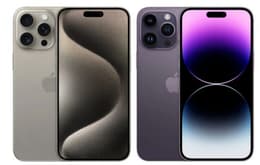
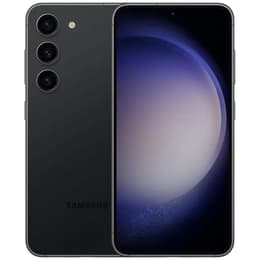
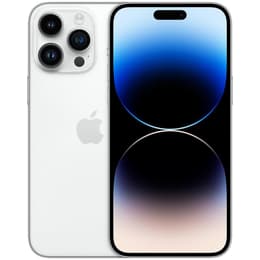
The Samsung Galaxy S23, released in February 2023, and the iPhone 14 Pro Max, launched in September 2022, represent flagship smartphones from their respective manufacturers. While both offer premium mobile experiences, they differ significantly in their operating systems and overall design philosophy. The Galaxy S23 runs on Android, offering a compact form factor, whereas the iPhone 14 Pro Max operates on iOS and provides a larger display and a distinct user interface.
Available Models
Colour
Storage (GB)
Scores
Durability
When considering the long-term usability of these devices, their release timelines and software support policies are key factors. The iPhone 14 Pro Max, released in September 2022, typically receives iOS updates for an extended period, often 5-7 years from its release. The Galaxy S23, launched in February 2023, is part of Samsung's commitment to provide four generations of Android OS upgrades and five years of security updates.
- Software Longevity: The iPhone 14 Pro Max is expected to receive major iOS updates until approximately 2029, potentially extending to 2030 for security patches. The Galaxy S23 is projected to receive Android OS updates up to Android 17 (around 2026) and security updates until 2028.
- Repairability: The Galaxy S23 series has shown improvements in repairability, with some internal components designed to be more accessible for independent repair. The iPhone 14 Pro Max, while sharing some internal design with its predecessor, was initially given a moderate repairability score, which was later downgraded due to challenges with official parts and software verification.
- Physical Durability: Both devices feature robust build materials. The iPhone 14 Pro Max uses Ceramic Shield on the front and a stainless steel frame, offering strong resistance to drops. The Galaxy S23 incorporates Gorilla Glass Victus 2 on both the front and back, along with an Armor Aluminum frame, contributing to its overall resilience.
Release year
2023
2022
Compatible with latest Update
Yes
Yes
Operating system
Android
iOS
Foldable
No
No
Performance
The performance of both the Galaxy S23 and iPhone 14 Pro Max is designed to handle demanding applications and multitasking efficiently, though they achieve this through different hardware and software optimizations.
- Processing Power: The iPhone 14 Pro Max features a powerful current-generation processor that ensures smooth operation across applications, responsive gaming, and efficient handling of intensive tasks. The Galaxy S23 is equipped with a specialized version of a leading current-generation processor, providing strong performance for everyday use, gaming, and multitasking without significant slowdowns.
- Battery Behavior: The iPhone 14 Pro Max is known for its substantial battery life, often lasting a full day or more for many users, even with heavy usage. The Galaxy S23 offers good battery life for its compact size, capable of lasting a full day for moderate users, though very heavy usage might require more frequent charging.
- Multitasking and Responsiveness: Both devices offer fluid multitasking experiences. The iPhone 14 Pro Max, with its optimized iOS, provides seamless app switching and quick loading times. The Galaxy S23, with its ample RAM and efficient Android interface, also delivers a highly responsive user experience, handling multiple applications simultaneously without noticeable lag.
Screen quality
The visual experience on both the Galaxy S23 and iPhone 14 Pro Max is a highlight, with each device offering a high-quality display tailored to its respective design philosophy.
- Display Technology and Clarity: The iPhone 14 Pro Max features a 6.7-inch Super Retina XDR OLED display, known for its deep blacks, vibrant colors, and high contrast. The Galaxy S23 comes with a 6.1-inch Dynamic AMOLED 2X display, also delivering rich colors and excellent contrast. Both offer sharp visuals suitable for various content.
- Brightness and Outdoor Visibility: The iPhone 14 Pro Max can reach a peak brightness of up to 2000 nits, ensuring excellent visibility even in direct sunlight. The Galaxy S23 offers a peak brightness of 1750 nits, which also provides strong outdoor readability.
- Refresh Rate and Smoothness: The iPhone 14 Pro Max incorporates ProMotion technology, allowing its display to adapt its refresh rate from 1Hz to 120Hz for smooth scrolling and animations while conserving battery. The Galaxy S23 also features an adaptive 120Hz refresh rate, contributing to a fluid user experience.
Resolution
1080 x 2340
1290 x 2796
Screen type
Dynamic AMOLED 2X
LTPO Super Retina XDR OLED
Audiovisual
Both the Galaxy S23 and iPhone 14 Pro Max offer advanced camera systems capable of capturing high-quality photos and videos, though they approach imaging with slightly different characteristics.
- Photography Performance: The iPhone 14 Pro Max features a versatile triple-camera system, including a 48MP main sensor, which excels in capturing detail and offers strong low-light performance with its Photonic Engine. The Galaxy S23 also has a triple-camera setup with a 50MP main sensor, delivering vibrant and sharp images, particularly praised for its night mode capabilities.
- Video Recording Capabilities: Both devices are capable of recording high-quality video. The iPhone 14 Pro Max offers features like Cinematic mode and ProRes video, providing professional-grade videography tools. The Galaxy S23 can record up to 8K video and offers good stabilization, making it suitable for content creation.
- Audio Experience: Both smartphones are equipped with stereo speakers, providing an immersive audio experience for media consumption. The microphone quality on both is generally clear for calls and recordings.
Main camera
50 megapixels
48 megapixels
Front camera
12 megapixels
12 megapixels
Miscellaneous
Beyond their core features, the Galaxy S23 and iPhone 14 Pro Max include various practical elements that influence daily usability and overall experience.
- Connectivity and Ports: Both devices support modern connectivity standards, including 5G, Wi-Fi 6 (or 6E for S23), and Bluetooth 5.3. The iPhone 14 Pro Max uses a Lightning port for charging and data transfer, while the Galaxy S23 features a USB-C port. Neither device includes a traditional 3.5mm headphone jack.
- Biometric Security: The iPhone 14 Pro Max relies on Face ID for secure facial recognition. The Galaxy S23 incorporates an in-display fingerprint sensor for biometric authentication.
- Physical Characteristics: The iPhone 14 Pro Max is a larger and heavier device, weighing 240g with dimensions of 160.7 x 77.6 x 7.85 mm. The Galaxy S23 is more compact and lighter at 168g, with dimensions of 146.3 x 70.9 x 7.6 mm, making it easier for one-handed use.
Weight
227 oz
120 oz
Screen size (in)
6.1
6,7
Network
5G
5G
SIM card
Physical SIM + eSIM
Physical SIM + eSIM
Carrier compatibility
Unlocked
Unlocked
Connector
USB-C
Lightning
What the community thinks
User feedback for the iPhone 14 Pro Max often highlights its exceptional camera quality, robust performance, and extended battery life as significant advantages. Common praise points include its vibrant display and the seamless integration within the iOS ecosystem. Some users have noted that while the camera is excellent, the 3x optical zoom might leave some wanting more reach. The Galaxy S23 receives commendation for its compact size, strong performance from its optimized processor, and its capable camera system, particularly its night mode. Users appreciate its bright display and the overall smooth Android experience. A frequent observation is that while its battery life is good for its size, it may not match the endurance of larger devices for power users.
Users prioritizing a larger display, a highly integrated ecosystem, and industry-leading video capabilities may find the iPhone 14 Pro Max well-suited to their needs. Those who prefer a more compact device, the flexibility of the Android operating system, and a strong all-around camera in a smaller form factor might lean toward the Galaxy S23. Both devices offer a premium smartphone experience, and considering a quality-assured refurbished option for either model can be a sustainable choice for consumers.