
iPhone 13 vs Oppo Find X5 Pro 5G

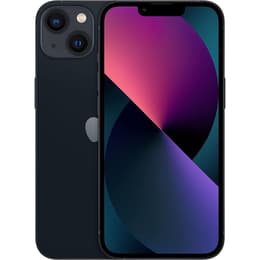
iPhone 13
iPhone 13
Starting at

Refurbished price:A$415.00

Versus A$1,099.00 new

See options
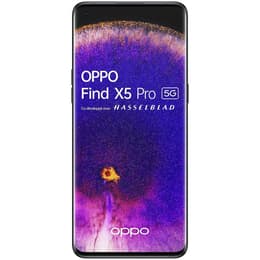
Oppo Find X5 Pro 5G
Oppo Find X5 Pro 5G
Starting at

Refurbished price:A$461.00

Versus A$2,708.00 new

See options

The iPhone 13, released in September 2021, and the Oppo Find X5 Pro 5G, launched globally in February 2022, represent distinct approaches to flagship smartphone design and functionality. While both devices offer premium experiences, they differ significantly in their operating systems, display technologies, and camera philosophies. The iPhone 13 operates on Apple's iOS, known for its integrated ecosystem, whereas the Oppo Find X5 Pro 5G runs on Android with Oppo's ColorOS overlay, offering greater customization.

Scores

Durability

When considering the practical lifespan of these devices, several factors come into play, including software support and physical resilience.

  • Release Timeline and OS Support: The iPhone 13, being an Apple device, benefits from a long software support cycle, typically receiving iOS updates for five to six years from its release. It launched with iOS 15 and is compatible with iOS 18 as of the current date. The Oppo Find X5 Pro 5G, running Android 12 with ColorOS 12.1 at launch, generally receives fewer major OS updates compared to its Apple counterpart, though security updates may continue for a reasonable period.
  • Repairability and Durability: The iPhone 13 features a Ceramic Shield front cover and an IP68 rating for water and dust resistance. Its repairability score from iFixit was noted as 5 out of 10, indicating some challenges for independent repairs, particularly concerning component pairing. The Oppo Find X5 Pro 5G also boasts an IP68 rating and uses Gorilla Glass Victus for front protection, complemented by a ceramic back that is noted for its strength and heat dissipation properties.
  • Expected Practical Lifespan: Users can expect the iPhone 13 to remain fully functional and receive critical updates for a longer duration due to Apple's extended software commitment. The Oppo Find X5 Pro 5G, while robust in build, may see its software support conclude sooner, potentially influencing its overall practical lifespan for users who prioritize the latest OS features.

Release year

2021

2022

Operating system

iOS

Android

Foldable

No

No

Performance

Both devices deliver robust performance suitable for demanding applications and multitasking, though they achieve this through different hardware configurations.

  • Processing Power: The iPhone 13 is equipped with a powerful processor that handles everyday tasks, graphic-intensive games, and complex applications with fluidity. Users can expect smooth app launches and seamless transitions between tasks. The Oppo Find X5 Pro 5G features a current-generation processor for its release year, providing strong performance for gaming, video editing, and heavy multitasking.
  • Multitasking and Storage: The iPhone 13 comes with 4GB of RAM, which is optimized by iOS to manage multiple applications efficiently. Storage options range from 128GB to 512GB. The Oppo Find X5 Pro 5G offers more RAM, with options for 8GB or 12GB, allowing for extensive multitasking and keeping many applications open in the background without performance degradation. It typically comes with 256GB or 512GB of internal storage.
  • Overall System Responsiveness: Both phones offer a highly responsive user experience. The iPhone 13's hardware and software integration ensures consistent performance, while the Oppo Find X5 Pro 5G's powerful processor and ample RAM contribute to a quick and smooth interaction across its Android-based interface.

Memory (GB)

4 GB

12 GB

Screen quality

The visual experience on both smartphones is vibrant, but they employ different display technologies and specifications.

  • Display Technology and Clarity: The iPhone 13 features a 6.1-inch Super Retina XDR OLED display with a resolution of 1170x2532 pixels, resulting in a pixel density of approximately 460 PPI. This OLED panel delivers deep blacks and vibrant colors. The Oppo Find X5 Pro 5G boasts a larger 6.7-inch LTPO2 AMOLED display with a higher resolution of 3216x1440 pixels, offering a sharper image with about 525 PPI. This display is capable of rendering over a billion colors.
  • Brightness and Refresh Rate: The iPhone 13's display reaches a typical brightness of 800 nits and a peak HDR brightness of 1200 nits, ensuring good visibility in various lighting conditions. It operates at a standard 60Hz refresh rate. In contrast, the Oppo Find X5 Pro 5G offers an adaptive refresh rate that can dynamically scale from 1Hz to 120Hz, providing smoother scrolling and animations while conserving battery life for static content. Its peak brightness can reach up to 1300 nits.
  • Viewing Experience: The Oppo Find X5 Pro 5G's larger size, higher resolution, and adaptive refresh rate provide a more immersive and fluid viewing experience, particularly for multimedia consumption and gaming. The iPhone 13 still offers an excellent, color-accurate display, but without the higher refresh rate.

Resolution

1170 x 2532

1440 x3216

Audiovisual

Both devices offer capable camera systems, but with different configurations and processing approaches.

  • Rear Camera Systems: The iPhone 13 features a dual 12MP camera system on the rear, comprising a wide-angle lens with a f/1.6 aperture and an ultra-wide-angle lens with a f/2.4 aperture and a 120-degree field of view. It includes sensor-shift optical image stabilization on the main sensor for improved low-light performance and stability. The Oppo Find X5 Pro 5G comes with a triple rear camera setup: a 50MP main sensor with f/1.7 aperture, a 50MP ultra-wide sensor with f/2.2 aperture, and a 13MP telephoto lens with f/2.4 aperture offering 2x optical zoom. It also incorporates a dedicated MariSilicon X NPU for image processing and Hasselblad color calibration.
  • Photography and Video Features: The iPhone 13 excels in video recording with features like Cinematic Mode, which provides a shallow depth of field effect, and HDR video recording with Dolby Vision up to 4K at 60fps. For stills, it offers Night mode, Deep Fusion, and Photographic Styles. The Oppo Find X5 Pro 5G emphasizes its Ultra Night Video capabilities, leveraging its NPU for enhanced low-light video. Its main and ultra-wide cameras are generally praised for their image quality and color accuracy, though user feedback suggests the telephoto lens's performance, particularly in zoom, can be a point of criticism.
  • Front Camera and Audio: Both phones feature a 12MP front-facing camera for selfies and video calls. The iPhone 13's front camera has an f/2.2 aperture, while the Oppo Find X5 Pro 5G's is a 32MP sensor with an f/2.4 aperture. For audio, both offer stereo speakers, providing a good media consumption experience.

Miscellaneous

Beyond core specifications, several practical elements differentiate these two devices in daily use.

  • Connectivity and Ports: Both smartphones support 5G connectivity and Wi-Fi 6 (802.11ax) for fast wireless internet. The iPhone 13 uses Apple's proprietary Lightning port for charging and data transfer, and supports Bluetooth 5.0. The Oppo Find X5 Pro 5G, on the other hand, features a USB-C port, a more universal standard, and supports Bluetooth 5.2.
  • Biometrics and Design: The iPhone 13 relies on Face ID for secure facial recognition. Its design features flat edges and an aluminum frame with a glass back. The Oppo Find X5 Pro 5G incorporates an in-display fingerprint sensor for biometric authentication, alongside face unlock. Its design is characterized by a unique ceramic back that seamlessly integrates the camera module, offering a distinct tactile experience and enhanced durability.
  • Dimensions and Weight: The iPhone 13 is a more compact device, measuring 146.7 x 71.5 x 7.65 mm and weighing 174 grams. The Oppo Find X5 Pro 5G is larger and heavier at 163.7 x 73.9 x 8.5 mm and 218 grams, which contributes to its larger display and battery capacity.

Weight

173 oz

218 oz

Screen size (in)

6,1

6,7

Network

5G

5G

SIM card

Physical SIM + eSIM

Physical SIM + eSIM

Carrier compatibility

Unlocked

Unlocked

User feedback for the iPhone 13 often highlights its consistent performance, reliable camera system, and strong battery life compared to its predecessors. Many appreciate the seamless integration within the Apple ecosystem and the long-term software support. Criticisms sometimes point to the 60Hz display, which some users find less fluid than higher refresh rate panels on competing devices, and the lack of a telephoto lens.

For the Oppo Find X5 Pro 5G, common praise centers on its stunning, high-resolution 120Hz adaptive AMOLED display, exceptionally fast wired and wireless charging speeds, and the unique, premium feel of its ceramic build. The main and ultra-wide cameras, enhanced by the MariSilicon X NPU and Hasselblad tuning, also receive positive remarks for their image quality. However, some users express disappointment with the performance of the telephoto camera, noting it doesn't always match the quality of the other lenses, and some have reported software glitches after updates.

Users prioritizing a compact device with extended software longevity and a highly integrated ecosystem may find the iPhone 13 well-suited to their needs. Its consistent performance and strong video capabilities make it a reliable choice for everyday use and content creation. Conversely, individuals who value a larger, high-refresh-rate display, rapid charging, and a more customizable Android experience might lean towards the Oppo Find X5 Pro 5G. Its advanced camera hardware, particularly the main and ultra-wide sensors, caters to those seeking detailed photography, though the telephoto performance should be considered.

For those evaluating either device, exploring quality-assured refurbished options can provide an eco-friendly alternative, offering access to these advanced technologies while supporting sustainable consumption.

See all articles

Our recent comparisons