
Compare models
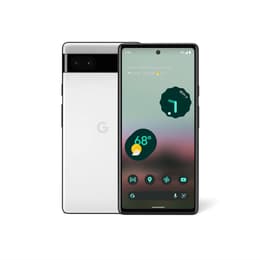
Google Pixel 6a vs Google Pixel 9a
- 1-year warranty
- Free standard shipping
- Free 30-day returns
Differences at a glance
The Google Pixel 6a (2022) and the Google Pixel 9a (2025) represent two generations of Google's accessible smartphone lineup, offering clean software and smart capabilities in everyday packages. While both models share a foundational philosophy of streamlined user experience, the Pixel 9a introduces a larger display, upgraded internals, and an extended support window that set it apart from its older counterpart.
Both devices run on clean versions of the Android operating system with direct software updates from Google, though their remaining lifecycle timelines differ significantly based on their release years.
Available Models
Colour
Storage
Scores
Durability
When examining longevity and durability, the Pixel 6a and Pixel 9a reflect different stages in their software support life cycles and build standards.
- Software Support Window: The Pixel 9a benefits from Google's extended commitment, receiving operating system and security updates for seven years from its release. The Pixel 6a operates on a shorter overall timeline matching its earlier launch date, meaning fewer remaining years of active updates.
- Build and Protection: The Pixel 9a features modern water and dust resistance protections alongside updated glass durability standards, while the Pixel 6a relies on an older generation of protective glass and standard water resistance ratings suitable for everyday mishaps.
- Expected Lifespan: Thanks to its newer release year and extended support commitment, the Pixel 9a offers a longer practical lifespan for users wanting current software features well into the future.
Release year
2022
2025
Foldable
No
No
Performance
Daily operation and hardware efficiency show noticeable generational advancements between these two devices, impacting how they handle regular workloads.
- Multitasking and App Handling: The Pixel 9a includes increased random access memory and a more advanced processor architecture, enabling smoother switching between demanding applications and faster loading times compared to the Pixel 6a.
- Battery Behavior: The Pixel 9a packs a larger battery capacity that easily sustains a full day of mixed usage, whereas the Pixel 6a features a smaller power cell that may require an additional top-up during heavy usage days.
- System Responsiveness: Everyday tasks such as web browsing, map navigation, and social media scrolling feel fluid on both devices, with the newer model providing extra processing headroom for intensive tasks and gaming.
Screen quality
Viewing experiences differ notably in size, fluidity, and brightness capabilities when comparing the screens of both smartphones.
- Display Technology and Refresh Rate: The Pixel 9a features a fluid 120Hz OLED panel that makes scrolling and animations appear noticeably smoother, while the Pixel 6a utilizes a standard 60Hz OLED screen.
- Size and Resolution: The Pixel 9a offers a slightly larger 6.3-inch display with crisp high-definition resolution, compared to the 6.1-inch panel found on the Pixel 6a, giving users more screen estate for media consumption.
- Outdoor Visibility: The newer display on the Pixel 9a achieves higher peak brightness levels, making it easier to read notifications and view maps under direct sunlight than the older generation screen.
Resolution
1080 x 2400
1080x2424
Screen type
OLED
P-OLED
Audiovisual
Photography and media capture capabilities have evolved, bringing hardware and software improvements to the newer model.
- Camera Hardware: The Pixel 9a steps up to a higher-resolution main sensor paired with an updated ultra-wide lens, while the Pixel 6a relies on a dependable dual-camera setup with lower megapixel counts.
- Low-Light and Editing: Both devices excel at capturing clear images in dim environments using software processing, but the Pixel 9a introduces faster processing times and advanced editing tools directly on the device.
- Video and Audio Output: Video recording is stable and clear on both smartphones, though the Pixel 9a provides improved microphone clarity and richer stereo speaker output for watching videos without headphones.
Miscellaneous
Practical everyday features, connectivity standards, and physical handling characteristics define how each phone fits into daily routines.
- Connectivity Standards: The Pixel 9a supports newer Wi-Fi frequencies and Bluetooth versions for faster accessory pairing and stable network connections, building upon the standard 5G and 4G capabilities of the Pixel 6a.
- Physical Dimensions: Despite offering a larger screen, the Pixel 9a manages its footprint efficiently, though both devices remain comfortable to hold and fit easily into pockets.
- Authentication and Sensors: Both phones utilize responsive under-display fingerprint sensors and secure facial recognition features for quick device unlocking and safe application logins.
Weight
250 oz
186 oz
Screen size (in)
6.1
6.3
SIM card
Physical SIM + eSIM
Physical SIM + eSIM
Carrier compatibility
Unlocked
Unlocked
What the community thinks
User feedback from online communities highlights distinct preference patterns for each device. Owners of the Pixel 6a frequently praise its compact footprint, reliable everyday camera performance, and straightforward software experience. Common discussions note that while it remains a capable companion for basic tasks, its battery life and screen refresh rate show their age compared to newer standards. Conversely, users of the Pixel 9a highlight its exceptionally smooth display, robust battery endurance, and long-term software outlook as major highlights, though some note the slightly larger body requires minor adjustment.
Users prioritizing fluid screen animations, extended software longevity, and robust battery life will find the Pixel 9a well-suited to their needs. Meanwhile, users seeking a compact, straightforward device for essential daily communication may lean toward the Pixel 6a as a quality-assured refurbished option. Choosing between them depends on whether your priority lies in modern display fluidity and longevity or a streamlined, smaller-scale package.