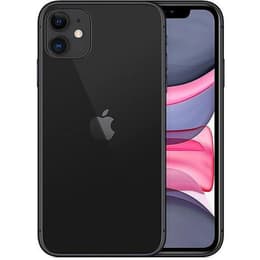

iPhone 11 vs Nokia X30

iPhone 11
iPhone 11
Starting at

Refurbished price:A$270.00

Versus A$769.00 new

See options
Nokia X30
Nokia X30
Starting at

Refurbished price:A$299.00

Versus A$965.00 new

See options

The iPhone 11, released in September 2019, and the Nokia X30, launched in September 2022, represent distinct approaches to smartphone design and functionality. While the iPhone 11 operates on Apple's iOS ecosystem, the Nokia X30 runs on Android, offering users different software experiences. A primary differentiator lies in their release timelines, with the Nokia X30 being a significantly newer device, which impacts its hardware capabilities and expected software support.

Scores

Durability

When considering the long-term usability of these devices, their release timelines and software support policies are key factors.

  • Software Longevity: The iPhone 11, launched in 2019, is expected to receive major iOS updates until approximately late 2026, with security updates potentially extending beyond that. This aligns with Apple's typical support cycle of around seven years. The Nokia X30, released in 2022, comes with a promise of three major OS upgrades and three years of monthly security updates, meaning it will receive updates for a comparable duration from its launch date, though starting later.
  • Physical Durability: Both devices offer a degree of water and dust resistance, with the iPhone 11 rated IP68 (maximum depth of 2 meters for up to 30 minutes) and the Nokia X30 rated IP67 (up to 1 meter for 30 minutes). The iPhone 11 has a repairability score of 6 out of 10 by iFixit, indicating that critical display and battery repairs are prioritized in its design. The Nokia X30 features a build that incorporates recycled aluminum and plastic, emphasizing environmental considerations.
  • Practical Lifespan: Users report that the iPhone 11 remains a capable device for daily tasks even in 2024, with performance and camera quality holding up well. The Nokia X30, being newer, is designed with more current hardware and software, suggesting a robust practical lifespan for its intended use cases.

Performance

The performance of a smartphone is crucial for everyday responsiveness and handling demanding applications.

  • Processing Power: The iPhone 11 is equipped with a processor that, at its release, offered strong performance, enabling smooth navigation, quick app launches, and capable handling of graphics-intensive games. Users generally report a fluid and responsive experience for most tasks. The Nokia X30 features a more recent processor that provides a noticeable step up in performance compared to its predecessors, ensuring smooth operation for daily use and moderate gaming, without excessive heat generation.
  • Multitasking and Storage: The iPhone 11 typically comes with 4GB of RAM, which allows for efficient multitasking, though some users occasionally note minor slowdowns with numerous apps open. Storage options for the iPhone 11 include 64GB, 128GB, and 256GB. The Nokia X30 offers 6GB or 8GB of RAM, contributing to a very smooth multitasking experience, and comes with 128GB or 256GB storage configurations.
  • Overall Responsiveness: Both devices deliver a responsive user experience. The iPhone 11's optimized software ensures that its hardware remains efficient for its age, while the Nokia X30's newer components and Android optimizations provide a consistently fluid interaction.

Memory (GB)

4 GB

8 GB

Screen quality

The display is a primary interface for smartphone interaction, influencing everything from media consumption to daily tasks.

  • Display Technology and Clarity: The iPhone 11 features a 6.1-inch Liquid Retina HD display, which is an IPS LCD panel with a resolution of 1792 x 828 pixels, resulting in a pixel density of 326 ppi. This display offers accurate color reproduction and wide viewing angles. The Nokia X30 boasts a 6.43-inch AMOLED display with a higher resolution of 2400 x 1080 pixels, providing sharper images and deeper blacks due to its OLED technology.
  • Brightness and Refresh Rate: The iPhone 11 has a typical maximum brightness of 625 nits, which is generally sufficient for indoor and most outdoor conditions, though some users report difficulty in very bright sunlight. Its refresh rate is a standard 60Hz. The Nokia X30 offers a peak brightness of 700 nits, enhancing visibility in brighter environments, and features a 90Hz refresh rate, which contributes to a smoother scrolling experience and more fluid animations compared to a 60Hz display.
  • Viewing Experience: Users prioritizing vibrant colors and high contrast, along with smoother motion, may find the Nokia X30's AMOLED 90Hz display more appealing. Those accustomed to LCD technology and a standard refresh rate will find the iPhone 11's display to be a clear and capable option.

Audiovisual

Camera capabilities are a significant consideration for many smartphone users, impacting how they capture memories and content.

  • Rear Camera System: The iPhone 11 features a dual 12MP camera system, comprising a wide-angle lens with optical image stabilization (OIS) and an ultra-wide-angle lens. It is well-regarded for its consistent image quality, excellent video recording capabilities (up to 4K at 60fps), and the introduction of Night Mode, which significantly improves low-light photography. The Nokia X30 comes with a dual camera setup featuring a 50MP main sensor with OIS and a 13MP ultra-wide sensor. Its main camera performs well in various lighting conditions, with features like Dark Vision AI enhancing low-light shots.
  • Front Camera and Video: The iPhone 11 has a 12MP front camera capable of recording 4K video at 60fps, offering high-quality selfies and video calls. The Nokia X30 includes a 16MP front camera, which records video at 1080p at 30fps.
  • Special Features: The iPhone 11's camera system is praised for its strong video stabilization and overall reliability. The Nokia X30's camera benefits from OIS on its main sensor and AI-driven enhancements for low-light, aiming to produce bright and detailed night images.

Miscellaneous

Beyond core features, several practical elements contribute to the overall user experience of a smartphone.

  • Connectivity and Ports: The iPhone 11 supports 4G LTE, Wi-Fi 6, and Bluetooth 5.0, and uses Apple's proprietary Lightning port for charging and data transfer. The Nokia X30 offers more modern connectivity with 5G support, Wi-Fi 6, and Bluetooth 5.1. It utilizes a USB-C port, which is a widely adopted standard.
  • Biometrics and Design: The iPhone 11 relies on Face ID for secure authentication. It features a glass front and back with an aluminum frame, weighing 194 grams. The Nokia X30 incorporates an in-display optical fingerprint sensor for unlocking. It has a glass front (Gorilla Glass Victus), an aluminum frame made from 100% recycled material, and a plastic back made from 65% recycled material, weighing 185 grams.
  • Dimensions and Handling: The iPhone 11 measures 150.9 x 75.7 x 8.3 mm. The Nokia X30 is slightly taller and narrower at 158.9 x 73.9 x 8 mm, and is marginally lighter. These differences contribute to distinct in-hand feels, with the Nokia X30 offering a slightly larger screen in a more slender profile.

Screen size (in)

6.1

6.43

Network

4G

5G

SIM card

Physical SIM + eSIM

Dual Physical SIM

Carrier compatibility

Unlocked

Unlocked

User feedback for the iPhone 11 often highlights its enduring performance, reliable camera system, and consistent software experience, even several years after its release. Many users find it still perfectly capable for daily tasks, with its camera, especially for video, receiving particular praise. Criticisms sometimes point to its LCD display compared to newer OLED panels and the 60Hz refresh rate.

The Nokia X30 is generally praised for its vibrant AMOLED display with a smoother 90Hz refresh rate, its commitment to software updates, and its eco-friendly construction using recycled materials. Some user concerns have been raised regarding its processor's competitiveness at its original price point, though it delivers a smooth experience for most users. Its camera, particularly in low light with OIS, is also noted as a strong point.

Users prioritizing a long-standing, well-optimized ecosystem with strong video capabilities and a familiar interface may find the iPhone 11 well-suited to their needs. Those who value a modern display with a higher refresh rate, 5G connectivity, and a commitment to sustainable manufacturing, alongside the flexibility of the Android operating system, may lean toward the Nokia X30. Both devices offer distinct advantages, and choosing between them depends on individual priorities. For those seeking a quality-assured, eco-friendly alternative, considering a refurbished option for either model can be a practical choice.
See all articles

Our recent comparisons