
iPhone 11 vs Motorola Edge 30 Pro

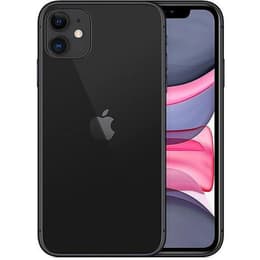
iPhone 11
iPhone 11
Starting at

Refurbished price:A$246.00

Versus A$769.00 new

See options
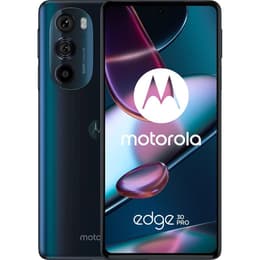
Motorola Edge 30 Pro
Starting at

Refurbished price:A$291.72

Versus A$2,709.00 new

See options

The iPhone 11, released in September 2019, and the Motorola Edge 30 Pro, launched in March 2022, represent different approaches to smartphone design and functionality from their respective manufacturers. While the iPhone 11 operates on Apple's iOS ecosystem, the Motorola Edge 30 Pro runs on Android, offering distinct user experiences. The primary differentiators lie in their display technologies, camera philosophies, and software support timelines.

Scores

Durability

When considering the long-term usability of these devices, their release timelines and software support are key factors. The iPhone 11, being an older model, has a different support trajectory compared to the more recent Motorola Edge 30 Pro.

  • Software Longevity: The iPhone 11, released in 2019, is expected to receive major iOS updates until approximately Fall 2026, with security updates potentially extending beyond that. The Motorola Edge 30 Pro, launched in 2022, was promised two major Android OS updates and three years of security updates, meaning its official software support likely concluded around March 2025.
  • Repairability: The iPhone 11 has an iFixit repairability score of 6 out of 10, indicating a moderate ease of repair for common components. The Motorola Edge 30 Pro received a slightly higher repairability score of 6.5 out of 10, though disassembling it often requires heat to loosen adhesives and careful handling of internal components.
  • Practical Lifespan: Users of the iPhone 11 can anticipate continued functionality for essential tasks for some time, benefiting from Apple's extended software support. The Motorola Edge 30 Pro, while newer, may face limitations in accessing the latest Android features and security patches sooner due to its shorter update commitment.

Release year

2019

2022

Compatible with latest Update

Yes

Yes

Operating system

iOS

Android

Foldable

No

No

Performance

The performance of a smartphone significantly impacts daily usage, from launching applications to handling demanding tasks. Both devices offer capable performance for their respective generations, but with different underlying architectures.

  • Processing Power: The iPhone 11 is equipped with Apple's A13 Bionic chip, which provides smooth performance for everyday applications, multitasking, and many graphically intensive games. The Motorola Edge 30 Pro features a current-generation processor known for its fast performance, making it highly responsive for demanding apps and multitasking.
  • Multitasking and Responsiveness: The iPhone 11 comes with 4GB of RAM, which is sufficient for typical smartphone usage and app switching. The Motorola Edge 30 Pro offers larger RAM configurations, typically 8GB or 12GB, contributing to its ability to keep more applications open in the background and maintain overall system responsiveness.
  • Battery Behavior: The iPhone 11 has a 3110 mAh battery, which users report can last a full day with moderate use, especially if the battery health is optimal or it has been replaced. The Motorola Edge 30 Pro houses a larger 4800 mAh battery, generally providing decent battery life that can also last through a full day for many users.

Memory (GB)

4 GB

8 GB

Screen quality

The visual experience is a crucial aspect of any smartphone, and these two models offer distinct display technologies and characteristics.

  • Display Technology: The iPhone 11 features a 6.1-inch Liquid Retina HD LCD display. In contrast, the Motorola Edge 30 Pro boasts a larger 6.7-inch pOLED display. The pOLED technology on the Motorola offers deeper blacks and higher contrast compared to the LCD panel of the iPhone.
  • Resolution and Clarity: The iPhone 11 has a resolution of 1792 x 828 pixels at 326 ppi. The Motorola Edge 30 Pro provides a sharper Full HD+ resolution of 2400 x 1080 pixels. This higher pixel density on the Motorola results in finer detail and clearer text.
  • Refresh Rate and Brightness: The iPhone 11 has a standard 60Hz refresh rate. The Motorola Edge 30 Pro offers a smoother visual experience with a high 144Hz refresh rate, which is particularly noticeable during scrolling and gaming. The iPhone 11 reaches a typical maximum brightness of 625 nits, while the Motorola Edge 30 Pro's display is generally bright and legible outdoors.

Resolution

828 x 1792

1080 x 2400

Screen type

Liquid Retina IPS LCD

OLED

Audiovisual

For many users, the camera system is a primary consideration, and both devices offer different capabilities for capturing photos and videos.

  • Rear Camera Systems: The iPhone 11 features a dual 12-megapixel camera setup, including a wide and an ultra-wide lens. It is known for producing sharp, colorful photos in good daylight with reliable exposure. The Motorola Edge 30 Pro comes with a triple rear camera system, highlighted by a 50-megapixel main sensor with optical image stabilization (OIS) and a 50-megapixel ultra-wide lens, alongside a 2-megapixel depth sensor.
  • Low-Light Performance and Features: The iPhone 11 includes a night mode that improves low-light photography, though its performance is not as strong as newer flagship phones. The Motorola Edge 30 Pro's camera performance, particularly in low light, has been noted by users as average, with some reporting grainy and noisy images despite the presence of OIS.
  • Video Recording and Front Camera: Both phones are capable of recording 4K video at 60 frames per second, with the iPhone 11 offering good stabilization. For selfies, the iPhone 11 has a 12-megapixel front camera, while the Motorola Edge 30 Pro features a high-resolution 60-megapixel front camera.

Main camera

12 megapixels

50 megapixels

Front camera

12 megapixels

60 megapixels

Miscellaneous

Beyond core specifications, several practical elements contribute to the overall user experience and device utility.

  • Connectivity: The iPhone 11 supports 4G LTE, Wi-Fi 6, and Bluetooth 5.0. The Motorola Edge 30 Pro offers more advanced connectivity, including 5G network support, Wi-Fi 6E (ax), and Bluetooth 5.2. This makes the Motorola more future-ready for faster mobile data speeds.
  • Ports and Sensors: The iPhone 11 utilizes Apple's proprietary Lightning port. The Motorola Edge 30 Pro features a USB-C port, a more universal standard, but notably lacks a 3.5mm headphone jack. Both devices include essential sensors like accelerometers, gyroscopes, and compasses, with the iPhone 11 relying on Face ID for biometric security and the Motorola Edge 30 Pro typically featuring a fingerprint sensor.
  • Design and Build: The iPhone 11 has a glass front and back with an aluminum frame, weighing 194 grams. It has an IP68 rating for water and dust resistance. The Motorola Edge 30 Pro also features a glass front (Gorilla Glass 3) and back (Gorilla Glass 5) but with a plastic frame, weighing 196 grams. It carries an IP52 rating, indicating splash resistance rather than full water immersion protection.

Weight

194 oz

196 oz

Screen size (in)

6.1

6,7

Network

4G

5G

SIM card

Physical SIM + eSIM

Dual Physical SIM

Carrier compatibility

Unlocked

Unlocked

User feedback for the iPhone 11 often praises its consistent performance for daily tasks, reliable camera in good lighting, and Apple's long-term software support, making it a solid choice for those who prioritize a stable and familiar ecosystem. Criticisms frequently point to its LCD display, which lacks the deep blacks and vibrant contrast of OLED screens, and the absence of 5G connectivity.

The Motorola Edge 30 Pro is commonly lauded for its powerful processor, smooth 144Hz OLED display, and fast charging capabilities, offering a high-performance Android experience. However, users often express concerns about its camera performance, particularly in low-light conditions, and the relatively shorter software update commitment from Motorola.

Users prioritizing extended software support, a highly optimized ecosystem, and consistent camera performance in daylight may find the iPhone 11 well-suited to their needs. Conversely, individuals who value a high refresh rate OLED display, cutting-edge processing power for demanding applications, 5G connectivity, and the flexibility of the Android operating system might lean towards the Motorola Edge 30 Pro. Both devices offer distinct advantages, catering to different user preferences. For those seeking an eco-friendly, quality-assured alternative, considering a refurbished option for either model can be a practical choice.

See all articles

Our recent comparisons