iPhone 11 vs iPhone 12 Pro Max

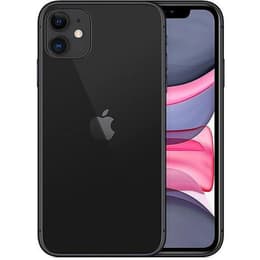
iPhone 11
iPhone 11
Starting at

Refurbished price:A$246.00

Versus A$769.00 new

See options
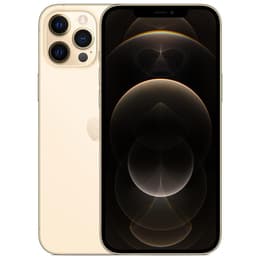
iPhone 12 Pro Max
iPhone 12 Pro Max
Starting at

Refurbished price:A$434.00

Versus A$1,249.00 new

See options

Ratings

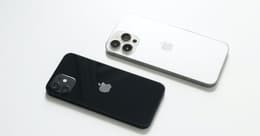
The iPhone 11, released in September 2019, and the iPhone 12 Pro Max, launched in November 2020, represent different tiers and generations within Apple's smartphone lineup. While both operate on the iOS ecosystem, the iPhone 12 Pro Max introduces a more advanced display technology, a more comprehensive camera system, and next-generation connectivity, distinguishing it from its predecessor.

Scores

Durability

When considering the long-term usability of these devices, their release timelines and Apple's software support policies are key factors.

  • Software Longevity: The iPhone 11, released in September 2019, is expected to receive major iOS updates until approximately Fall 2026, likely concluding with iOS 26. Security updates are anticipated to continue for at least another year or two beyond that. The iPhone 12 Pro Max, launched in November 2020, is projected to receive major iOS updates for a longer period, extending until at least 2027, with security patches continuing thereafter.
  • Physical Durability: Both devices feature an IP68 rating for water and dust resistance. The iPhone 11 is rated for submersion up to 2 meters for 30 minutes, while the iPhone 12 Pro Max offers enhanced protection, capable of withstanding depths of up to 6 meters for 30 minutes. Both models received a repairability score of 6 out of 10 from iFixit, indicating a moderate ease of repair for common components.
  • Expected Lifespan: Users can expect several years of practical use from both devices, with the iPhone 12 Pro Max offering a slightly extended period of major software support due to its later release.

Release year

2019

2020

Compatible with latest Update

Yes

Yes

Operating system

iOS

iOS

Foldable

No

No

Performance

The performance of these smartphones impacts daily tasks, from app usage to demanding applications and multitasking.

  • Processing Power: The iPhone 11 handles demanding apps and multitasking smoothly, providing a responsive experience for everyday use and gaming. The iPhone 12 Pro Max, with its newer generation processor, offers a noticeable boost in speed and efficiency, resulting in even smoother app loading, more fluid multitasking, and enhanced performance in graphically intensive games and applications.
  • Battery Behavior: The iPhone 11 generally provides a full day of use for most users, with some tests showing around 11 hours and 16 minutes of web browsing. The iPhone 12 Pro Max is recognized for its extended battery life, often lasting significantly longer, with some reports indicating over 14 hours of web browsing or more than 48 hours of mixed use between charges, making it well-suited for heavy users.
  • Storage and Multitasking: The iPhone 11 is available with storage options up to 256GB and includes 4GB of RAM, which supports efficient multitasking for typical user needs. The iPhone 12 Pro Max offers higher storage capacities, up to 512GB, and features 6GB of RAM, providing more headroom for extensive app usage and seamless transitions between multiple demanding applications.

Memory (GB)

4 GB

6 GB

Screen quality

The visual experience is a key differentiator, with distinct display technologies and sizes influencing clarity and brightness.

  • Display Technology and Size: The iPhone 11 features a 6.1-inch Liquid Retina HD LCD display, known for its accurate color reproduction. The iPhone 12 Pro Max boasts a larger 6.7-inch Super Retina XDR OLED display, which delivers deeper blacks, higher contrast, and more vibrant colors, enhancing the viewing experience for media consumption.
  • Resolution and Brightness: The iPhone 11 has a resolution of 1792 x 828 pixels at 326 pixels per inch (ppi) and a typical maximum brightness of 625 nits. The iPhone 12 Pro Max offers a sharper resolution of 2778 x 1284 pixels at 458 ppi, with a typical maximum brightness of 800 nits and a peak brightness of 1200 nits for HDR content, providing superior clarity and better visibility in bright outdoor conditions.
  • Refresh Rate: Both devices feature a standard 60Hz refresh rate, which provides a smooth experience for most daily interactions.

Resolution

828 x 1792

1284 x 2778

Screen type

Liquid Retina IPS LCD

Super Retina XDR OLED

Audiovisual

Both smartphones offer capable camera systems, but the iPhone 12 Pro Max introduces several enhancements for photography and videography.

  • Rear Camera System: The iPhone 11 is equipped with a dual 12MP camera system, including a wide (f/1.8) and an ultra-wide (f/2.4) lens, offering 2x optical zoom out and up to 5x digital zoom. The iPhone 12 Pro Max features a more versatile triple 12MP camera system, adding a telephoto lens (f/2.2) to its wide (f/1.6) and ultra-wide (f/2.4) setup. This allows for 2.5x optical zoom in, 2x optical zoom out, a 5x optical zoom range, and up to 12x digital zoom.
  • Low-Light and Advanced Features: Both models include Night mode for improved low-light photography on their wide lenses. The iPhone 12 Pro Max extends Night mode to its ultra-wide lens and introduces Night mode portraits, enabled by its LiDAR Scanner. It also features sensor-shift optical image stabilization on the wide camera for enhanced stability and supports Apple ProRAW for more flexible post-processing.
  • Video Recording: Both devices are capable of recording 4K video at up to 60 frames per second. The iPhone 12 Pro Max benefits from its advanced stabilization and processing, potentially offering slightly more refined video quality, especially in challenging conditions.

Main camera

12 megapixels

12 megapixels

Front camera

12 megapixels

12 megapixels

Miscellaneous

Beyond core features, several practical elements contribute to the overall user experience and device utility.

  • Connectivity: The iPhone 11 supports 4G LTE, Wi-Fi 6, and Bluetooth 5.0, along with an Ultra Wideband (U1) chip for spatial awareness. The iPhone 12 Pro Max upgrades connectivity with 5G support, offering faster cellular data speeds where available, in addition to Wi-Fi 6 and Bluetooth 5.0.
  • Physical Design and Handling: The iPhone 11 has rounded edges and weighs 194 grams, with dimensions of 150.9 x 75.7 x 8.3 mm. The iPhone 12 Pro Max features a flatter-edged design, is larger and heavier at 228 grams, and measures 160.8 x 78.1 x 7.4 mm. The larger size and weight of the 12 Pro Max may impact one-handed use for some individuals.
  • Charging and Ports: Both devices utilize the Lightning port for charging and data transfer. Neither includes a traditional 3.5mm headphone jack. The iPhone 12 Pro Max introduces MagSafe technology, allowing for magnetic attachment of accessories and wireless charging.

Weight

194 oz

226 oz

Screen size (in)

6.1

6,7

Network

4G

5G

SIM card

Physical SIM + eSIM

Physical SIM + eSIM

Carrier compatibility

Unlocked

Unlocked

Connector

Lightning

Lightning

User feedback often highlights the iPhone 11 as a reliable and capable device, praised for its solid battery life and improved camera performance over its direct predecessor. Some users appreciate its LCD display for being less straining on the eyes compared to OLED panels. Criticisms sometimes point to its display resolution being lower than Pro models and its thicker bezels.

The iPhone 12 Pro Max is frequently lauded for its expansive and vibrant OLED display, exceptional battery longevity, and its advanced camera system, particularly for those who value photography and videography. However, its larger size and increased weight can be a consideration for users preferring a more compact device. The 60Hz refresh rate, despite being a Pro model, has also been a point of discussion among some users.

Users prioritizing a large, high-resolution OLED display, extended battery life, and a more versatile camera system with advanced features like telephoto zoom and improved low-light capabilities may find the iPhone 12 Pro Max better suited to their needs. Conversely, those seeking a slightly more compact device that still offers strong performance, good battery life, and a capable camera for everyday use might lean towards the iPhone 11. Both models remain viable options, and considering a quality-assured refurbished option can be an eco-friendly alternative for either device.
See all articles

Our recent comparisons