iPhone 11 Pro vs iPhone 14 Pro

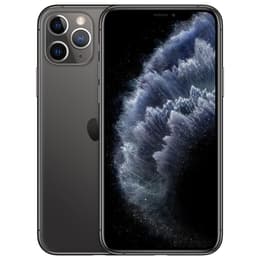
iPhone 11 Pro
iPhone 11 Pro
Starting at

Refurbished price:A$327.00

Versus A$1,029.00 new

See options
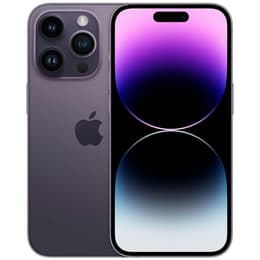
iPhone 14 Pro
iPhone 14 Pro
Starting at

Refurbished price:A$622.00

Versus A$1,749.00 new

See options

Ratings

The iPhone 11 Pro, released in September 2019, and the iPhone 14 Pro, launched in September 2022, represent different generations of Apple's premium smartphone line. While both offer a high-quality user experience, the iPhone 14 Pro introduces several advancements in display technology, camera capabilities, and overall performance. Both devices operate on Apple's iOS ecosystem, ensuring a consistent software experience, though the newer model benefits from a longer period of software support.

Scores

Durability

When considering the practical lifespan of these devices, several factors come into play, including software support, physical durability, and repairability.

  • Software Longevity: The iPhone 11 Pro, having been released in 2019, shipped with iOS 13 and is expected to receive major iOS updates for several more years, potentially up to iOS 26 as of September 2025. The iPhone 14 Pro, released in 2022 with iOS 16, will benefit from an extended period of software support, likely receiving updates for at least one to two years longer than its predecessor.
  • Physical Durability: Both models feature a stainless steel frame and glass construction, contributing to a robust feel. The iPhone 14 Pro enhances this with a Ceramic Shield front cover, designed for increased drop performance, and an improved IP68 water and dust resistance rating, allowing submersion up to 6 meters for 30 minutes compared to the iPhone 11 Pro's 4 meters for 30 minutes.
  • Expected Practical Lifespan: Users typically find that iPhones remain highly functional for many years, often exceeding five years with proper care. The newer iPhone 14 Pro, due to its more recent release and advanced components, is likely to maintain optimal performance and compatibility with new applications for a longer duration. Opting for a quality-assured refurbished option for either model can further extend its useful life by ensuring it meets high standards upon purchase.

Release year

2019

2022

Compatible with latest Update

Yes

Yes

Operating system

iOS

iOS

Foldable

No

No

Performance

The performance of a smartphone is crucial for daily tasks, from app usage to demanding multimedia applications. Both the iPhone 11 Pro and iPhone 14 Pro deliver capable performance, but with notable differences.

  • Processing Power: The iPhone 14 Pro features a more advanced internal processor, which translates to faster app loading times, smoother transitions between applications, and more efficient handling of intensive tasks like high-fidelity gaming or video editing. The iPhone 11 Pro, while still capable for everyday use, will show its age in direct comparison, particularly with newer, more demanding software.
  • Multitasking and Responsiveness: The iPhone 14 Pro includes 6GB of RAM, offering more headroom for multitasking and keeping more applications active in the background without needing to reload them. The iPhone 11 Pro comes with 4GB of RAM. This difference means the iPhone 14 Pro can maintain a more consistently fluid and responsive experience, especially for users who frequently switch between multiple apps.
  • Battery Behavior: The iPhone 14 Pro generally offers improved battery longevity compared to the iPhone 11 Pro, often lasting a full day for many users, though heavy usage may still require an evening charge. Some users of the iPhone 14 Pro have noted that its battery health can degrade somewhat faster than expected over time. The iPhone 11 Pro's battery life, while good for its generation, typically requires more frequent charging for heavy users in its current state.

Memory (GB)

4 GB

6 GB

Screen quality

The display is a primary interface for any smartphone, and both models offer high-quality viewing experiences, though the iPhone 14 Pro introduces significant advancements.

  • Display Technology and Clarity: Both devices feature Super Retina XDR OLED displays, providing deep blacks, vibrant colors, and excellent contrast ratios. The iPhone 14 Pro has a slightly larger 6.1-inch display with a resolution of 2556x1179 pixels at 460 pixels per inch, offering a marginally sharper image than the iPhone 11 Pro's 5.8-inch display with 2436x1125 pixels at 458 pixels per inch.
  • Brightness and Smoothness: The iPhone 14 Pro significantly improves brightness, reaching up to 1000 nits typical, 1600 nits peak for HDR content, and an impressive 2000 nits peak outdoors, making it highly legible even in direct sunlight. The iPhone 11 Pro offers 800 nits typical and 1200 nits peak for HDR. Additionally, the iPhone 14 Pro features ProMotion technology, providing an adaptive refresh rate up to 120Hz for smoother scrolling and more fluid animations, a feature absent on the iPhone 11 Pro, which has a standard 60Hz refresh rate.
  • User Experience Features: The iPhone 14 Pro introduces the Dynamic Island, a dynamic area around the front camera and sensors that adapts to display alerts, notifications, and ongoing background activities. It also features an Always-On display, which shows essential information without fully waking the screen. The iPhone 11 Pro retains the traditional notch design and does not have an Always-On display.

Resolution

1125 x 2436

1179 x 2556

Screen type

Super Retina XDR OLED

LTPO Super Retina XDR OLED

Audiovisual

Both the iPhone 11 Pro and iPhone 14 Pro offer advanced camera systems, but the newer model brings substantial upgrades in sensor technology and computational photography.

  • Main Camera System: The iPhone 14 Pro features a significant upgrade with a 48-megapixel main sensor, which uses pixel binning to produce highly detailed 12-megapixel photos, and offers improved low-light performance. It also includes a 12-megapixel Ultra Wide lens and a 12-megapixel 3x Telephoto lens. The iPhone 11 Pro has a triple 12-megapixel camera system with Ultra Wide, Wide, and 2x Telephoto lenses.
  • Photography Enhancements: The iPhone 14 Pro benefits from Apple's Photonic Engine, Deep Fusion, and Smart HDR 4, which collectively enhance image quality, especially in challenging lighting conditions, capturing more detail and better color accuracy. It also includes a LiDAR scanner for improved depth sensing, benefiting Night mode portraits. The iPhone 11 Pro features Night mode, Smart HDR, and Deep Fusion, which were groundbreaking at its release, but are less advanced than the 14 Pro's system.
  • Video and Front Camera: The iPhone 14 Pro offers advanced video capabilities like Cinematic mode in 4K HDR at 30 frames per second and Action mode for enhanced video stabilization. Its front-facing 12-megapixel camera includes autofocus and a wider aperture for better selfies and video calls. The iPhone 11 Pro supports 4K video recording with cinematic stabilization and has a 12-megapixel front camera, but lacks the advanced features of the 14 Pro.

Main camera

12 megapixels

48 megapixels

Front camera

12 megapixels

12 megapixels

Miscellaneous

Beyond the core features, several practical elements differentiate the iPhone 11 Pro and iPhone 14 Pro, impacting daily usability and future compatibility.

  • Connectivity and Ports: A major difference is the iPhone 14 Pro's support for 5G cellular networks, offering significantly faster data speeds where available, a feature absent on the iPhone 11 Pro, which relies on Gigabit LTE. Both devices continue to use the Lightning port for charging and data transfer. The iPhone 14 Pro also features newer Wi-Fi 6 and Bluetooth 5.3 standards, providing more reliable and efficient wireless connections compared to the iPhone 11 Pro's Wi-Fi 6 and Bluetooth 5.0.
  • Sensors and Biometrics: Both models utilize Face ID for secure authentication. The iPhone 14 Pro introduces Emergency SOS via satellite and Crash Detection, enhancing safety features. It also incorporates a LiDAR scanner, which improves augmented reality experiences and low-light photography.
  • Design and Handling: The iPhone 14 Pro features a slightly different design with a more prominent camera bump and the Dynamic Island replacing the traditional notch. It is also marginally heavier at 206 grams compared to the iPhone 11 Pro's 188 grams, and slightly thicker. Some users have noted the iPhone 14 Pro's stainless steel frame can contribute to hand fatigue, suggesting a case might improve comfort.

Weight

188 oz

206 oz

Screen size (in)

5.8

6,1

Network

4G

5G

SIM card

Physical SIM + eSIM

Physical SIM + eSIM

Carrier compatibility

Unlocked

Unlocked

Connector

Lightning

Lightning

The iPhone 11 Pro and iPhone 14 Pro cater to users with varying priorities, reflecting the technological advancements over three generations. User sentiment for the iPhone 14 Pro frequently highlights its impressive display, particularly the fluidity of the ProMotion technology and the innovative Dynamic Island, which many find intuitive and engaging. The camera system, especially its low-light capabilities and detail capture, receives consistent praise, with users appreciating the significant leap in photographic quality and video stabilization features like Action mode. Some common criticisms include its increased weight and the observation that battery health might degrade faster than previous models, though overall battery life is generally considered solid for a full day's use.

For the iPhone 11 Pro, users often commend its enduring performance for everyday tasks and its still-capable camera system, especially considering its age. Its more compact size and lighter weight are often cited as advantages by those who prefer smaller devices. However, its lack of 5G connectivity and the absence of features like ProMotion and the Always-On display are noticeable limitations compared to newer models.

Users prioritizing the latest display technology, advanced camera features for both photos and videos, and future-proof connectivity like 5G will find the iPhone 14 Pro well-suited to their needs. Its enhanced processing power also makes it ideal for demanding applications and extended longevity. Conversely, users seeking a more compact and lighter device that still offers a premium experience for general use, and who do not require the absolute latest in camera or display technology, may lean toward the iPhone 11 Pro. Both models are available as quality-assured refurbished options, providing a sustainable choice for consumers.


See all articles

Our recent comparisons