
Compare models
iPad 11 (2025, A16 series) vs iPad Pro (2025, M5 series)
- 1-year warranty
- Free standard shipping
- Free 30-day returns
Differences at a glance
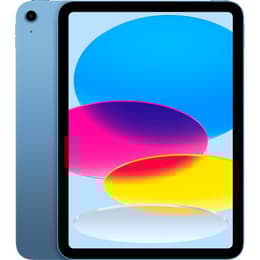
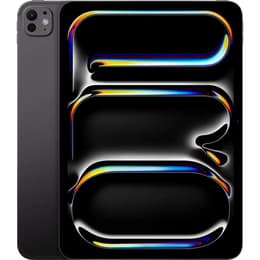
The iPad 11 (2025) and the iPad Pro (2025) represent two distinct tiers within Apple's tablet lineup, tailored for different usage requirements and user expectations. While the iPad 11 is designed as an accessible device for everyday household tasks and media consumption, the iPad Pro delivers specialized hardware capabilities for demanding professional workflows. Both run on Apple's iPadOS operating system, though they utilize different internal processing architectures that influence their overall system capabilities and feature sets.
Available Models
Colour
Storage (GB)
Scores
Durability
Both tablets benefit from Apple's long-standing software support cycle, though their hardware configurations position them for varying practical lifespans depending on workload intensity.
- Software Support Timeline: Both models receive current iPadOS updates upon release, with the high-performance processor in the iPad Pro providing additional headroom for future resource-heavy feature expansions.
- Repairability and Build Longevity: Both devices feature robust aluminum chassis constructions, though professional-grade components in the iPad Pro require specialized repair procedures when service is needed.
- Expected Practical Lifespan: Casual users will find the iPad 11 maintains reliable performance for years of web browsing and streaming, while power users tackling heavy creative tasks will benefit from the sustained endurance of the iPad Pro. Selecting a quality-assured refurbished option provides a sustainable choice that extends device lifecycles while reducing electronic waste.
Release year
2025
2025
Compatible with latest Update
Yes
Yes
Operating system
iPadOS
iPadOS
Performance
System responsiveness and multitasking capabilities differ significantly between the two models due to contrasting internal hardware and memory allocations.
- Storage and Multitasking: The iPad 11 offers standard storage tiers paired with sufficient memory for everyday app switching, whereas the iPad Pro provides extensive storage configurations and higher unified memory capacity to keep multiple demanding applications active simultaneously.
- Everyday Responsiveness: Both devices handle web browsing, media streaming, and document editing smoothly, but the iPad Pro excels during intensive tasks such as 3D rendering, video editing, and complex graphic design.
- Battery Behavior: Both tablets deliver standard all-day battery life during typical web use, though heavy gaming or professional rendering will drain the iPad Pro's power reserves faster due to its high-performance configuration.
Processor
Apple A16
Apple M5
Screen quality
Display technology is one of the primary differentiators, offering contrasting visual experiences for media consumption and creative work.
- Display Technology: The iPad 11 utilizes a standard Liquid Retina IPS LCD panel with balanced color accuracy, while the iPad Pro features advanced tandem OLED technology that delivers deep contrast ratios and higher peak brightness for HDR content.
- Refresh Rate and Smoothness: The iPad 11 operates at a standard 60Hz refresh rate suitable for standard scrolling, whereas the iPad Pro incorporates adaptive high refresh rate technology for fluid motion during drawing and fast-paced navigation.
- Viewing Experience: The iPad Pro's advanced screen lamination reduces internal reflections and improves clarity under bright lighting conditions compared to the unlaminated display structure on the iPad 11.
Resolution
2360 x 1640
2420 x 1668
True Tone
Yes
Yes
Promotion
No
Yes
Screen type
Liquid Retina display
Ultra Retina XDR display
Sound quality
Speakers
Stereo speakers (landscape)
Four speaker audio
Audiovisual
Imaging hardware and multimedia output vary to accommodate casual snapshots versus professional content capture and audio production.
- Camera Systems: The iPad 11 features a single wide rear camera suitable for document scanning and casual photos, while the iPad Pro includes a multi-lens rear array equipped with advanced depth scanners for augmented reality and versatile photography.
- Video and Audio Output: The iPad 11 includes standard stereo speakers and reliable front-facing video calling hardware, whereas the iPad Pro incorporates a studio-grade multi-microphone array and a four-speaker audio system for immersive media playback.
- Creation and Media Consumption: Users reviewing media or participating in video calls will find clear audio on both devices, with the iPad Pro providing greater depth and fidelity for creative audio monitoring.
Miscellaneous
Physical dimensions, accessory compatibility, and connectivity options shape how each device integrates into daily portability and workspace setups.
- Portability and Handling: The iPad 11 features a slightly thicker profile with a traditional aluminum frame, while the iPad Pro prioritizes a thin, lightweight footprint that is easy to carry during travel.
- Accessory Ecosystem: The iPad Pro supports advanced precision input accessories and magnetic keyboard attachments with function rows, whereas the iPad 11 relies on standard folio cases and basic stylus options.
- Connectivity Standards: Both models offer wireless connectivity configurations, with the iPad Pro integrating faster Wi-Fi protocols and high-speed data transfer capabilities through its versatile port interface.
Weight
477 oz
444 oz
Screen size (in)
11
11
Network
Wi-Fi
Wi-Fi
Carrier compatibility
Without SIM Port
Without SIM Port
Face ID
No
Yes
Touch ID
Yes
No
Connector
USB Type-C
USB Type-C
What the community thinks
Choosing between these two tablets depends closely on individual workflow demands and intended daily usage patterns. Users prioritizing everyday web browsing, media streaming, and casual note-taking will find the iPad 11 well-suited to their needs without unnecessary complexity. Conversely, professionals, digital artists, and power users requiring advanced display technology, maximum processing headroom, and robust accessory compatibility will lean toward the iPad Pro. Considering an eco-friendly alternative like a quality-assured refurbished option offers a sustainable way to access either model while supporting responsible electronics consumption. Ultimately, evaluating personal tasks against each device's capabilities ensures an informed and practical purchasing decision.