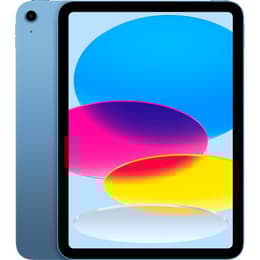
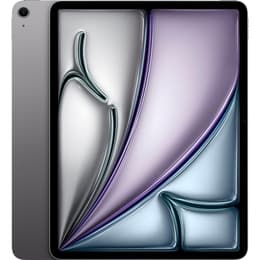

iPad 11 (2025, A16 series) vs iPad Air 7 (2025, M3 series)

iPad 11 (2025, A16 series)
See options
iPad Air 7 (2025, M3 series)
Starting at

Refurbished price:A$1,078.92

Versus A$1,199.00 new

See options

Ratings

The iPad 2025 A16 Series and the iPad Air 2025 M3 Series, both released in March 2025, represent distinct tiers within Apple's tablet lineup. While both devices operate on iPadOS and offer a versatile tablet experience, they cater to different user needs through their core processing power and display enhancements. The iPad 2025 A16 Series serves as a capable entry-point, whereas the iPad Air 2025 M3 Series delivers significantly more performance and advanced display features for more demanding tasks.

Scores

Durability

When considering the long-term usability of these tablets, several factors contribute to their expected practical lifespan.

  • Release Timeline and OS Support: Both devices were released in March 2025, meaning they will receive iPadOS updates for a comparable duration. Apple typically provides 5-7 years of major software updates for its tablets. The iPad Air 2025 M3 Series, with its more powerful M3 chip, is likely to handle future software advancements and more demanding applications for a longer period than the iPad 2025 A16 Series. The iPad Air (M3) shipped with iPadOS 18, and as of April 2026, the current version is iPadOS 26.4.1.
  • Repairability: While specific repairability scores are not available, Apple's design philosophy generally means that internal components require specialized tools and expertise for repair. Both models are expected to follow similar repairability trends as their predecessors, with authorized service providers offering component replacement.
  • Software Longevity: The M3 chip in the iPad Air is designed to leverage advanced features like Apple Intelligence, which the iPad 2025 A16 Series does not support. This difference in capability for future AI-driven features could influence the perceived longevity for users who rely on such functionalities.

Release year

2025

2025

Compatible with latest Update

Yes

Yes

Operating system

iPadOS

iPadOS

Minimum system requirements (iPadOS)

iPadOS 18

iPadOS 18

Performance

The performance capabilities of these two iPads are a primary differentiator, stemming from their respective processors.

  • Processor Capabilities: The iPad 2025 A16 Series is equipped with an A16 Bionic chip, which includes a 5-core CPU and a 4-core GPU. This configuration provides robust performance for everyday tasks, web browsing, media consumption, and casual gaming. The iPad Air 2025 M3 Series, on the other hand, features the M3 chip with an 8-core CPU and a 9-core GPU. This significantly more powerful chip is designed for intensive multitasking, professional-grade applications, and graphics-heavy gaming, offering a substantial boost in processing power compared to the A16.
  • Multitasking and Responsiveness: The M3 chip's architecture in the iPad Air allows for smoother handling of multiple demanding applications simultaneously and quicker transitions between tasks. Users engaging in complex creative work or running several professional apps will notice the M3's enhanced responsiveness. The iPad Air (M3) also comes with 8GB of unified memory, which aids in multitasking, while the iPad (A16) is likely to have less RAM.
  • Storage Options: Both devices offer a range of storage capacities. The iPad 2025 A16 Series starts with 128GB and goes up to 512GB. The iPad Air 2025 M3 Series provides more extensive options, starting at 128GB and extending up to 1TB, catering to users with larger storage needs for files, apps, and media.

Memory (GB)

6 GB

8 GB

Processor

Apple A16

Apple M3

Screen quality

The visual experience on these tablets is shaped by their display technologies and features.

  • Display Technology and Clarity: Both the iPad 2025 A16 Series and the iPad Air 2025 M3 Series feature Liquid Retina IPS LCD displays. They share a similar resolution of 2360x1640 pixels at 264 pixels per inch (ppi) for the 10.9-inch and 11-inch models, respectively, providing clear visuals for general use.
  • Color Accuracy and Brightness: The iPad Air 2025 M3 Series offers P3 wide color support, which allows for a broader and more accurate range of colors, beneficial for creative professionals and media consumption. The iPad 2025 A16 Series supports sRGB color coverage. In terms of brightness, the 11-inch iPad Air (M3) reaches 500 nits, while the 13-inch model can go up to 600 nits. The iPad (A16) also offers 500 nits of brightness.
  • Additional Display Features: The iPad Air 2025 M3 Series includes an anti-reflective coating and a fully laminated display. These features reduce glare and bring the display closer to the glass, enhancing the viewing experience, especially in bright environments. The iPad 2025 A16 Series lacks these specific enhancements. Both models feature True Tone technology, which adjusts the display's color and intensity to match the ambient light.

Resolution

2360 x 1640

2360 x 1640

True Tone

Yes

Yes

Promotion

No

No

Screen type

Liquid Retina display

Liquid Retina display

Pixel density

264ppp

264ppp

Brightness

500 nits brightness

500 nits brightness

Sound quality

Speakers

Stereo speakers (landscape)

Stereo speakers (landscape)

Audiovisual

Both iPads are equipped with capable camera systems for everyday photography, video calls, and document scanning.

  • Rear Camera System: Both the iPad 2025 A16 Series and the iPad Air 2025 M3 Series feature a 12MP Wide rear camera with an f/1.8 aperture. This allows for clear photos and 4K video recording. Both support Smart HDR 4 for improved dynamic range in images.
  • Front Camera and Video Calls: For video conferencing and selfies, both tablets include a 12MP front-facing camera with Center Stage, which automatically keeps subjects in view during video calls. The iPad Air 2025 M3 Series has an f/2.0 aperture on its front camera, while the iPad 2025 A16 Series has an f/2.4 aperture. This difference means the iPad Air's front camera may perform slightly better in lower light conditions.
  • Audio for Media and Communication: The iPad Air 2025 M3 Series features a four-speaker audio system, providing a more immersive sound experience for media consumption. The iPad 2025 A16 Series offers stereo speakers, which are an improvement for media playback compared to older base models. Both devices include dual microphones for clear audio recording and calls.

Miscellaneous

Beyond core performance and display, several practical elements contribute to the overall user experience of these tablets.

  • Connectivity Standards: The iPad Air 2025 M3 Series supports Wi-Fi 6E, offering faster wireless speeds and improved performance in congested network environments. The iPad 2025 A16 Series supports Wi-Fi 6. Both models feature Bluetooth 5.3 for connecting accessories. Cellular models of both devices support sub-6GHz 5G connectivity and utilize eSIM technology.
  • Port Types and Data Transfer: The iPad Air 2025 M3 Series is equipped with a USB-C 3.0 port, enabling data transfer speeds of up to 10Gbps. This is beneficial for users who frequently transfer large files or connect high-speed external accessories. The iPad 2025 A16 Series uses a USB-C 2.0 port, which offers slower transfer speeds of up to 480Mbps.
  • Biometric Security and Design: Both tablets feature Touch ID integrated into the power button for secure authentication. In terms of physical design, both models maintain a modern aesthetic with thin bezels and rounded corners. The iPad Air (M3) is slightly thinner and lighter than the iPad (A16).

Weight

477 oz

460 oz

Width

179.5 in

178.5 in

Height

248.6 in

247.6 in

Depth

7 in

6.1 in

Screen size (in)

11

11

Network

Wi-Fi

Wi-Fi

Carrier compatibility

Without SIM Port

Without SIM Port

Wi-Fi version

Wi-Fi 6 802.11ax

Wi-Fi 6 802.11ax

Bluetooth version

Bluetooth 5.3

Bluetooth 5.3

Face ID

No

No

Touch ID

Yes

Yes

Connector

USB Type-C

USB Type-C

The iPad 2025 A16 Series and the iPad Air 2025 M3 Series offer distinct advantages depending on a user's priorities. Users frequently praise the iPad Air (M3) for its significant performance leap, making it suitable for demanding creative tasks and advanced multitasking. Its enhanced display features, such as P3 wide color and anti-reflective coating, are also frequently highlighted as beneficial for visual work and media consumption. Some users, however, note that the base iPad (A16) provides a solid experience for general use, appreciating its capable performance for everyday tasks and media consumption. A common criticism of the iPad (A16) is its lack of Apple Intelligence support, which is present in the iPad Air (M3).

Users prioritizing high-performance computing for professional applications, graphic design, video editing, or intensive gaming will find the iPad Air 2025 M3 Series well-suited to their needs. Its M3 chip, 8GB of RAM, and faster USB-C port provide the necessary power and speed for such workflows. Conversely, users primarily seeking a reliable device for web browsing, email, streaming, casual gaming, and note-taking will find the iPad 2025 A16 Series to be a capable option. It delivers a smooth experience for these common tasks, making it a practical choice for students or those with lighter usage patterns. Both devices offer a quality-assured refurbished option, providing a sustainable choice for consumers looking to make an informed purchasing decision.


See all articles

Our recent comparisons