
Galaxy Tab A9+ (11.0", 2023) vs iPad 11 (2025, A16 series)

Galaxy Tab A9+ (11.0", 2023)
See options
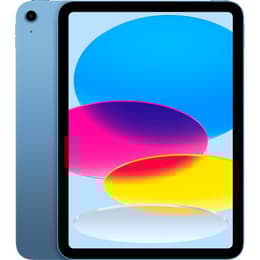
iPad 11 (2025, A16 series)
See options

The Samsung Galaxy Tab A9+ (released in October 2023) and a hypothetical iPad model from 2025, featuring an A16 series processor, represent distinct approaches to tablet computing. While both offer large displays suitable for media consumption and productivity, they differ significantly in their operating systems, core performance capabilities, and ecosystem integration. The Galaxy Tab A9+ operates on Android, providing flexibility and expandable storage, whereas the 2025 iPad would run on Apple's iPadOS, emphasizing a streamlined user experience and robust performance.

Scores

Durability

The longevity of a tablet is influenced by its release timeline, software support, and physical durability. These two devices offer different expectations in terms of their practical lifespan and ongoing usability.

  • Release Timeline and Age: The Galaxy Tab A9+ was released in late 2023, making it a relatively recent Android tablet. The iPad 2025, as its name suggests, would be a newer device, benefiting from a later manufacturing date and more current components.
  • OS Support Duration: Samsung typically provides at least three years of major Android software updates for its A-series tablets, with security updates potentially extending longer. Apple, historically, offers a longer period of major iPadOS updates, often spanning five to seven years, followed by additional security updates, which can lead to a total usable lifespan of eight to ten years for its devices. [33, 34, 39, 42, 43]
  • Repairability and Build: Both tablets feature an aluminum body, contributing to a sturdy feel. [5, 13, 41] General tablet repairability can vary, but both brands aim for a durable construction suitable for daily use.

Release year

2023

2025

Compatible with latest Update

Yes

Yes

Operating system

Android

iPadOS

Performance

Performance is a key differentiator, impacting how smoothly applications run, how quickly tasks are completed, and the overall responsiveness of the device. The core processing power and memory configurations play a significant role here.

  • Processor Capabilities: The Galaxy Tab A9+ is equipped with a processor that handles everyday tasks such as web browsing, video streaming, and light productivity applications smoothly. It can manage intensive games at moderate settings. [2, 3, 9, 25, 28, 36] The hypothetical iPad 2025, featuring an A16 series processor, would offer substantially more processing power, enabling very fluid multitasking, demanding applications, and high-fidelity gaming with ease.
  • Storage Options: The Galaxy Tab A9+ offers configurations with 64GB or 128GB of internal storage, with the notable advantage of expandable storage via a microSD card slot, supporting up to 1TB. [2, 3, 5, 37, 41] The iPad 2025 would likely come with 64GB and 256GB storage options, but without the possibility of external expansion. [8, 13, 14, 21]
  • Battery Behavior: The Galaxy Tab A9+ typically provides around 7-8 hours of heavy use or 10-12 hours with moderate usage on its 7040 mAh battery. [2, 3, 5, 12, 17, 25] The iPad 2025, with its approximately 7606 mAh battery, is generally rated for up to 10 hours of web surfing or video playback over Wi-Fi. [4, 6, 7, 10, 15, 16, 21]

Memory (GB)

4 GB

6 GB

Screen quality

The visual experience is central to tablet usage, and the display technology, resolution, and refresh rate contribute significantly to how content is perceived.

  • Display Technology and Resolution: The Galaxy Tab A9+ features an 11-inch LCD display with a resolution of 1920 x 1200 pixels. [1, 2, 3, 5, 11, 37, 38] The iPad 2025 would likely incorporate a 10.9-inch Liquid Retina IPS LCD display with a higher resolution of 2360 x 1640 pixels, resulting in greater clarity and sharpness. [4, 7, 8, 10, 14, 16, 24]
  • Refresh Rate and Smoothness: The Galaxy Tab A9+ offers a 90Hz refresh rate, providing smoother scrolling and animations compared to a standard 60Hz display. [1, 3, 5, 11, 27, 28, 37] The iPad 2025 would likely maintain a 60Hz refresh rate, which is standard for many tablets, offering a consistent visual experience.
  • Brightness and Viewing: The Galaxy Tab A9+ achieves a maximum brightness of around 493 nits, which is suitable for indoor use but can appear washed out in direct sunlight. [5] The iPad 2025 would offer a brightness of 500 nits, providing good visibility in various lighting conditions. [4, 7, 8, 10, 14, 16, 24]

Resolution

1200 x 1920

2360 x 1640

Screen type

TFT LCD

Liquid Retina display

Pixel density

210ppp

264ppp

Audiovisual

While tablets are not typically primary photography devices, their cameras are important for video calls, document scanning, and casual photography. Both models offer capable camera systems for these purposes.

  • Camera System Capabilities: The Galaxy Tab A9+ includes an 8-megapixel rear camera with autofocus and a 5-megapixel front camera. [1, 2, 3, 5, 17, 41] The iPad 2025 would feature a more advanced 12-megapixel rear camera and a 12-megapixel ultrawide front camera. [14, 16, 19, 22, 24, 35]
  • Photography and Video Performance: The Galaxy Tab A9+'s cameras perform adequately in well-lit conditions for casual photos and video calls, though they struggle in low light. [2, 3, 5, 12, 17] Video recording is available up to Full HD at 30 frames per second. [1, 5, 41] The iPad 2025's cameras would deliver sharper images and better low-light performance, with the rear camera capable of 4K video recording and the front camera supporting Full HD video. [16, 19, 22, 24, 35]
  • Special Features: The iPad 2025's front camera would likely include Center Stage, a feature that automatically keeps subjects framed during video calls. [16, 22, 24]

Miscellaneous

Beyond core specifications, practical elements like connectivity, ports, and physical design contribute to the overall user experience and how a tablet integrates into daily life.

  • Connectivity Options: The Galaxy Tab A9+ supports Wi-Fi 5 and Bluetooth 5.1, with an optional 5G variant for mobile data. [3, 5, 12, 31, 38, 41] The iPad 2025 would offer more current Wi-Fi 6 and Bluetooth 5.2 connectivity, along with optional 5G. [14]
  • Port Types and Sensors: The Galaxy Tab A9+ includes a USB-C port (USB 2.0) and retains a 3.5mm headphone jack. [3, 5, 17, 41] It uses face recognition for biometric security. [2] The iPad 2025 would feature a USB-C port (USB 2.0 with DisplayPort support) but typically omits the headphone jack. [14, 24] Biometric security would be handled by Touch ID integrated into the power button. [21, 24]
  • Weight and Dimensions: The Galaxy Tab A9+ measures 257.1 x 168.7 x 6.9 mm and weighs 480g (Wi-Fi model). [2, 3, 5, 31, 41] The iPad 2025 would have similar dimensions at 248.6 x 179.5 x 7 mm and a weight of 477g (Wi-Fi model). [4, 8, 10, 13, 14] Both are designed for comfortable handling.

Weight

480 oz

477 oz

Width

25,71 in

179.5 in

Height

16,87 in

248.6 in

Depth

0,69 in

7 in

Screen size (in)

11.0

11

Network

Wi-Fi + 5G

Wi-Fi

Carrier compatibility

Unlocked

Without SIM Port

Choosing between the Galaxy Tab A9+ and a 2025 iPad with an A16 series processor involves weighing different priorities. Users of the Galaxy Tab A9+ often praise its smooth performance for everyday tasks, its large 90Hz display, and the flexibility of expandable storage. [2, 3, 9, 12, 25, 28, 36, 37] Some common observations include its camera performance being adequate but not exceptional, and battery life being solid but not class-leading. [2, 3, 12, 17, 25] The iPad, on the other hand, is frequently lauded for its robust performance, high-resolution display, and the consistent, user-friendly experience of iPadOS. Its camera system, particularly the front-facing one with Center Stage, is often highlighted for video calls. [19, 22, 24, 35]

Users prioritizing an open ecosystem, expandable storage, and a higher display refresh rate for smoother visuals may find the Galaxy Tab A9+ well-suited to their needs. It is a practical choice for media consumption, web browsing, and light productivity. Conversely, users who value a powerful and highly optimized operating system, a sharper display, superior camera capabilities for video conferencing, and a longer period of software support may lean toward the iPad 2025. This device would be particularly beneficial for those engaged in more demanding applications or who are deeply integrated into the Apple ecosystem.

For those considering either of these tablets, exploring quality-assured refurbished options can provide an eco-friendly alternative, offering access to these devices while supporting sustainable consumption.


See all articles

Our recent comparisons