
Google Pixel 9 Pro XL vs Motorola Razr 40 Ultra

Google Pixel 9 Pro XL
Starting at

Refurbished price:A$853.00

Versus A$1,849.00 new

See options
Motorola Razr 40 Ultra
See options

The Google Pixel 9 Pro XL, released in August 2024, and the Motorola Razr 40 Ultra, launched in June 2023, represent distinct approaches to modern smartphone design and functionality. While the Pixel 9 Pro XL offers a traditional, high-performance slab experience with a strong emphasis on computational intelligence, the Razr 40 Ultra stands out with its innovative foldable form factor and large external display. Both devices operate on the Android platform, but they cater to different user preferences through their core design and feature sets.

Scores

Durability

The expected practical lifespan of a smartphone is influenced by its build quality, software support, and the longevity of its components. These two devices offer different considerations in these areas.

  • Release Timeline and Software Support: The Google Pixel 9 Pro XL, released in August 2024, benefits from Google's commitment to providing seven years of operating system updates, extending its software longevity significantly. In contrast, the Motorola Razr 40 Ultra, launched in June 2023, is slated to receive three major Android OS updates and four years of bi-monthly security updates. This means the Pixel 9 Pro XL is designed for a considerably longer period of official software support.
  • Build Materials and Durability: The Pixel 9 Pro XL features a robust, traditional smartphone construction, often incorporating premium materials designed for everyday resilience. The Motorola Razr 40 Ultra, as a foldable device, introduces a hinge mechanism and a flexible internal display. While user reports indicate the Razr 40 Ultra's hinge holds up well over time with no significant issues regarding the crease or screen protector peeling, its overall durability, particularly the cover screen, has been noted in some tests to be less robust under extreme pressure compared to traditional slab phones. The Razr 40 Ultra also carries an IP52 rating for splash resistance, whereas the Pixel 9 Pro XL is expected to offer a higher level of water and dust protection.
  • Expected Practical Lifespan: Users prioritizing the longest possible software support and a traditional, rigid device structure may find the Pixel 9 Pro XL more aligned with their needs for extended use. Those drawn to the unique foldable design of the Razr 40 Ultra should consider its specific durability characteristics, though long-term user reviews suggest the foldable mechanism itself is well-engineered for daily use.

Release year

2024

2023

Compatible with latest Update

Yes

Yes

Operating system

Android

Android

Foldable

No

Yes

Performance

Performance in modern smartphones is crucial for smooth operation, multitasking, and demanding applications. Both devices offer capable hardware, but with differences stemming from their release generations.

  • Processor Capabilities: The Google Pixel 9 Pro XL is equipped with Google's Tensor G4 processor, designed to handle complex tasks, advanced AI features, and demanding applications with efficiency. The Motorola Razr 40 Ultra features the Qualcomm Snapdragon 8+ Gen 1, a powerful processor from 2022 that provides a responsive experience for daily use, gaming, and multitasking. While both deliver strong performance, the Pixel 9 Pro XL's newer generation processor is expected to offer an edge in raw processing power and AI-driven tasks.
  • Multitasking and Storage: The Pixel 9 Pro XL typically comes with 16GB of RAM, providing ample capacity for extensive multitasking and keeping numerous applications open simultaneously without slowdowns. It offers storage options up to 1TB. The Razr 40 Ultra is available with 8GB or 12GB of RAM and storage options up to 512GB, which is sufficient for most users' needs for apps and media.
  • Overall System Responsiveness: Both phones provide a fluid Android experience. The Pixel 9 Pro XL's integration of its Tensor chip with Android is optimized for Google's software ecosystem, including advanced AI functionalities. The Razr 40 Ultra offers a near-stock Android experience with minimal bloatware, contributing to its smooth operation.

Memory (GB)

16 GB

8 GB

Screen quality

The display is a primary interaction point for any smartphone, and these two devices present different visual experiences, particularly due to the Razr 40 Ultra's foldable nature.

  • Display Technology and Clarity: The Google Pixel 9 Pro XL features a 6.8-inch LTPO OLED display with a QHD+ resolution (2992 x 1344 pixels), offering sharp details and vibrant colors. The Motorola Razr 40 Ultra's main internal display is a 6.9-inch pOLED/LTPO AMOLED panel with a resolution of 1080x2640 pixels, providing a clear and immersive viewing experience. The Pixel 9 Pro XL's higher resolution on a slightly smaller screen results in a higher pixel density.
  • Brightness and Refresh Rate: The Pixel 9 Pro XL's display is capable of reaching a peak brightness of 3000 nits, ensuring excellent visibility even in bright outdoor conditions. It also features an adaptive refresh rate ranging from 1Hz to 120Hz for smooth scrolling and power efficiency. The Razr 40 Ultra's main display offers a peak brightness of 1400 nits and an impressive 165Hz refresh rate, providing very fluid visuals.
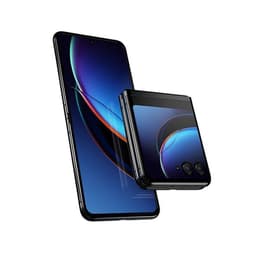
  • Unique Cover Display: A key differentiator for the Razr 40 Ultra is its large 3.6-inch external pOLED display, which has a resolution of 1056x1066 pixels and a 144Hz refresh rate. This cover screen is highly functional, allowing users to interact with apps, notifications, and even take photos without opening the phone. The Pixel 9 Pro XL, being a traditional slab phone, does not feature a secondary display.

Resolution

1344 x 2992

1080 x 2640

Screen type

LTPO OLED

Foldable LTPO AMOLED

Audiovisual

Camera capabilities are a significant factor for many users, and both devices offer advanced systems, though with different strengths.

  • Rear Camera Systems: The Google Pixel 9 Pro XL boasts a versatile triple-camera setup, including a 50MP main sensor, a 48MP ultrawide lens with macro focus, and a 48MP telephoto lens offering 5x optical zoom and up to 30x Super Res Zoom. Google's computational photography is a core strength, enhancing image quality across various conditions. The Motorola Razr 40 Ultra features a dual-camera system with a 12MP main sensor (f/1.5, OIS) and a 13MP ultrawide lens (f/2.2) that also functions for macro photography.
  • Photography Performance: The Pixel 9 Pro XL is known for its consistent image quality, particularly in challenging lighting, and its AI-driven features like Magic Editor for post-processing. Users report the Razr 40 Ultra's main camera performs well in good lighting, producing images with good detail and colors, and its wider aperture aids in low-light situations. However, its ultrawide camera may struggle with color consistency and detail in darker scenes.
  • Video Recording and Front Camera: The Pixel 9 Pro XL supports video recording up to 8K at 30fps and includes features like Video Boost. Its front-facing camera is a 42MP sensor. The Razr 40 Ultra can record 4K video at 30/60fps and 1080p at up to 120fps. Its internal selfie camera is 32MP, and a notable feature is the ability to use the higher-quality main rear cameras for selfies and video calls by utilizing the external display.

Main camera

50 megapixels

12 megapixels

Front camera

42 megapixels

32 megapixels

Miscellaneous

Beyond core performance and display, several practical features contribute to the overall user experience and daily utility of these smartphones.

  • Connectivity and Ports: The Google Pixel 9 Pro XL supports the latest connectivity standards, including 5G, Wi-Fi 7, and Bluetooth 5.3, along with a USB Type-C 3.2 port for fast data transfer and charging. The Motorola Razr 40 Ultra also offers 5G connectivity, Wi-Fi 6E, and Bluetooth 5.3, with a USB 2.0 Type-C port.
  • Biometrics and Sensors: The Pixel 9 Pro XL features an under-display ultrasonic fingerprint sensor and face recognition for secure unlocking. The Razr 40 Ultra incorporates a side-mounted fingerprint sensor for authentication. Both devices include a standard array of sensors like accelerometers, gyroscopes, and compasses.
  • Physical Design and Handling: The Pixel 9 Pro XL is a larger, traditional slab phone with dimensions of 162.8 x 76.6 x 8.5mm. The Razr 40 Ultra's foldable design allows it to be compact when closed (88.4 x 74 x 15.1mm) and expand to a full-sized smartphone when open (170.8 x 74 x 7mm). Its weight is around 184.5g to 188g. The choice between these two often comes down to a preference for a consistently large screen or the portability and unique interaction of a foldable.
  • Build Materials and Durability Features: The Razr 40 Ultra uses Gorilla Glass Victus for its cover screen and back, with an aluminum frame and stainless steel hinge, and has a water-repellent coating with an IP52 rating for splash resistance. The Pixel 9 Pro XL also features premium build materials, contributing to its overall durability.

Weight

221 oz

1 oz

Screen size (in)

6.8

6.9

Network

5G

5G

SIM card

Physical SIM + eSIM

Dual Physical SIM

Carrier compatibility

Unlocked

Unlocked

The Google Pixel 9 Pro XL and the Motorola Razr 40 Ultra cater to distinct user needs, each excelling in different areas. User sentiment often highlights the Pixel 9 Pro XL's strengths in its advanced camera system, particularly its computational photography capabilities, and its long-term software support. Many appreciate its powerful performance for demanding applications and its vibrant, high-resolution display. Criticisms, when they arise, sometimes focus on its traditional slab form factor, which might be less innovative for some users compared to foldables.

Conversely, the Motorola Razr 40 Ultra receives praise for its unique foldable design, offering a blend of a large screen experience with enhanced portability. Its large, functional external display is frequently cited as a major advantage, allowing for quick interactions without opening the device. Users also commend its smooth performance for everyday tasks and its decent battery life for a foldable. Common concerns for the Razr 40 Ultra, as with many foldables, can revolve around the perceived long-term durability of the flexible screen and hinge, though many long-term users report positive experiences. Some reviews also suggest its camera system, while capable, may not match the top-tier performance of traditional flagships in all scenarios.

Users prioritizing a cutting-edge camera experience, extended software longevity, and robust performance in a traditional smartphone form factor will find the Google Pixel 9 Pro XL well-suited to their needs. Its emphasis on AI-driven features and a consistently large display makes it ideal for those who consume a lot of media or rely heavily on smart functionalities. On the other hand, users who value portability, a unique design, and the convenience of a functional external screen will lean towards the Motorola Razr 40 Ultra. It is an excellent choice for individuals seeking a device that stands out and offers a different way to interact with their smartphone, especially for those who appreciate the compact nature of a flip phone. Both devices offer compelling experiences, and for those considering a more sustainable choice, quality-assured refurbished options for both models can provide an eco-friendly alternative.

See all articles

Our recent comparisons