Motorola Moto E13 vs Nokia G22

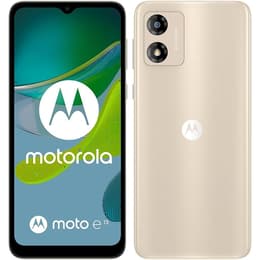
Motorola Moto E13
Motorola Moto E13
Starting at

Refurbished price:A$121.29

Versus A$244.00 new

See options
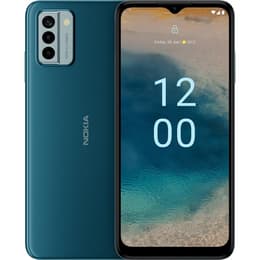
Nokia G22
Nokia G22
See options

The Motorola Moto E13, released in early 2023, and the Nokia G22, also launched in early 2023, are both smartphones designed for essential daily use. While they share a similar focus on core functionalities, the Nokia G22 emphasizes user repairability and a slightly more robust display, whereas the Moto E13 offers a streamlined software experience with Android Go Edition.

Scores

Durability

When considering the long-term usability of these devices, several factors come into play, including their release timelines, software support, and physical resilience.

  • Release Timeline and Software Support: Both devices were released in early 2023, meaning they started their software support cycles around the same time. The Motorola Moto E13 launched with Android 13 Go Edition [4, 7], a version optimized for devices with less memory, which can contribute to smoother operation over time on its hardware. The Nokia G22 launched with Android 12 but promises two years of OS upgrades, potentially reaching Android 14, and three years of monthly security updates [17, 18, 24]. This suggests a slightly longer period of official software updates for the Nokia G22 compared to the Moto E13, which typically receives fewer major OS updates.
  • Repairability and Practical Lifespan: The Nokia G22 stands out with its 'QuickFix' design, developed in partnership with iFixit, allowing users to more easily replace components like the battery, screen, and charging port using readily available parts and guides [2, 16, 24]. This focus on user repairability can significantly extend the practical lifespan of the device by making common repairs more accessible. The Motorola Moto E13 does not feature this level of user-centric repair design.
  • Durability Features: The Nokia G22 features Corning Gorilla Glass 3 for display protection and an IP52 rating for dust and splash resistance [13, 17, 21]. The Motorola Moto E13 also has an IP52 water-repellent design, offering protection against splashes [5, 30]. The Gorilla Glass on the Nokia G22 provides an additional layer of screen durability against scratches and minor impacts.

Release year

2023

2023

Compatible with latest Update

No

No

Operating system

Android

Android

Foldable

No

No

Performance

Both the Motorola Moto E13 and the Nokia G22 utilize similar internal components, leading to comparable performance profiles for everyday tasks, though with some distinctions in their approach to software optimization and memory configurations.

  • Processor Capabilities: Both devices are powered by an octa-core processor designed for essential smartphone functions [1, 4, 7, 19]. This processor handles common applications and light multitasking. However, reviews indicate that both devices can exhibit sluggishness when running multiple demanding applications simultaneously or engaging in graphically intensive gaming [2, 3, 5, 16].
  • RAM and Storage: The Motorola Moto E13 is available with 2GB or 4GB of RAM, with some variants offering up to 8GB, and storage options up to 128GB, expandable via microSD [7, 12, 28]. The Nokia G22 typically comes with 4GB or 6GB of RAM and storage options up to 256GB, also expandable via microSD up to 2TB [11, 17, 21]. The Nokia G22's higher base RAM and larger maximum expandable storage capacity may offer a slight advantage for users who frequently switch between many apps or store a large volume of media.
  • Software Optimization: The Moto E13 runs on Android 13 Go Edition, which is specifically optimized for devices with lower RAM, aiming to provide a smoother experience for basic operations and Google's core applications [3, 5, 27]. The Nokia G22 runs a more standard version of Android, with HMD Global's generally light approach to software customization [2, 26].

Memory (GB)

4 GB

4 GB

Screen quality

The display experience on both smartphones is designed for everyday viewing, with some differences in refresh rate and brightness that can impact user interaction.

  • Display Technology and Resolution: Both the Motorola Moto E13 and the Nokia G22 feature 6.5-inch IPS LCD displays with a resolution of 720 x 1600 pixels, commonly referred to as HD+ [4, 7, 13, 21]. This resolution provides adequate clarity for general browsing, social media, and video consumption.
  • Refresh Rate and Smoothness: A key difference lies in the refresh rate. The Motorola Moto E13 has a standard 60Hz refresh rate [10, 30], while the Nokia G22 offers a 90Hz refresh rate [13, 17, 21]. The higher refresh rate on the Nokia G22 results in smoother scrolling and a more fluid visual experience, which can be noticeable during daily interactions and navigating menus.
  • Brightness and Outdoor Visibility: The Nokia G22's display can reach up to 500 nits of brightness, which contributes to better visibility in bright outdoor conditions [13, 23]. While specific brightness figures for the Moto E13 are less consistently highlighted, its display is generally described as adequate for its segment, but the Nokia G22's higher peak brightness offers a clearer viewing experience under direct sunlight.

Resolution

720 x 1600

720 x 1600

Screen type

IPS LCD

IPS LCD

Audiovisual

The camera systems on the Motorola Moto E13 and the Nokia G22 are built for capturing everyday moments, with the Nokia G22 offering a higher resolution main sensor and a more versatile setup.

  • Rear Camera System: The Motorola Moto E13 features a single 13-megapixel main camera on the rear [3, 6, 7]. The Nokia G22, in contrast, boasts a triple camera setup, including a 50-megapixel main sensor, complemented by 2-megapixel macro and 2-megapixel depth sensors [2, 14, 16, 17]. The higher megapixel count on the Nokia G22's main sensor can capture more detail in well-lit conditions [14].
  • Photography Performance: Both devices perform adequately in good lighting, producing usable images for casual sharing [5, 8, 23]. However, reviews indicate that both cameras can struggle with low-light conditions and capturing fast-moving subjects, often resulting in less detailed or blurry photos [2, 3, 5, 16, 23]. The camera app on both phones has been noted for being slow to launch and process images [2, 3, 27].
  • Front Camera and Video: For selfies, the Moto E13 has a 5-megapixel front camera [3, 6, 7], while the Nokia G22 features an 8-megapixel front camera [2, 14, 17]. Both devices are capable of recording video at 1080p resolution at 30 frames per second [7, 19].

Main camera

13 megapixels

50 megapixels

Front camera

5 megapixels

8 megapixels

Miscellaneous

Beyond core features, connectivity, physical design, and additional functionalities contribute to the overall user experience of these smartphones.

  • Connectivity and Ports: Both devices support 4G LTE networks, Wi-Fi 5 (802.11 a/b/g/n/ac with dual-band support), and Bluetooth 5.0 [4, 7, 17, 30]. They both include a USB-C port for charging and data transfer, and a 3.5mm headphone jack [3, 5, 17, 18]. A notable difference is the inclusion of NFC on the Nokia G22 [17, 18, 19, 29], which is absent on the Motorola Moto E13 [7, 30]. NFC enables features like contactless payments and quick pairing with accessories.
  • Biometric Security: The Nokia G22 incorporates a side-mounted fingerprint sensor for secure unlocking, along with face recognition [1, 17, 18]. The Motorola Moto E13 relies solely on less secure face unlock and traditional PIN/pattern methods, lacking a fingerprint sensor [3, 28, 30].
  • Design and Handling: Both phones have similar dimensions and weight, with the Moto E13 weighing around 179g and the Nokia G22 around 196g [4, 11, 17, 31]. Both feature plastic backs and frames, contributing to their lightweight feel. The Nokia G22's back cover is made from 100% recycled plastic [17, 18, 20].

Weight

179 oz

196 oz

Screen size (in)

6.5

6.5

Network

4G

4G

SIM card

Dual Physical SIM

Dual Physical SIM

Carrier compatibility

Unlocked

Unlocked

The Motorola Moto E13 and Nokia G22 both serve as functional smartphones for users seeking essential features without advanced capabilities. User feedback for the Moto E13 often praises its straightforward Android Go experience and generally reliable battery life for its specifications [5, 27]. Criticisms frequently point to the camera's slow performance and the absence of a fingerprint sensor [3, 27].

The Nokia G22 is commonly lauded for its exceptional battery longevity, often lasting up to two days on a single charge for typical use, and its unique emphasis on user repairability through the QuickFix design [2, 18, 24]. However, users have noted its processor can feel sluggish, and the camera performance, while featuring a higher megapixel count, does not consistently deliver high-quality results, particularly in challenging conditions [2, 16, 26].

Users prioritizing a device that is easier to maintain and potentially extend its lifespan through self-repair, along with a smoother scrolling experience from a 90Hz display and the convenience of NFC, may find the Nokia G22 better suited to their needs. Its commitment to software updates also offers a slightly longer support window. Conversely, users who prefer a streamlined Android Go Edition for optimized performance on more modest hardware, and do not require advanced features like NFC or a fingerprint sensor, might lean towards the Motorola Moto E13. Both devices represent practical choices for everyday communication and media consumption, and considering a quality-assured refurbished option for either model can be an eco-friendly alternative.

See all articles

Our recent comparisons