
Google Pixel 9 Pro Fold vs iPhone 14 Plus

Google Pixel 9 Pro Fold
See options
iPhone 14 Plus
iPhone 14 Plus
Starting at

Refurbished price:A$480.00

Versus A$1,249.00 new

See options

Ratings

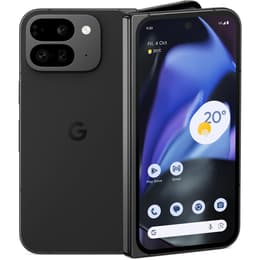
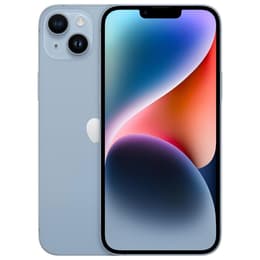
The Google Pixel 9 Pro Fold, released in September 2024, and the iPhone 14 Plus, launched in October 2022, represent distinct approaches to smartphone design and functionality. While the Pixel 9 Pro Fold offers a unique foldable form factor running on Android, the iPhone 14 Plus provides a traditional large-screen experience powered by Apple's iOS. These devices cater to different user preferences, with the Pixel emphasizing versatility and the iPhone focusing on a streamlined, consistent experience.

Scores

Durability

When considering the practical lifespan of these devices, several factors come into play, including their release timelines, software support, and physical durability.

  • Release Timeline and Age: The Google Pixel 9 Pro Fold, released in September 2024, is a significantly newer device compared to the iPhone 14 Plus, which launched in October 2022. This difference in release date inherently means the Pixel 9 Pro Fold has a longer potential lifespan ahead in terms of cutting-edge features and component freshness.
  • OS Support Duration: Google has committed to providing 7 years of OS and security updates for the Pixel 9 Pro Fold, extending its support until 2031. The iPhone 14 Plus, while known for Apple's long-term software support, typically receives iOS updates for approximately 5-6 years from its release, meaning its software support will conclude sooner than the Pixel's.
  • Physical Durability: The iPhone 14 Plus features a Ceramic Shield front cover and an IP68 rating for water and dust resistance, contributing to its robust build. The Pixel 9 Pro Fold, as a foldable device, incorporates a redesigned hinge for enhanced durability and also carries an IPX8 rating for water resistance, though its folding screen introduces a different set of considerations for long-term wear.

Release year

2024

2022

Compatible with latest Update

Yes

Yes

Operating system

Android

iOS

Foldable

Yes

No

Performance

The performance of a smartphone is crucial for daily tasks, from app usage to demanding multimedia. Both devices offer capable performance, but their underlying architectures differ.

  • Processor Capabilities: The Google Pixel 9 Pro Fold is powered by Google's Tensor G4 processor, designed to handle demanding applications, advanced AI features, and multitasking smoothly. The iPhone 14 Plus utilizes the A15 Bionic chip, which provides responsive performance for everyday use, gaming, and video editing.
  • Multitasking and Responsiveness: With 16GB of RAM, the Pixel 9 Pro Fold is well-equipped for extensive multitasking and running numerous applications simultaneously without slowdowns. The iPhone 14 Plus comes with 6GB of RAM, which, combined with iOS's efficient memory management, delivers a fluid and responsive user experience for typical smartphone usage.
  • Storage Options: Both devices offer a range of storage capacities to suit different user needs. The Pixel 9 Pro Fold is available with 256GB or 512GB of internal storage. The iPhone 14 Plus provides options for 128GB, 256GB, or 512GB of storage.

Memory (GB)

16 GB

6 GB

Screen quality

The display is a primary interface for any smartphone, and these two devices offer distinct viewing experiences due to their form factors and display technologies.

  • Display Technology and Size: The Google Pixel 9 Pro Fold features two OLED displays: a 6.3-inch cover display and an 8-inch inner foldable display when unfolded. Both offer vibrant colors and deep blacks. The iPhone 14 Plus sports a single 6.7-inch Super Retina XDR OLED display, known for its color accuracy and contrast.
  • Resolution and Clarity: The Pixel 9 Pro Fold's inner display has a resolution of 2076 x 2152 pixels, providing a sharp and detailed viewing area, especially for productivity and media consumption. The iPhone 14 Plus offers a resolution of 2778 x 1284 pixels at 458 pixels per inch, resulting in clear and crisp visuals.
  • Refresh Rate and Brightness: The Pixel 9 Pro Fold's displays support an adaptive refresh rate of up to 120Hz, contributing to smoother scrolling and more fluid animations. It also boasts a peak brightness of 2700 nits for outdoor visibility. The iPhone 14 Plus has a standard 60Hz refresh rate but offers a peak brightness of 1200 nits for HDR content, with typical brightness at 800 nits.

Resolution

2076 x 2152

1284 x 2778

Screen type

Foldable LTPO OLED

Super Retina XDR OLED

Audiovisual

Both smartphones offer capable camera systems, but they approach photography with different hardware and software philosophies.

  • Rear Camera System: The Google Pixel 9 Pro Fold features a triple rear camera setup, including a 48MP wide-angle lens, a 10.5MP ultra-wide lens, and a 10.8MP telephoto lens with 5x optical zoom and up to 20x Super Res Zoom. The iPhone 14 Plus comes with a dual-camera system, comprising a 12MP main wide-angle lens and a 12MP ultra-wide lens.
  • Photography Performance: The Pixel 9 Pro Fold leverages Google's computational photography for strong low-light performance and detailed images across various conditions. Its telephoto lens provides greater versatility for distant subjects. The iPhone 14 Plus offers reliable performance in good lighting and improved low-light capabilities compared to its predecessors, with features like Photonic Engine enhancing image quality.
  • Video Recording: Both devices are capable of recording high-quality video. The Pixel 9 Pro Fold includes features like Video Boost. The iPhone 14 Plus supports 4K video recording at up to 60 frames per second, with Cinematic mode for depth-of-field effects and Action mode for stabilized video.

Main camera

48 megapixels

12 megapixels

Front camera

10 megapixels

12 megapixels

Miscellaneous

Beyond core specifications, several practical elements differentiate these two devices, impacting daily usability and connectivity.

  • Connectivity Options: Both the Pixel 9 Pro Fold and the iPhone 14 Plus support 5G connectivity for fast mobile data. They also feature Wi-Fi 6 and Bluetooth 5.3 for wireless connections. The Pixel 9 Pro Fold includes a new modem for improved call quality and satellite connectivity for emergencies. The iPhone 14 Plus also offers Emergency SOS via satellite.
  • Biometric Security: The Pixel 9 Pro Fold incorporates a fingerprint sensor for secure unlocking. The iPhone 14 Plus relies on Face ID, Apple's facial recognition system, for biometric authentication.
  • Build Materials and Dimensions: The iPhone 14 Plus features a Ceramic Shield front and a glass back with an aluminum frame, weighing 203 grams. The Pixel 9 Pro Fold, with its folding design, has a stainless steel hinge and aluminum alloy cover, and a weight of 312 grams. Its dimensions are 158.7 x 139.7 x 5.8 mm when unfolded and 158.7 x 79.5 x 12.1 mm when folded. The iPhone 14 Plus measures 160.8 x 78.1 x 7.8 mm.

Weight

257 oz

203 oz

Screen size (in)

8.0

6,7

Network

5G

5G

SIM card

Physical SIM + eSIM

Physical SIM + eSIM

Carrier compatibility

Unlocked

Unlocked

User feedback for the Google Pixel 9 Pro Fold often highlights its innovative foldable display and the enhanced productivity it offers, particularly for multitasking and media consumption on the larger inner screen. Users appreciate Google's advanced computational photography and the extended software support commitment. Some common considerations for foldable devices, such as the durability of the folding screen and the overall thickness and weight compared to traditional smartphones, are sometimes mentioned.

For the iPhone 14 Plus, users frequently praise its consistent performance, excellent battery life, and the reliability of the iOS ecosystem. The large, vibrant display and capable camera system are also often cited as strong points. Some users occasionally note the standard 60Hz refresh rate as a point of comparison with other devices that offer higher refresh rates.

Users prioritizing a versatile device for productivity and immersive media consumption on a larger, adaptable screen, coupled with long-term software support and advanced camera features, may find the Google Pixel 9 Pro Fold well-suited to their needs. Conversely, users who value a streamlined, robust, and consistently performing smartphone with a large, traditional display and a strong ecosystem will likely lean towards the iPhone 14 Plus. Both devices offer quality-assured refurbished options, providing a sustainable choice for consumers.

See all articles

Our recent comparisons