
Compare models
Galaxy Z Fold7 vs iPhone 14 Pro
- 1-year warranty
- Free standard shipping
- Free 30-day returns
Differences at a glance
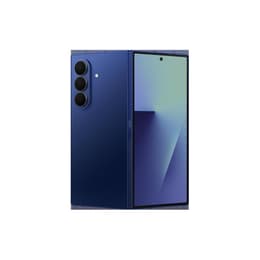
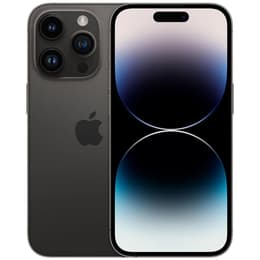
The Samsung Galaxy Z Fold7 (2025) and the Apple iPhone 14 Pro (2022) represent two distinct approaches to high-end mobile technology, contrasting a modern book-style foldable screen configuration with a traditional, pocket-friendly smartphone layout. While the Galaxy Z Fold7 provides an expansive dual-display layout running on Android, the iPhone 14 Pro delivers a compact, rigid form factor operating on iOS. These fundamental differences in hardware design and software ecosystems define how users interact with each device on a daily basis.
Available Models
Colour
Storage (GB)
Scores
Durability
Comparing these devices involves looking at different release timelines, software update commitments, and structural designs that influence long-term everyday usage.
- Software longevity: The Galaxy Z Fold7 benefits from an extended software support window typical of recent releases, while the iPhone 14 Pro has a shorter remaining official support lifecycle due to its earlier launch year.
- Structural durability: The iPhone 14 Pro utilizes a rigid glass and steel construction with established drop resistance, whereas the Galaxy Z Fold7 features a complex folding mechanism and flexible inner display requiring mindful handling.
- Repair considerations: Traditional smartphone designs like the iPhone generally offer straightforward component replacement paths, while foldable devices involve specialized screen assemblies that can complicate maintenance over time.
Release year
2025
2022
Operating system
Android
iOS
Foldable
Yes
No
Performance
System responsiveness and everyday utility are shaped by different hardware configurations, internal memory allocations, and power management profiles.
- Multitasking capabilities: The Galaxy Z Fold7 handles demanding multi-window workflows and heavy applications smoothly with its high-capacity memory, whereas the iPhone 14 Pro manages everyday apps and switching efficiently within a standard single-screen environment.
- Battery behavior: The iPhone 14 Pro relies on optimized power draw to sustain typical daily tasks on a single charge, while the larger display area of the Galaxy Z Fold7 can result in higher energy consumption during extended media viewing sessions.
- Storage configurations: Both product lines offer various internal capacity tiers starting from baseline options up to expansive storage levels for large media libraries and offline files.
Screen quality
Visual output and screen layout represent the most prominent points of divergence between these two device categories.
- Display technology: The Galaxy Z Fold7 deploys a foldable main panel alongside a standard cover screen, utilizing vibrant organic light-emitting diode technology across both surfaces for deep contrast levels.
- Viewing space: Users working with spreadsheets, documents, or split-screen layouts benefit from the tablet-sized canvas of the foldable device, while the iPhone 14 Pro provides a conventional single-handed viewing area with high pixel density.
- Outdoor visibility: Both models incorporate high peak brightness modes that maintain legibility under direct sunlight, supported by responsive adaptive refresh rates for smooth scrolling and motion.
Resolution
1968x2184
1179 x 2556
Audiovisual
Imaging hardware and media playback capabilities cater to different creative preferences and entertainment requirements.
- Camera versatility: The Galaxy Z Fold7 incorporates a high-resolution main sensor array alongside specialized lenses, whereas the iPhone 14 Pro utilizes a refined multi-lens setup paired with advanced computational photography software for consistent everyday snapshots.
- Video recording: Both smartphones capture stable, high-definition footage with detailed audio capture, making them reliable tools for recording personal moments or professional clips on the go.
- Audio output: Stereo speaker configurations on both models deliver clear sound reproduction for hands-free calls, podcasts, and casual video playback without requiring external speakers.
Miscellaneous
Practical daily utility is further influenced by physical dimensions, connectivity standards, and biometric security features.
- Portability and handling: The iPhone 14 Pro offers a heavier, dense feel in a compact footprint that slips easily into pockets, while the Galaxy Z Fold7 balances a surprisingly thin profile when folded with a wider physical footprint when fully opened.
- Connectivity: Both models support modern fifth-generation cellular networks, rapid wireless standards, and Bluetooth protocols for dependable accessory pairing.
- Authentication: Security and device unlocking are handled via facial recognition on the Apple device and a side-mounted fingerprint sensor integrated into the power button on the Samsung foldable.
Weight
215 oz
206 oz
Screen size (in)
8.0
6,1
Network
5G
5G
SIM card
Dual Physical SIM + eSIM
Physical SIM + eSIM
Carrier compatibility
Unlocked
Unlocked
What the community thinks
User feedback from online communities highlights distinct preferences for each device model. Owners of the Galaxy Z Fold7 frequently praise the versatility of the large inner screen for multitasking and media consumption, though some note that the foldable crease and battery longevity under heavy use require adaptation. Conversely, users of the iPhone 14 Pro appreciate its reliable camera performance, durable everyday build, and pocket-friendly dimensions, while occasionally mentioning limitations related to the fixed screen size.
Users prioritizing expansive screen real estate and flexible multi-window workflows will find the Galaxy Z Fold7 well-suited to their daily routines. Meanwhile, users focusing on a compact, single-handed form factor with established software simplicity may lean toward the iPhone 14 Pro. For those seeking a quality-assured refurbished option, Back Market provides these devices as sustainable choices that extend technology lifecycles while maintaining dependable performance standards.