
Compare models

Google Pixel 7a vs iPhone 17

  • 1-year warranty
  • Free standard shipping
  • Free 30-day returns
Google Pixel 7a
Starting at

Refurbished price:A$318.00

Versus A$604.50 new

See options
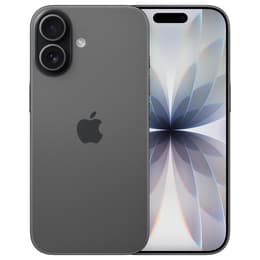
iPhone 17
Starting at

Refurbished price:A$1,503.05

Versus A$1,549.00 new

See options

Differences at a glance

The Google Pixel 7a (2023) and the Apple iPhone 17 (2025) represent two distinct generations and ecosystems in the smartphone market. While the Pixel 7a focuses on accessibility and core software integration, the iPhone 17 introduces modern flagship innovations across a refined hardware footprint. Operating on Android and iOS respectively, these devices cater to users with differing software preferences and usage habits.

Available Models

Colour

Storage (GB)

Scores

Durability

When evaluating the long-term viability of these devices, differences in their release timelines and support schedules play a central role in shaping their expected operational lifespans.

  • Release timeline and age: The Pixel 7a launched in mid-2023, whereas the iPhone 17 debuted in late 2025, placing them in different generations of mobile technology.
  • Software support duration: The iPhone 17 benefits from a later release date and extended update schedules, whereas the Pixel 7a is further along its predetermined software lifecycle.
  • Expected practical lifespan: Users looking for maximum years of future security updates and software feature drops will find the newer Apple model naturally aligns with long-term retention goals.

Release year

2022

2025

Compatible with latest Update

Yes

Yes

Operating system

Android

iOS

Foldable

No

No

Performance

Both smartphones handle daily mobile tasks competently, though their underlying processing architectures and internal memory management yield distinct everyday experiences.

  • System responsiveness: The iPhone 17 handles demanding applications, graphic-heavy gaming, and fast multitasking with minimal thermal throttling, while the Pixel 7a manages routine browsing and streaming smoothly with its mid-tier processor architecture.
  • Storage configurations: The Pixel 7a provides a standard storage baseline configuration, whereas the iPhone 17 starts with larger baseline capacities to accommodate modern media storage needs.
  • Battery behavior: Battery endurance varies under heavy loads, requiring daily recharging for intensive users on both devices, though optimization differences impact how standby time is managed.

Screen quality

Display technology differs noticeably between the two models, influencing outdoor legibility, motion smoothness, and overall visual clarity.

  • Display technology: The iPhone 17 incorporates an advanced OLED panel with adaptive refresh rates reaching up to 120 Hz, whereas the Pixel 7a utilizes a 90 Hz OLED screen.
  • Outdoor brightness: The iPhone 17 achieves higher peak outdoor brightness levels for improved visibility under direct sunlight, while the Pixel 7a remains clearly legible during standard daylight conditions.
  • Panel dimensions: The iPhone 17 offers a slightly larger viewing area with narrower bezels, compared to the compact 6.1-inch form factor of the Pixel 7a.

Audiovisual

Imaging capabilities and media playback hardware shape how each device handles photography, video recording, and audio output.

  • Camera systems: The Pixel 7a relies on a high-resolution main sensor paired with computational photography software, while the iPhone 17 features dual high-megapixel lenses for wide and ultra-wide shots.
  • Video and low-light performance: Both devices capture detailed low-light imagery and stable high-definition video, with the iPhone 17 offering refined cinematic recording modes and advanced stabilization features.
  • Media consumption: Stereo speakers on both models deliver clear audio for calls and video playback, though internal speaker enclosure volumes create distinct acoustic profiles.

Front camera

13 megapixels

18 megapixels

Miscellaneous

Physical construction, connectivity options, and security sensors dictate how each device handles day-to-day handling and physical interaction.

  • Build materials: The Pixel 7a combines an aluminum frame with a matte composite back, while the iPhone 17 uses color-infused glass paired with an aluminum enclosure.
  • Port types and connectivity: Both devices utilize USB-C charging ports and support modern 5G networks, though their Wi-Fi and Bluetooth standard versions reflect their respective release years.
  • Biometric security: The Pixel 7a provides facial recognition alongside an optical in-display fingerprint sensor, whereas the iPhone 17 relies exclusively on advanced facial scanning hardware housed within the display cutout.

Weight

212 oz

177 oz

Screen size (in)

6.3

6.3

Network

5G

5G

SIM card

Physical SIM + eSIM

Physical SIM + eSIM

Carrier compatibility

Unlocked

Unlocked

What the community thinks

User discussions across online communities highlight distinct preferences for each device based on ecosystem integration and hardware priorities. Owners of the Google Pixel 7a frequently praise its clean software interface, reliable everyday camera performance, and comfortable compact size. Conversely, discussions surrounding the iPhone 17 often emphasize its smooth display technology, robust processing capabilities, and extended software support timeline. Common criticisms for the Pixel tend to center on moderate battery endurance under heavy usage, while the iPhone is occasionally noted for its higher entry-level configurations.

Users prioritizing a streamlined Android interface and a compact form factor will find the Pixel 7a well-suited to their daily routines. Meanwhile, users prioritizing advanced display smoothness, high processing power, and long-term software longevity may lean toward the iPhone 17. For those exploring sustainable purchasing routes, choosing a quality-assured refurbished option provides an eco-friendly alternative that extends device life cycles without compromising on performance standards.