
Galaxy S21+ 5G vs Motorola Edge 30 Pro

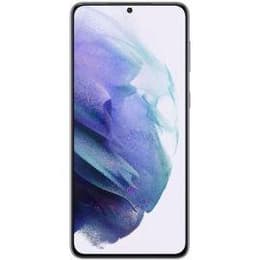
Galaxy S21+ 5G
Galaxy S21+ 5G
Starting at

Refurbished price:A$348.00

Versus A$2,005.00 new

See options
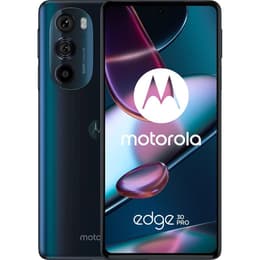
Motorola Edge 30 Pro
Starting at

Refurbished price:A$289.72

Versus A$2,709.00 new

See options

The Samsung Galaxy S21 Plus 5G, released in January 2021, and the Motorola Edge 30 Pro, launched in February 2022, are both powerful Android smartphones. While the Galaxy S21 Plus 5G offers a robust and refined experience with Samsung's One UI, the Motorola Edge 30 Pro provides a more recent hardware platform and a near-stock Android experience. These devices primarily differentiate themselves through their processing power, camera capabilities, and software support timelines.

Scores

Durability

The Samsung Galaxy S21 Plus 5G, released in January 2021, benefits from Samsung's extended software support policy, offering four generations of Android OS upgrades and five years of security patches. This provides a longer update timeline compared to the Motorola Edge 30 Pro, launched in February 2022, which typically receives two to three major OS updates and three years of security patches.

  • Build Materials and Water Resistance: The Galaxy S21 Plus 5G features Gorilla Glass Victus on both front and back, an aluminum frame, and an IP68 rating for significant dust and water resistance. The Motorola Edge 30 Pro uses Gorilla Glass 3 on the front and Gorilla Glass 5 on the back, with a plastic frame, and has an IP52 rating, indicating splash resistance.
  • Repairability: Both devices have moderate repairability scores, with components often requiring heat to loosen adhesive during disassembly.
  • Software Longevity: Users prioritizing long-term software updates will find the Galaxy S21 Plus 5G offers a more extended support period.

Release year

2021

2022

Compatible with latest Update

Yes

Yes

Operating system

Android

Android

Foldable

No

No

Performance

Both devices offer strong performance suitable for demanding applications and multitasking, though they utilize different generations of high-end processors.

  • Processing Power: The Motorola Edge 30 Pro, with its newer generation processor, generally delivers faster CPU and GPU speeds, resulting in a highly responsive user experience and smoother handling of graphically intensive games and applications. The Galaxy S21 Plus 5G, while still capable, uses a slightly older generation processor that provides excellent performance for everyday tasks and most demanding apps.
  • Multitasking and Storage: Both phones typically come with 8GB of RAM, with the Motorola Edge 30 Pro also offering a 12GB RAM option, which can provide a slight edge in keeping more applications open simultaneously. Storage options for both devices include 128GB and 256GB, with the Edge 30 Pro also having a 512GB variant.
  • Battery Life: Both devices are equipped with a 4800 mAh battery. User experiences suggest the Galaxy S21 Plus 5G generally offers reliable all-day battery life. The Motorola Edge 30 Pro's battery performance is solid, though heavy usage might require an evening top-up.

Memory (GB)

8 GB

8 GB

Screen quality

Both smartphones feature large, vibrant displays, but there are differences in their underlying technology and refresh rates.

  • Display Technology and Clarity: The Galaxy S21 Plus 5G features a 6.7-inch Dynamic AMOLED 2X display, known for its deep blacks, vibrant colors, and excellent clarity at its Full HD+ resolution (1080 x 2400 pixels). The Motorola Edge 30 Pro also has a 6.7-inch OLED display with a Full HD+ resolution, offering similar benefits in color reproduction and contrast.
  • Refresh Rate and Smoothness: The Galaxy S21 Plus 5G offers an adaptive 120Hz refresh rate, providing a smooth scrolling and viewing experience. The Motorola Edge 30 Pro surpasses this with a 144Hz refresh rate, which can result in an even more fluid visual experience, particularly noticeable in fast-paced content or gaming.
  • Brightness and Outdoor Visibility: The Galaxy S21 Plus 5G's display can reach a peak brightness of 1300 nits, ensuring good visibility in bright outdoor conditions. The Motorola Edge 30 Pro's display typically reaches around 500-700 nits.

Resolution

1080 x 2400

1080 x 2400

Screen type

Dynamic AMOLED 2X

OLED

Audiovisual

Camera performance is a key area of distinction, with both devices offering multi-lens setups but varying results in different scenarios.

  • Rear Camera System: The Galaxy S21 Plus 5G features a versatile triple camera system with a 12MP main, 12MP ultrawide, and 64MP telephoto lens offering 3x hybrid optical zoom. The Motorola Edge 30 Pro comes with a dual 50MP camera system, including a 50MP main and a 50MP ultrawide sensor that also functions as a macro lens, alongside a 2MP depth sensor.
  • Photography Performance: The Galaxy S21 Plus 5G generally delivers consistent image quality with good detail and color accuracy in well-lit conditions, and its telephoto lens provides effective zoom. The Motorola Edge 30 Pro's main camera can produce good photos in normal lighting, but user reviews often indicate less consistency in low light and with moving subjects.
  • Video and Front Camera: Both phones offer robust video recording capabilities, with the S21 Plus 5G supporting up to 8K. The Galaxy S21 Plus 5G has a 10MP front camera, while the Motorola Edge 30 Pro features a 60MP front camera.

Main camera

12 megapixels

50 megapixels

Front camera

10 megapixels

60 megapixels

Miscellaneous

Beyond core features, several practical elements contribute to the overall user experience of these smartphones.

  • Connectivity: Both the Galaxy S21 Plus 5G and the Motorola Edge 30 Pro support 5G connectivity. The Motorola Edge 30 Pro supports Wi-Fi 6E and Bluetooth 5.2, offering slightly newer standards compared to the Galaxy S21 Plus 5G's Wi-Fi 6 and Bluetooth 5.0.
  • Ports and Biometrics: Both devices feature a USB-C port but lack a 3.5mm headphone jack. The Galaxy S21 Plus 5G uses an in-display fingerprint sensor, while the Motorola Edge 30 Pro has a side-mounted fingerprint sensor, often praised for its speed. Both also support face recognition.
  • Design and Handling: The Galaxy S21 Plus 5G measures 161.5 x 75.6 x 7.8 mm and weighs 200 grams. The Motorola Edge 30 Pro is slightly larger and lighter at 163.1 x 75.95 x 8.8 mm and 196 grams. The S21 Plus 5G features a matte glass back, while the Edge 30 Pro has a matte glass back with a plastic frame.

Weight

200 oz

196 oz

Screen size (in)

6.7

6,7

Network

5G

5G

SIM card

Physical SIM + eSIM

Dual Physical SIM

Carrier compatibility

Unlocked

Unlocked

The Samsung Galaxy S21 Plus 5G and the Motorola Edge 30 Pro cater to slightly different user priorities, despite both being capable Android smartphones.

Users often praise the Galaxy S21 Plus 5G for its consistent camera performance, vibrant display, and robust software support policy, ensuring longer access to Android updates and security patches. Some criticisms have included its flat screen and thicker bezels compared to more premium models, and the lack of a charger in the box.

The Motorola Edge 30 Pro is frequently lauded for its exceptional raw performance, thanks to its newer generation processor, and its very smooth 144Hz display. Its near-stock Android experience is also a positive for many users. However, common criticisms revolve around its camera performance, particularly in low light and with moving subjects, which some users find to be average for its class. Its IP52 splash resistance is also less robust than the S21 Plus 5G's IP68 rating.

Users prioritizing a longer software support lifespan, a more durable build with higher water resistance, and a consistently reliable camera system may find the Samsung Galaxy S21 Plus 5G to be a more suitable choice. Conversely, those who value cutting-edge processing power for demanding applications and gaming, a higher refresh rate display for ultimate smoothness, and a cleaner Android experience might lean towards the Motorola Edge 30 Pro. Both devices are available as quality-assured refurbished options, providing an eco-friendly alternative.


See all articles

Our recent comparisons